
Energy transition is the global shift from an energy system dominated by fossil fuels to one powered primarily by renewable and low-carbon sources, fundamentally reshaping how societies generate, distribute, and consume energy. This transformation encompasses the replacement of coal, oil, and natural gas with solar, wind, hydroelectric, and other clean technologies, alongside massive upgrades to electricity grids, energy storage systems, and end-use infrastructure.
The stakes have never been higher. By mid-2026, nations representing over 80% of global GDP have committed to net-zero emissions targets, making energy transition the defining infrastructure challenge of this century. The shift touches everything from power generation and transportation to industrial processes and building design, creating both urgent climate imperatives and unprecedented economic opportunities.
Understanding energy transition matters because it’s already underway and accelerating. Global renewable capacity additions reached record levels in recent years, while electric vehicle sales continue their exponential climb. Yet the concept remains frustratingly vague in popular discourse, often reduced to simplistic narratives about swapping out technologies rather than recognized as the complex, systemic transformation it actually represents.
This article cuts through the confusion with a comprehensive yet accessible explanation of what energy transition truly means in practice. You’ll find a clear breakdown of the core components driving this shift, from decarbonization pathways to the critical role of energy efficiency and electrification. We’ll examine how different sectors approach transition challenges, drawing on case studies from countries and companies leading the charge. Expert voices will illuminate both the technical mechanisms and broader societal implications, while addressing the most common questions that arise when professionals and policymakers discuss this transformation.
Whether you’re explaining energy transition to stakeholders, shaping policy, or simply seeking clarity on a term that shapes daily headlines, this guide provides the foundational knowledge you need.
What Energy Transition Means
Energy transition refers to the global shift from energy systems powered predominantly by coal, oil, and natural gas to systems based on renewable and low-carbon sources like solar, wind, and hydropower. This structural change in energy systems represents one of the most significant economic and technological transformations of the 21st century, touching every aspect of how societies generate, distribute, and consume power.
But energy transition means far more than swapping one fuel for another. It encompasses a complete reimagining of energy infrastructure, from centralised coal and gas plants to distributed renewable generation, from one-way power grids to smart networks that manage bidirectional flows, from predictable baseload generation to systems that balance variable renewable output with storage and flexible demand. The transition requires simultaneous advances in technology, markets, and regulation.
The transformation extends beyond the technical realm into policy, economics, and society itself. Governments must redesign regulatory frameworks to accommodate new energy sources and business models. Communities face decisions about where to site wind farms and solar arrays. Workers in fossil fuel industries need pathways to new careers. Consumers adopt electric vehicles and heat pumps, fundamentally changing household energy use.
To understand the full scope of energy transition, it helps to grasp several core concepts:
- Decarbonisation
- The process of reducing carbon dioxide emissions from energy production and use, primarily by replacing fossil fuels with clean energy sources and improving efficiency.
- Renewable Energy
- Power generated from naturally replenishing sources such as sunlight, wind, water, and geothermal heat that produce little to no greenhouse gas emissions during operation.
- Grid Modernisation
- Upgrading electricity networks with digital technologies, sensors, and controls to manage variable renewable generation, enable two-way power flows, and improve reliability and resilience.
- Energy Security
- A nation’s or region’s ability to meet energy needs reliably and affordably, which energy transition can enhance by reducing dependence on imported fossil fuels and diversifying supply sources.
- Just Transition
- The principle that the shift to clean energy must address social equity, supporting workers and communities economically dependent on fossil fuel industries through retraining, economic development, and inclusive planning.
This multifaceted transformation is already reshaping the global energy sector, with renewable capacity additions outpacing fossil fuel installations and major economies committing to net-zero emissions targets by mid-century.
How Energy Transition Works
The Role of Technology and Innovation
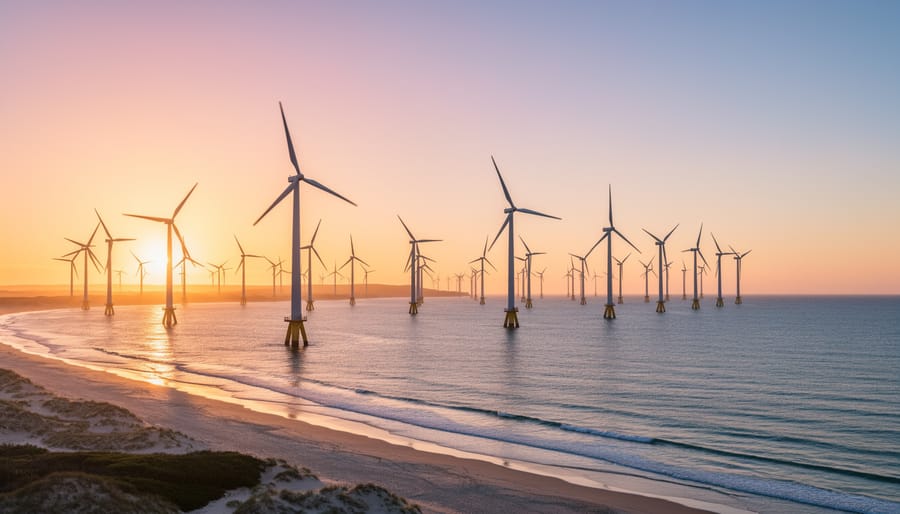
Technological breakthroughs have transformed energy transition from an abstract goal into an actionable reality. Solar photovoltaic costs have plummeted over 90% since 2010, making solar competitive with coal and gas in most markets without subsidies. The future of solar now includes bifacial panels, perovskite cells, and integrated building systems that generate power from previously unusable surfaces. Wind turbines have grown taller and more efficient, with offshore installations capturing steady ocean breezes that earlier technology couldn’t harness economically.
Battery storage has evolved just as dramatically. Lithium-ion costs dropped 97% between 2010 and 2023, enabling grid-scale storage that smooths renewable intermittency and replaces fossil peaker plants. Newer chemistries like sodium-ion and solid-state batteries promise safer, cheaper options for different applications.
Smart grid technology ties these advances together. Advanced metering, demand response systems, and AI-driven forecasting let utilities balance supply and demand in real time, integrating variable renewables without sacrificing reliability. Energy efficiency innovations, from LED lighting to heat pumps to industrial process optimization, reduce total demand, making the transition faster and cheaper. Each breakthrough compounds the others, accelerating the shift beyond what policy alone could achieve.
Policy and Regulatory Frameworks
Government policies and regulatory frameworks don’t just support energy transition, they actively shape its pace and direction. Without clear rules and incentives, markets alone rarely shift quickly enough to meet climate targets or overcome the built-in advantages that decades of fossil fuel infrastructure enjoy.
Carbon pricing mechanisms, whether through direct taxes or cap-and-trade systems, put a cost on emissions that makes clean energy more competitive. The EU’s Emissions Trading System and carbon taxes in jurisdictions like British Columbia have demonstrated how price signals redirect investment toward lower-carbon alternatives. These aren’t theoretical constructs; they’re changing what utilities build and what industries choose to power their operations.
Renewable energy mandates and portfolio standards compel grid operators to source specific percentages of electricity from clean sources by defined dates. Feed-in tariffs guarantee prices for renewable generators, reducing investment risk and accelerating deployment. Building codes increasingly require energy efficiency measures or renewable-ready infrastructure, embedding transition principles into physical development.
International agreements like the Paris Accord create diplomatic pressure and coordination mechanisms that individual nations translate into domestic law. National climate legislation then cascades into sector-specific regulations, emission limits for power plants, fuel economy standards for vehicles, methane rules for oil and gas operations.
Effective frameworks balance certainty for investors with flexibility to adapt as technology costs fall. They phase out subsidies for fossil fuels while channeling support toward emerging clean technologies. The regulatory environment ultimately determines whether energy transition progresses steadily or stalls.
Core Components of Energy Transition
A complete energy transition requires more than simply swapping coal plants for solar farms. It demands coordinated development across multiple interconnected systems, each essential to achieving reliable, affordable, low-carbon energy at scale. Understanding these core components helps clarify why transition is a comprehensive transformation rather than a single technology fix.
At the foundation sits renewable energy generation, the shift from combustion-based power to sources that harness natural flows of energy without depleting resources or emitting carbon. Solar photovoltaics, wind turbines, hydroelectric facilities, and geothermal plants now represent the fastest-growing segment of global power capacity, delivering electricity at costs that increasingly undercut fossil alternatives. These eco-friendly alternatives form the generation backbone that makes transition technically feasible.
Yet renewable generation alone cannot sustain modern energy systems. The essential building blocks of energy transition include:
- Renewable energy generation sources: solar, wind, hydroelectric, and geothermal power facilities
- Energy storage systems: batteries, pumped hydro, and emerging technologies that balance intermittent supply with constant demand
- Grid infrastructure upgrades: transmission lines, substations, and distribution networks redesigned for bidirectional power flow
- Electrification of end-uses: replacing fossil fuel consumption in transport, heating, and industry with electric alternatives
- Energy efficiency measures: building retrofits, industrial process improvements, and appliance standards that reduce total energy demand
- Hydrogen and alternative fuels: clean molecules for sectors where direct electrification proves difficult
- Digital and smart technologies: sensors, software, and control systems that optimize system performance in real time
Energy storage deserves particular attention because it solves the mismatch between when renewable energy is generated and when consumers need it. Lithium-ion batteries now provide grid-scale storage at costs unimaginable a decade ago, while pumped hydroelectric storage offers massive capacity for longer-duration needs. Without adequate storage, high renewable penetration creates reliability challenges that stall transition progress.
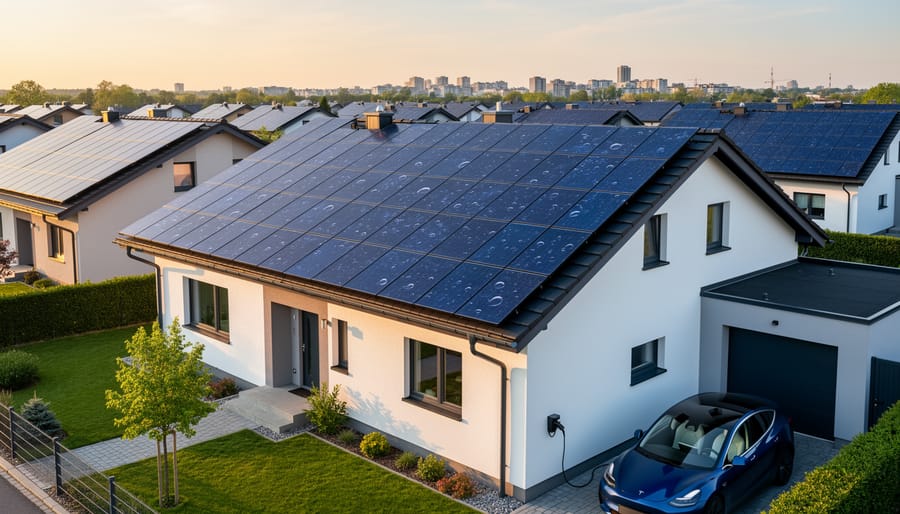
Grid modernization represents another non-negotiable component. Legacy transmission systems were designed for one-way power flow from large central plants to distributed consumers. Transition requires grids that accommodate power flowing in multiple directions, manage thousands of distributed generation sources, and respond dynamically to changing conditions. This means new transmission capacity to connect remote renewable resources to demand centers, plus distribution upgrades to handle rooftop solar, electric vehicle charging, and neighborhood battery systems.
Market structures and regulatory frameworks, though less visible than physical infrastructure, provide the economic foundation that makes transition financially viable. Carbon pricing, renewable energy credits, capacity markets, and grid connection rules determine whether clean energy projects attract investment or languish. Effective transition strategies reform these structures to reward flexibility, reward storage, and internalize the costs of emissions.
Together, these components form an integrated system where progress in one area enables advancement in others, and weakness in any single element constrains the whole. Recognizing this interdependence helps explain why successful energy transition requires coordinated policy, sustained investment, and patient system-building rather than isolated technology deployments.
Energy Transition in Practice: Real-World Applications
National and Regional Energy Strategies
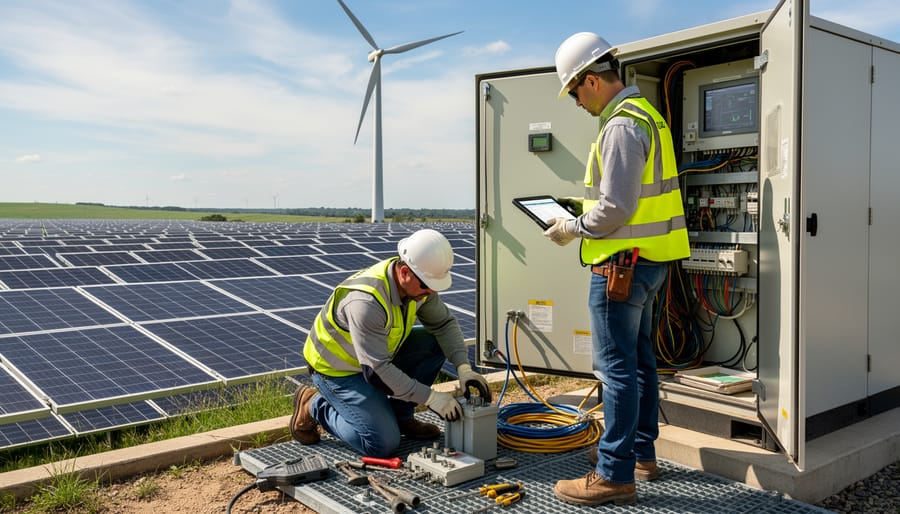
Countries worldwide are translating energy transition commitments into concrete programs, each shaped by local resources, economic priorities, and political systems. The European Union’s Green Deal combines binding emissions targets with €1 trillion in public and private investment to transform power grids, phase out coal, and scale offshore wind capacity across member states. China’s approach emphasizes massive infrastructure deployment, the country accounts for more than half of global renewable installations backed by industrial policy that positions domestic manufacturers as world leaders in solar panels, wind turbines, and batteries. Meanwhile, smaller nations like Denmark and Costa Rica demonstrate that geography matters: Denmark leverages North Sea wind resources and district heating networks, while Costa Rica taps abundant hydropower and geothermal energy to run almost entirely on renewables. These strategies share common elements, renewable energy targets, grid modernization, fossil fuel phase-outs, but differ significantly in pace, scope, and implementation based on each region’s starting point and capabilities.
Corporate and Industrial Transitions
Businesses across industries are taking concrete steps to decarbonize operations and secure cleaner energy supplies. Major manufacturers now procure renewable electricity through power purchase agreements that lock in long-term pricing while supporting new wind and solar projects. Tech companies have led this trend, with data centers running on 100% renewable power, but heavy industries, steel, cement, chemicals, are following with more complex transitions.
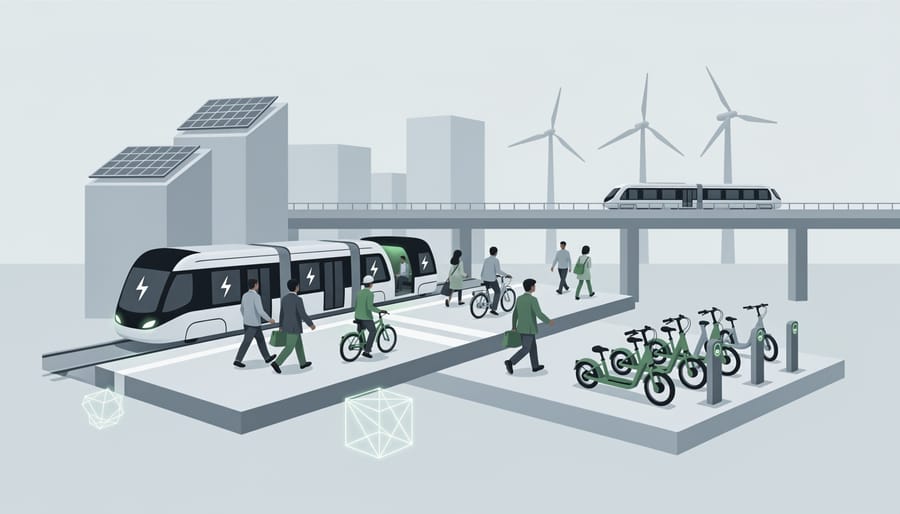
Electrification represents the most visible shift: replacing fossil fuel equipment with electric alternatives. Companies are converting vehicle fleets to EVs, installing electric heat pumps in facilities, and redesigning processes around electricity rather than natural gas or diesel. This change requires infrastructure upgrades, charging stations, electrical capacity, backup systems, but reduces direct emissions and operational costs over time.
Supply chain restructuring extends transition commitments beyond a company’s own walls. Firms now pressure suppliers to meet clean energy standards, track embodied carbon in purchased materials, and prioritize low-carbon logistics. Industrial buyers increasingly favor “green steel” made with renewable electricity or “green hydrogen” over conventional products, creating market signals that ripple through entire sectors and accelerate the broader energy transition.
Community and Distributed Energy Projects
At the community level, energy transition takes tangible forms that residents can see and participate in directly. Solar cooperatives allow neighbourhoods to collectively invest in and benefit from shared renewable installations, distributing both costs and returns among members. In rural areas and island communities, microgrids powered by local wind, solar, and battery storage provide reliable electricity independent of centralized grids, demonstrating how distributed generation can enhance resilience while cutting emissions.
Community-owned wind farms give local stakeholders direct financial interest in nearby turbines, transforming renewable projects from external impositions into shared assets. Rooftop solar programs in apartment buildings and social housing complexes extend clean energy access beyond individual homeowners. These distributed projects prove that energy transition isn’t solely about massive infrastructure, it’s equally about empowering communities to generate, store, and manage power locally, creating economic benefits and energy security at the grassroots level.
Voices from the Field: Expert Perspectives
Dr. Maria Santos, who leads the International Renewable Energy Agency’s policy advisory group, sees the transition as fundamentally about choices. “Every energy decision now has a carbon context,” she explains. “Governments and businesses are weighing renewable vs nonrenewable options with unprecedented scrutiny because the economic case has shifted alongside the climate imperative.”
From the corporate side, James Chen, Chief Sustainability Officer at a major European utility, offers a pragmatic view. “We’re not just swapping coal plants for solar farms. We’re rebuilding the entire operating model, how we forecast demand, manage grids, price electricity, and relate to customers. The technical challenges are solvable. The organizational transformation is what keeps me up at night.”
Community energy advocate Amara Okafor brings a different lens from her work in rural electrification across West Africa. “Energy transition isn’t a single pathway,” she notes. “In communities that never had reliable grid access, we’re leapfrogging straight to distributed solar and battery systems. They’re experiencing modern energy and clean energy simultaneously, which shapes their expectations completely differently than places transitioning away from established fossil infrastructure.”
Research scientist Dr. Henrik Larsen, who studies grid integration at a Nordic technical institute, emphasizes the knowledge gaps that remain. “We understand the technologies individually quite well. What we’re still learning is how they interact at scale, how millions of rooftop solar systems, electric vehicles charging, and wind farms coordinate through smart systems. The next decade is essentially a live experiment in complex system management.”
These perspectives reveal transition’s multifaceted nature. It’s simultaneously a technical challenge, an economic opportunity, an organizational shift, and a social transformation that plays out differently depending on context and starting point.
Challenges and Opportunities Shaping the Path Forward
The path toward comprehensive energy transition presents formidable challenges that coexist with transformative opportunities. Understanding both dimensions helps stakeholders navigate the complexity honestly while maintaining momentum.
Infrastructure constraints rank among the most pressing obstacles. Existing transmission networks weren’t designed to handle variable renewable generation or bidirectional power flows from distributed sources. Upgrading this infrastructure requires massive capital investment, estimates suggest trillions of dollars globally, and navigating complex permitting processes that can delay critical projects for years. Storage technology, while advancing rapidly, still costs more than many applications can bear economically, particularly for seasonal energy storage needs.
The social dimension presents equally significant hurdles. Communities dependent on fossil fuel industries face legitimate concerns about employment and economic disruption. A coal plant closure doesn’t just eliminate jobs; it can devastate an entire region’s tax base, schools, and services. Ensuring a just transition that supports affected workers and communities isn’t optional, it’s essential for maintaining public support. Energy affordability concerns also loom large, particularly in regions where renewable deployment increases short-term electricity costs before economic benefits materialize.
Political and regulatory uncertainty creates investment risk. Policy reversals, inconsistent incentives, and fragmented regional approaches complicate long-term planning. Grid interconnection queues have swelled to years-long waits in many markets, stalling deployment of approved projects.
Yet these challenges exist alongside extraordinary opportunities. The transition is generating entirely new industries and employment categories, renewable technicians, battery engineers, grid optimization specialists, and sustainability analysts represent just a fraction of emerging roles. Research from multiple sources suggests renewable energy sectors create more jobs per unit of energy than fossil fuel industries, often in locations that can benefit from economic diversification.
Innovation accelerates across the entire energy value chain. Companies developing next-generation solar cells, advanced batteries, green hydrogen systems, and AI-driven grid management tools are attracting substantial investment. This innovation extends to business models, with community solar, virtual power plants, and peer-to-peer energy trading creating new market structures.
Energy security improvements represent a geopolitical opportunity. Nations can reduce dependence on imported fossil fuels by developing domestic renewable resources, insulating economies from price volatility and supply disruptions. The connection between energy sustainability and national resilience has never been clearer.
Climate action benefits, while often discussed abstractly, translate into concrete advantages: reduced air pollution saves lives and healthcare costs, while avoided climate damages protect infrastructure and agricultural productivity. The transition isn’t without difficulty, but the opportunities it unlocks justify the commitment required to overcome obstacles.
Common Questions About Energy Transition
The pace and scope of energy transition naturally raises questions for anyone trying to understand what this shift means for their energy bills, job security, and daily life. While the transformation is already well underway, separating fact from fiction helps clarify what to expect as the energy sector continues to evolve.
How long will energy transition take?
Energy transition is an ongoing process rather than a single event, with most analyses projecting the shift to low-carbon energy systems will extend through mid-century. The pace varies significantly by region and sector, with electricity generation transitioning faster than heavy industry or aviation.
Can renewables provide reliable power?
Modern renewable systems paired with storage, grid interconnections, and flexible demand management already deliver reliable electricity in multiple markets. Countries like Denmark and Uruguay generate most of their electricity from renewables while maintaining grid stability comparable to or better than fossil-dependent systems.
What will energy transition cost?
Upfront infrastructure investment is substantial, estimated in the trillions globally, but lifecycle costs for renewable generation now undercut fossil fuels in most markets. The transition represents a reallocation of energy spending rather than pure additional expense, with fuel savings offsetting capital costs over time.
Will my energy bills increase?
Bill impacts vary by location and depend on policy choices around who pays for infrastructure upgrades. In many markets, consumers are seeing stable or declining costs as cheap renewable generation replaces expensive fossil fuel plants, though transmission upgrades can add near-term costs.
Concerns about employment in fossil fuel sectors are legitimate and require intentional workforce transition planning. Energy transition creates more jobs than it eliminates overall, but those new positions often require different skills and appear in different locations than traditional energy employment. Effective transition includes retraining programs, early retirement support, and economic development in affected communities rather than leaving workers behind.
Energy security worries often assume dependence on imported fuels is safer than domestic renewables, when the opposite is typically true. Countries reduce vulnerability by generating power from local sun and wind rather than purchasing fuel on volatile global markets. The challenge shifts from fuel supply chains to manufacturing supply chains for equipment and critical minerals, requiring different but manageable security strategies.
Reliability concerns frequently conflate variable generation with unreliable service. Grid operators manage variability through diverse renewable portfolios spread across wide geographic areas, storage systems that dispatch power on demand, and demand flexibility that shifts consumption to match generation. The technical challenges are real but solvable, as demonstrated by grids already operating with majority renewable supply during extended periods.
Energy transition, the fundamental shift from fossil fuel-based systems to renewable and low-carbon energy sources, isn’t a distant possibility. It’s the defining transformation reshaping the global power sector right now. From technological breakthroughs in solar and wind to ambitious national policies and grassroots community projects, the evidence of this shift surrounds us in 2026.
What began as a climate imperative has evolved into an economic opportunity, a technological revolution, and a reimagining of how societies generate, distribute, and consume power. The transition encompasses far more than swapping one fuel for another. It requires simultaneous evolution across infrastructure, markets, regulations, and consumption patterns, a complexity that makes progress sometimes feel uneven, yet the direction remains unmistakable.
The pace will continue to accelerate. Technology costs keep falling, policy frameworks strengthen, and the business case for clean energy becomes more compelling with each passing quarter. Challenges around grid modernization, energy storage, and ensuring equitable access remain real, but they’re increasingly matched by innovation, investment, and collective will.
For anyone involved in energy, whether as a professional, policymaker, advocate, or informed citizen, staying engaged with this transformation matters. The decisions made now will shape energy systems for decades. Understanding what energy transition truly means positions you to contribute meaningfully to a future where reliable, affordable, clean energy becomes the global norm rather than the aspiration.