
Energy sustainability is the practice of meeting current energy needs through sources and systems that can be maintained indefinitely without depleting natural resources or causing irreversible environmental harm. At its core, this means shifting from fossil fuels to renewable energy sources like solar, wind, and hydropower while simultaneously reducing overall energy consumption through efficiency improvements and smarter grid management.
The concept matters now more than ever. Global energy demand continues climbing, yet the consequences of traditional energy production have become impossible to ignore. Rising temperatures, air pollution, and resource scarcity have pushed energy sustainability from an idealistic goal to an economic and social imperative. Countries that once viewed renewable energy as experimental now compete to lead the transition, driven by falling technology costs and mounting climate risks.
Understanding energy sustainability requires looking beyond simple definitions. It encompasses the technologies that generate clean power, the infrastructure that delivers it efficiently, and the policies that make adoption feasible at scale. A wind farm represents one piece of the puzzle. The transmission lines carrying that electricity, the battery systems storing excess generation, and the building codes requiring energy-efficient construction all contribute to a sustainable energy system.
This article breaks down how energy sustainability works in practice, from the fundamental principles governing renewable systems to the specific components that make modern grids resilient and clean. You’ll see real examples of communities and industries making this transition successfully, along with insights from engineers and policy experts navigating the challenges firsthand. Whether you’re evaluating sustainability initiatives for your organization or simply trying to understand what powers a low-carbon future, the framework presented here provides a foundation for informed decisions in 2026 and beyond.
What Energy Sustainability Means
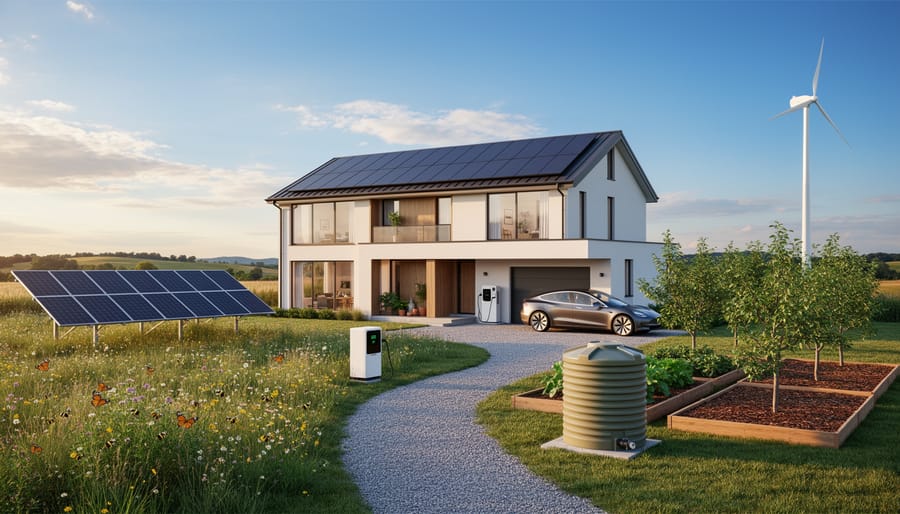
Energy sustainability represents a balanced approach to meeting current energy needs while preserving the capacity of future generations to meet theirs. At its core, the concept rests on the three pillars of sustainability: environmental protection, economic viability, and social equity. Unlike terms often used interchangeably, each carries distinct meaning in energy planning.
- Energy Sustainability
- An approach that balances environmental health, economic feasibility, and social fairness across the entire energy system, from generation through consumption and disposal.
- Renewable Energy
- Energy derived from natural sources that replenish faster than they’re consumed, such as sunlight, wind, or flowing water.
- Energy Security
- The reliable availability of energy sources at affordable prices, protecting against supply disruptions and price volatility.
- Intergenerational Equity
- The principle that today’s energy choices shouldn’t compromise the resources, climate stability, or options available to future generations.
The environmental pillar demands that energy production and use minimize ecosystem damage, reduce greenhouse gas emissions, and protect finite resources. This is where understanding renewable vs nonrenewable sources becomes critical, it’s not just about switching fuels, but about matching consumption to natural replenishment cycles.
Economic viability ensures energy systems remain financially sound without relying on endless subsidies or externalizing costs onto communities through pollution or health impacts. A sustainable energy project must generate value over its full lifecycle, accounting for construction, operation, maintenance, and eventual decommissioning.
Social equity addresses who benefits from energy systems and who bears their burdens. Sustainable energy considers energy access for underserved populations, fair wages for workers, community health impacts, and meaningful local engagement in energy decisions.
Here’s the crucial distinction: a project can be renewable without being sustainable. A hydroelectric dam might generate clean electricity yet displace communities and destroy river ecosystems. Solar panels reduce emissions during operation but require responsible mining practices and end-of-life recycling to truly qualify as sustainable. This explains why coal can’t renew it fails on both replenishment timescale and environmental impact.
True energy sustainability demands we evaluate all three pillars simultaneously, making trade-offs transparent and seeking solutions that advance environmental health, economic resilience, and social justice together rather than sacrificing one for another.
How Energy Sustainability Works in Practice
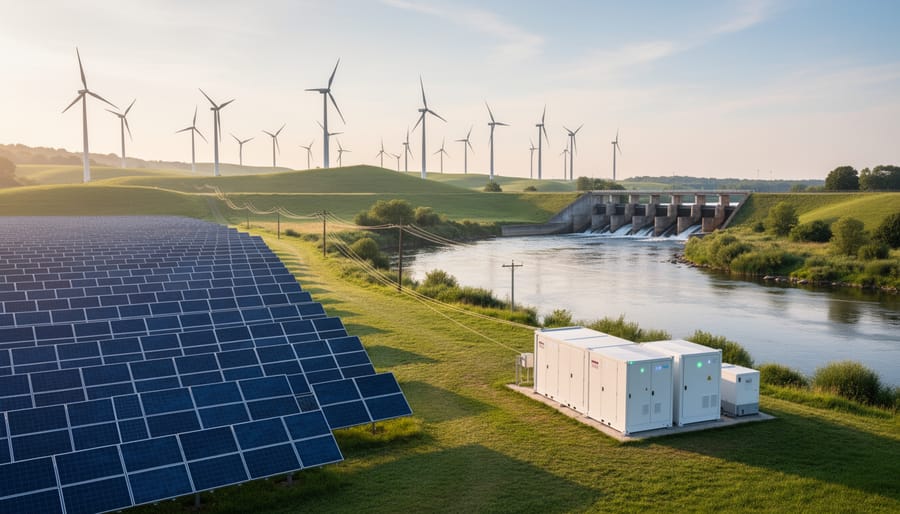
The Resource Balance Principle
The resource balance principle forms the foundation of energy sustainability: the rate at which we consume energy must align with the rate at which we can replenish it without depleting resources or harming the environment. Think of it like a bank account where withdrawals shouldn’t exceed deposits over time.
Solar power demonstrates this principle clearly. A photovoltaic array generates electricity when sunlight hits the panels, converting a renewable resource, solar radiation, into usable energy. The sun replenishes this resource daily, making it inherently sustainable as long as consumption patterns respect generation capacity. The relationship between solar and grid systems exemplifies this balance in action, where grid operators must match variable solar output with real-time demand.
However, achieving true balance requires more than simply installing panels. A 100-megawatt solar farm might generate peak power for six hours daily, producing 600 megawatt-hours. If local demand totals 800 megawatt-hours across 24 hours, the system remains out of balance without storage or complementary generation sources.
Sustainable energy systems address this through diversification, combining solar with wind, which often peaks during different hours, and through efficiency measures that reduce overall demand. The principle isn’t about perfect moment-to-moment matching but about ensuring long-term renewal capacity meets or exceeds consumption needs without degrading the resource base.
Lifecycle and Systems Thinking
True energy sustainability extends far beyond a power plant’s operational emissions. It demands an entire life cycle assessment that traces environmental and social impacts from raw material extraction through manufacturing, transportation, installation, decades of operation, and eventual decommissioning or recycling.
Consider a utility-scale solar installation. The panels themselves generate zero-emission electricity for 25 to 30 years, but their sustainability profile includes mining silicon and rare earth elements, energy-intensive manufacturing processes, transportation across continents, and disposal or recycling at end-of-life. A genuinely sustainable approach accounts for all these stages, measuring total carbon footprint, water use, habitat disruption, and waste generation across the entire system.
This systems thinking reveals hidden trade-offs. An electric vehicle charged with coal power may produce more lifetime emissions than an efficient hybrid. A hydroelectric dam provides clean generation but can disrupt river ecosystems and displace communities. Wind turbines require concrete foundations and rare earth magnets, creating upstream impacts that must be weighed against decades of clean operation.
The Danish energy company Ørsted illustrates this approach in practice. When planning offshore wind farms, they conduct comprehensive lifecycle assessments covering seabed preparation, turbine manufacturing, cable installation, operational maintenance, and planned decommissioning 30 years ahead. They measure impacts on marine life, calculate embedded carbon in supply chains, and plan for blade recycling before the first turbine spins. This lifecycle perspective identifies improvement opportunities at each stage, from selecting suppliers with renewable-powered factories to developing turbine designs that simplify future recycling.
Systems thinking also connects energy projects to broader economic and social systems, ensuring that environmental gains don’t create new problems elsewhere.
Core Components of Sustainable Energy Systems
Renewable Generation Technologies
Renewable generation technologies form the backbone of sustainable energy systems by producing electricity without depleting finite resources or generating carbon emissions. Solar photovoltaic panels convert sunlight directly into electricity, now achieving over 25% efficiency in commercial installations while costs have dropped more than 90% since 2010. Wind turbines harness kinetic energy from air movement, with modern offshore installations generating up to 15 megawatts per turbine. Hydroelectric systems capture the energy of flowing water, providing both steady baseload power and rapid-response storage through pumped hydro facilities. Geothermal plants tap heat from the Earth’s interior, delivering consistent output regardless of weather conditions, particularly valuable in tectonically active regions.
Sustainable biomass rounds out these alternatives to fossil fuels converting organic waste into energy while maintaining carbon neutrality through careful forest management and agricultural practices. Each technology offers distinct advantages: solar scales from rooftop arrays to gigawatt desert installations, wind excels in coastal and plains regions, hydro provides storage capabilities, geothermal delivers uninterrupted generation, and biomass handles waste streams. The environmental impact varies by implementation, but all avoid the carbon emissions and air pollution associated with fossil combustion when properly deployed.
Energy Storage and Grid Flexibility
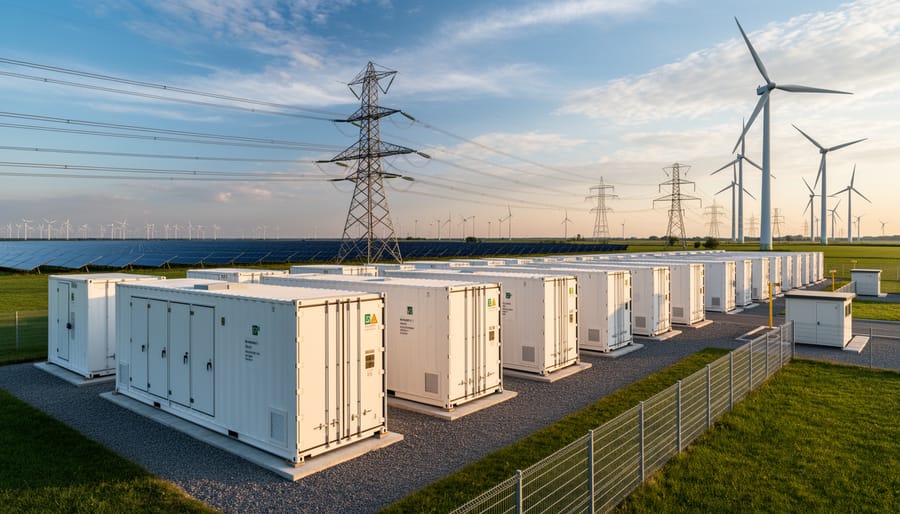
Storage technologies bridge the gap between when sustainable energy is generated and when it’s actually needed. Without storage, a wind farm’s output at 2 AM has no value if demand peaks at 6 PM, and grid operators would need fossil fuel plants on standby for those evening hours.
Battery systems now anchor this solution. Utility-scale lithium-ion installations store excess solar power during midday and discharge during evening peaks, maintaining grid stability without carbon emissions. Australia’s Hornsdale Power Reserve demonstrated this in practice, responding to grid disturbances in milliseconds while displacing gas peaker plants.
Pumped hydroelectric storage, pumping water uphill when renewable generation exceeds demand, then releasing it through turbines when needed, provides longer-duration backup. It’s mature technology that accounts for 90% of global energy storage capacity in 2026.
Emerging solutions extend the timeline further. Flow batteries, compressed air systems, and even gravity-based storage using concrete blocks offer days or weeks of capacity rather than hours. These technologies matter because truly sustainable grids need storage that matches seasonal patterns, not just daily cycles.
The sustainability calculus includes manufacturing impact: responsible sourcing of lithium and cobalt, recyclable battery chemistries, and storage infrastructure designed for 20-plus-year lifespans.
Smart Infrastructure and Efficiency
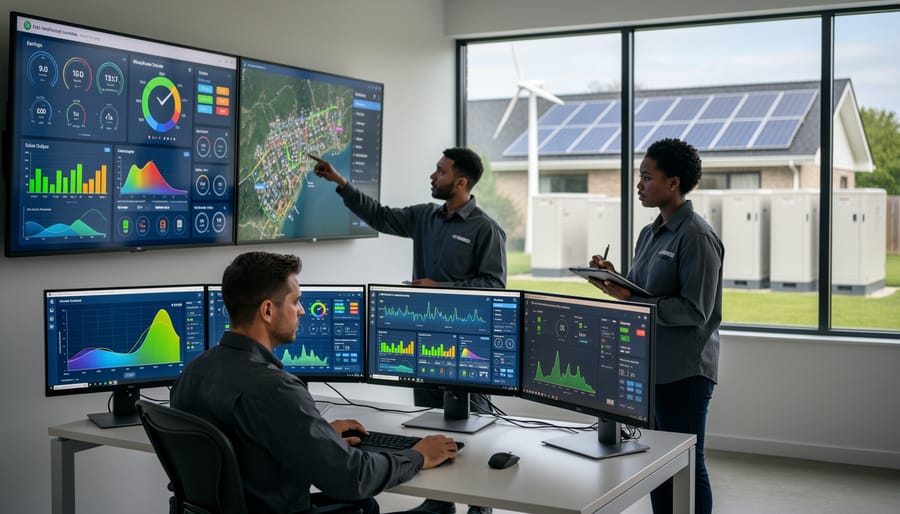
Modern grid technology transforms how we manage energy by replacing analog systems with digital networks that communicate in real time. Smart meters, sensors, and automated controls gather data on electricity flow across the system, allowing operators to detect problems instantly and reroute power around outages. This two-way communication enables utilities to balance supply and demand with precision that would be impossible in traditional grids.
Demand response programs leverage this connectivity by giving consumers and businesses incentives to shift electricity use away from peak hours. A manufacturer might run heavy equipment overnight when renewable generation is abundant, or a household thermostat might pre-cool a home before evening demand surges. These voluntary adjustments reduce the need for backup fossil fuel plants while lowering costs for participants.
Energy efficiency measures work alongside smart infrastructure to minimize waste throughout the system. LED lighting uses 75% less energy than incandescent bulbs. High-efficiency HVAC systems adjust output based on occupancy and weather conditions rather than running at full capacity constantly. Building management systems coordinate lighting, heating, and ventilation to eliminate redundant operation.
The combination delivers measurable results. Smart grid deployments typically reduce energy losses during transmission by 15-30%, while comprehensive efficiency programs can cut building energy use by 20-40%. These improvements make renewable energy go further without requiring additional generation capacity.
Where Energy Sustainability Is Applied Today
Utility and Grid-Scale Applications
Electric utilities are transforming their operations by integrating large-scale renewable installations, energy storage, and smart grid technology to deliver reliable power while reducing carbon emissions. These grid-scale projects demonstrate how sustainable energy principles work at the system level, balancing environmental goals with economic constraints and social needs for dependable electricity.
California’s Clean Power Alliance provides a clear example of successful utility-scale transition. Launched in 2018 and serving nearly 3 million residents by 2026, the alliance shifted from 50% renewable energy to 100% carbon-free power through strategic procurement and infrastructure upgrades. The organization combined utility-scale solar farms with battery storage facilities capable of dispatching power during evening demand peaks, addressing intermittency challenges that once limited renewable adoption. By negotiating long-term power purchase agreements with wind and solar developers, they locked in stable pricing while financing new generation capacity.
The transition required coordination across multiple fronts. Grid operators installed advanced metering infrastructure to monitor real-time supply and demand, enabling dynamic load balancing. Distribution networks were upgraded to handle bidirectional power flows as rooftop solar fed electricity back into the system. Energy storage facilities provided grid stabilization services previously supplied by natural gas peaker plants.
Most significantly, the alliance maintained rate affordability while transitioning to eco-friendly energy sources, demonstrating that sustainability and economic viability can align at utility scale. This case shows how coordinated planning, infrastructure investment, and policy support enable utilities to implement sustainable energy systems that serve millions of customers reliably.
Industrial and Commercial Sectors
Manufacturing facilities, data centers, and commercial buildings are proving that energy sustainability can deliver both environmental and economic returns at industrial scale.
Modern manufacturers are integrating on-site solar arrays with cogeneration systems that capture waste heat for production processes. A pharmaceutical plant in Ireland reduced grid dependence by 60% through this approach, cutting emissions while stabilizing energy costs against volatile markets. Advanced sensors monitor energy use across production lines in real time, automatically shifting high-demand operations to periods when renewable generation peaks.
Data centers face unique sustainability challenges given their constant power requirements. Leading facilities now combine renewable energy contracts with liquid cooling systems that slash energy consumption by 30% compared to traditional air cooling. Some operators time computational workloads to match renewable availability, running intensive processing tasks when solar or wind output is highest.
Commercial office buildings are achieving net-zero operation through integrated design: high-performance building envelopes, LED lighting with occupancy sensors, heat pumps replacing gas boilers, and rooftop solar feeding on-site battery storage. A 2025 analysis found that comprehensively retrofitted commercial buildings typically achieve 40-50% energy reductions with payback periods under seven years, demonstrating that sustainability aligns with financial prudence.
Community and Residential Scale
At the community and household level, energy sustainability takes tangible form through rooftop solar arrays, home battery systems, and local microgrids that allow neighborhoods to generate and share power. A growing number of residential developments in 2026 incorporate solar panels paired with energy storage, enabling homes to operate independently during grid outages while reducing reliance on fossil fuels. Community solar projects let apartment dwellers and renters access clean energy without installing equipment on their own properties. Smart home systems optimize energy use by scheduling high-consumption appliances during peak solar production hours, cutting waste and lowering bills. Local microgrids, where groups of buildings share generation and storage resources, demonstrate how distributed systems can enhance resilience while maintaining sustainability principles, proving that the shift toward sustainable energy doesn’t require massive infrastructure overhauls but can start with individual choices and neighborhood collaboration.
Common Questions About Energy Sustainability
The path to energy sustainability raises practical questions that deserve straightforward answers. These concerns come from homeowners evaluating solar panels, business leaders planning infrastructure upgrades, and policy makers weighing investment priorities.
How is energy sustainability different from carbon neutrality?
Energy sustainability encompasses the full lifecycle of energy systems, including resource extraction, social equity, and economic viability, while carbon neutrality focuses specifically on balancing carbon emissions through offsets or reduction. A carbon-neutral system might still deplete non-renewable resources or create social inequities, whereas sustainable energy addresses all three pillars simultaneously.
Can energy sustainability be affordable for average consumers?
Yes, sustainable energy has become increasingly cost-competitive, with solar and wind now cheaper than fossil fuels in most markets. While upfront costs for residential systems can be significant, falling equipment prices, financing options, and long-term savings on energy bills make sustainable solutions accessible to a growing number of households.
What role does nuclear power play in energy sustainability?
Nuclear energy provides reliable, low-carbon baseload power and is considered by many experts as part of a sustainable energy mix, particularly for regions with limited renewable resources. However, concerns about waste disposal, high capital costs, and long construction timelines mean its role varies significantly by location and policy framework.
How long does the transition to sustainable energy take?
Timelines vary widely depending on scale and starting point. Individual buildings can transition in months, while utility grids typically require five to fifteen years for major shifts, and complete national transitions span decades. The pace depends on existing infrastructure, political will, financing availability, and technological deployment rates.
Is 100% renewable energy actually achievable?
Several regions and countries already operate on 100% renewable electricity for extended periods, proving technical feasibility. Achieving this consistently across all sectors, including transportation and industry, presents greater challenges but becomes more realistic as storage technology improves and system integration advances.
One common misconception deserves particular attention: the belief that sustainable energy means accepting reduced reliability or comfort. Modern sustainable systems, when properly designed with adequate storage and grid flexibility, match or exceed the reliability of conventional power. Denmark and Uruguay demonstrate this reality, maintaining grid stability while sourcing the majority of their electricity from wind and hydro respectively.
Another frequent concern centers on materials and manufacturing. Critics rightly point out that solar panels and batteries require mining and processing. The difference lies in scale and lifecycle: once installed, these systems generate energy without ongoing fuel extraction, and recycling programs are rapidly improving recovery rates for components like lithium and silicon.
Energy sustainability isn’t a distant aspiration, it’s a practical framework already reshaping how we generate, distribute, and consume power across every sector. We’ve explored its definition rooted in environmental, economic, and social balance, examined the mechanisms that make it work through resource management and lifecycle thinking, and seen its real-world applications from utility grids to individual homes.
The path forward requires continued innovation in storage technologies, smarter infrastructure, and policies that support long-term transitions rather than short-term fixes. What’s encouraging is that the fundamentals are proven: renewable generation scales, storage solutions improve, and integrated systems deliver measurable results.
Success depends on maintaining that three-pillar balance. Environmental gains mean little if systems aren’t economically viable or equitably accessible. Economic efficiency rings hollow without protecting ecosystems or ensuring fair energy access. This holistic approach distinguishes genuine sustainability from greenwashing.
The trajectory is clear. As technology costs decline and implementation experience grows, sustainable energy systems will become the standard rather than the alternative. We’re not betting on future breakthroughs to make this work, we’re refining and scaling solutions that already function today.