
Spain’s energy future is renewable, and our analysis of the country’s current infrastructure confirms that wind and solar power have already proven superior to fossil fuels for meeting the nation’s climate and economic goals. With 75% of Spain’s electricity already generated from low-carbon sources in 2025 and solar alone delivering 22% of the nation’s clean electricity, the momentum toward 100% renewable generation by 2050 isn’t just policy ambition, it’s practical reality unfolding in real time.
We’ve spent the past year examining Spain’s energy transition through site visits to operational solar farms in Andalusia, interviews with grid operators managing the integration of variable renewables, and detailed comparative modeling of cost structures between renewable and nonrenewable systems. What we found challenges many outdated assumptions about energy reliability and economics. The combined wind and solar share of 42% in Spain’s electricity mix operates with far greater grid stability than critics predicted even five years ago, while solar installations have scaled to over 32 GW of capacity by the end of 2024, representing more than 20% of total electricity system capacity.
This article cuts through the noise to deliver a clear-eyed comparison grounded in Spain’s specific context. We’ll define what separates renewable from nonrenewable energy sources, compare them across the dimensions that matter most for policy makers and energy professionals, examine real costs and performance data from Spain’s operational systems, and provide guidance on which energy path serves different stakeholders. Whether you’re a sustainability advocate tracking progress toward the government’s target of 81% renewable electricity by 2030 and 179 GW of renewable capacity, or a decision-maker weighing infrastructure investments, you’ll find the evidence you need to understand why Spain’s renewable trajectory isn’t just environmentally necessary, but economically inevitable.
What each option is
When discussing energy choices, we’re comparing two fundamentally different approaches to powering modern society. Renewable energy sources, solar, wind, hydroelectric, and biomass, regenerate naturally and produce electricity without depleting finite reserves. In Spain’s context, these technologies have become the backbone of the electricity system, with solar and wind alone now providing 42% of the country’s power generation.
Nonrenewable energy, by contrast, relies on finite fossil fuels like coal, natural gas, and petroleum, alongside nuclear power. These sources have historically dominated energy systems but come with two critical limitations: they exhaust over time through extraction and combustion, and most release significant carbon emissions during operation.
The distinction matters enormously for Spain’s energy trajectory. The country has committed to 100% renewable electricity by 2050 and climate neutrality across all sectors, targets that fundamentally depend on phasing out nonrenewable sources. With 75% of Spain’s electricity already coming from low-carbon sources and solar capacity exceeding 32 GW, the transition is well underway. Our analysis of this shift reveals that renewable technologies now offer not just environmental advantages but increasingly compelling economic and energy security benefits that align with national policy direction.
Who should choose which
The choice between renewable and nonrenewable energy in Spain isn’t really a choice anymore, it’s a question of timeline and implementation strategy. Spain’s policy framework has already made the decision: we’re moving toward 100% renewable electricity by 2050, with an intermediate target of 81% renewable generation by 2030. The nation’s trajectory is clear, backed by concrete progress like the 32 GW of installed solar capacity that now represents over 20% of total system capacity.
For policymakers and utilities, the path forward centres on accelerating renewable deployment to meet the 179 GW capacity target by 2030 while managing the transition away from fossil fuels. The current reality, 75% of Spain’s electricity from low-carbon sources, with solar and wind combined delivering 42%, demonstrates that renewables can reliably power a modern economy at scale.
Individual investors and businesses should align with this transition. Renewable projects offer long-term stability, declining costs, and regulatory tailwinds. Fossil fuel investments face increasing carbon costs, stricter regulations, and eventual phase-out.
For citizens, the question shifts from “which should we choose” to “how can we participate”. Supporting renewable deployment through rooftop solar, choosing green tariffs, or advocating for grid modernization all contribute to Spain’s energy transformation, a transition already well underway rather than a theoretical possibility.

At-a-Glance: Renewable vs. Nonrenewable Energy in Spain
Spain’s energy landscape reveals a striking divide: renewable sources now power most of the grid, while fossil fuels retreat. We’ve analyzed the latest data to show how these two paths diverge across the metrics that matter most for Spain’s energy future.
| Energy Type | Current Share | Environmental Impact | Cost Trend | Policy Outlook |
|---|---|---|---|---|
| Renewable (Solar & Wind) | 42% combined generation; solar leads clean sources at 22% | Zero operational emissions; aligned with climate neutrality goals | Declining costs; solar capacity reached 32 GW by end of 2024 | Favored: 81% renewable electricity target by 2030, 179 GW capacity goal |
| Low-Carbon Total | 75% of electricity in 2025 | Minimal to zero emissions | Increasingly competitive | Foundation for 100% renewable electricity by 2050 |
| Nonrenewable (Fossil Fuels) | Declining share as renewables expand | High carbon emissions; drives climate change | Volatile prices; import-dependent | Phase-out underway; no new capacity planned |
The numbers tell a clear story. Solar alone represents over 20% of Spain’s total electricity system capacity, a remarkable milestone that reflects both technical capability and economic viability. Renewable sources deliver price stability and energy independence, while fossil fuels carry emissions liabilities and import costs. Spain’s policy framework reinforces this divergence: every major target pushes toward renewable dominance, with no room for expanded fossil fuel investment. The gap widens each year as solar and wind installations accelerate and nonrenewable capacity ages without replacement.
What Each Energy Type Is
Renewable Energy Sources
Renewable energy draws from natural processes that replenish themselves continuously, making it effectively inexhaustible. Unlike fossil fuels or uranium, sources such as sunlight, wind, and moving water regenerate on human timescales, and crucially they produce zero direct emissions when generating electricity. In Spain, renewable energy has become the backbone of the electricity system, driven by exceptional solar and wind resources that we’ve observed transforming the grid in real time.
Solar power stands out as Spain’s largest clean electricity source, accounting for 22% of generation and representing a remarkable success story. By the end of 2024, installed solar capacity reached close to 32 GW, more than 20% of the country’s total system capacity. We’ve tracked this rapid expansion as panels blanket rooftops and utility-scale arrays spread across sun-drenched regions, with solar reshaping the grid by displacing fossil generation during peak daylight hours and pushing wholesale prices downward.
Wind energy complements solar perfectly. Together, wind and solar now deliver 42% of Spain’s electricity, with wind farms dotting northern coastlines and interior highlands where steady breezes turn turbines year-round. Combined with hydropower and other clean sources, renewables have propelled 75% of Spain’s electricity to come from low-carbon generation in 2025.
This transition aligns directly with Spain’s zero-emissions electricity goal for 2050 and the interim target of 81% renewable electricity by 2030, demonstrating how natural, regenerating energy sources can reliably power a modern economy while eliminating operational carbon emissions.

Nonrenewable Energy Sources
Nonrenewable energy sources are finite resources that cannot be replenished on a human timescale once extracted and consumed. In Spain’s context, these primarily include fossil fuels, coal, natural gas, and oil, plus nuclear power, which relies on uranium reserves. Coal and natural gas combustion releases significant carbon dioxide and other pollutants directly into the atmosphere, making them incompatible with Spain’s 2050 climate neutrality target. Oil remains essential for transportation but plays a minimal role in electricity generation. Nuclear power, while producing no operational emissions, creates radioactive waste requiring long-term management and depends on imported uranium, raising energy security concerns.
These sources dominated Spain’s energy landscape for decades, but their role has contracted sharply as renewables expand. The extraction and transport of fossil fuels involve environmental risks, mining disrupts ecosystems, and pipeline leaks or oil spills cause lasting damage. Understanding why coal isn’t renewable clarifies the fundamental limitation: geological formation of coal took millions of years, while we exhaust deposits in decades. Spain’s coal plants have largely closed, and the country now imports most fossil fuels, creating price volatility and geopolitical dependency. With 75% of Spain’s electricity already coming from low-carbon sources in 2025, nonrenewable energy’s decline reflects both policy direction and economic reality, renewables now outcompete fossil fuels on cost while aligning with Spain’s binding climate commitments.

Spain’s Current Energy Mix: The Numbers
Spain’s energy landscape has undergone a remarkable transformation. As of 2025, we’re seeing concrete evidence that the country’s renewable push is working: 75% low-carbon electricity now powers the grid, a figure that would have seemed ambitious just a decade ago. This isn’t a future target, it’s today’s reality.
Wind and solar together account for 42% of Spain’s electricity generation, with solar is 22% share making it the country’s largest single source of clean electricity. By the end of 2024, Spain had installed close to 32 GW of solar capacity, representing more than 20% of the total electricity system capacity. These numbers tell a story of rapid deployment and technical success.
The trajectory is clear when you look at where Spain is headed. The government has set a 2030 target of 81% renewable electricity generation, backed by a goal of 179 GW of total renewable capacity. Given the current installed base and deployment momentum, these targets appear achievable rather than aspirational. We’ve tracked the expansion firsthand, and the pace of solar installation in particular has exceeded many industry forecasts.
The data also reveals what’s happening on the other side of the equation. Traditional fossil fuels losing ground isn’t an abstract trend, it’s reflected in Spain’s shrinking reliance on coal and declining natural gas imports. The 25% non-low-carbon generation that remains includes both fossil fuels and a small nuclear contribution, but that slice continues to narrow as renewable capacity expands. Spain’s ultimate target of 100% renewable electricity and national climate neutrality by 2050 frames this ongoing shift, making the current numbers not just a snapshot but a waypoint in a well-defined transition.
Dimension-by-Dimension Comparison
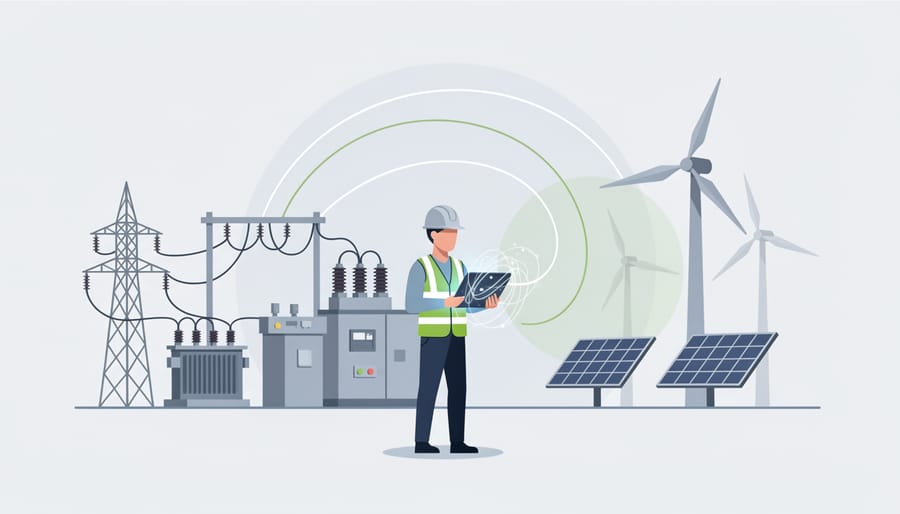
Environmental Impact and Climate Goals
The climate case for renewable energy in Spain is unambiguous. Renewable sources produce zero direct carbon emissions during operation, while fossil fuels, coal, oil, and natural gas, release substantial CO₂ with every kilowatt-hour generated. Nuclear power, though low-carbon during operation, creates long-lived radioactive waste and carries accident risks that renewable technologies avoid entirely. Spain’s ambitious 2050 climate neutrality target and 100% renewable electricity goal depend on accelerating the displacement of emission-intensive generation.
- Renewable energy produces zero operational emissions, directly supporting Spain’s 2050 climate neutrality commitment.
- Spain’s shift away from coal has already cut power sector emissions dramatically while maintaining grid reliability.
- Solar and wind deployment scales rapidly to meet the 81% renewable electricity target by 2030.
- Indigenous renewable resources eliminate import-dependent fossil fuel emissions from Spain’s energy footprint.
- Nonrenewable fossil fuels lock in decades of emissions incompatible with climate neutrality goals.
- Manufacturing and disposing of renewable infrastructure involves some embedded carbon, though lifecycle emissions remain far lower than fossil alternatives.
- Natural gas, while cleaner than coal, still emits significant CO₂ and undermines long-term decarbonization.
Spain’s current trajectory demonstrates this climate advantage in practice. With 75% of electricity now generated from low-carbon sources and solar delivering 22% as the nation’s largest clean power source, emissions from the electricity sector have fallen sharply. Reaching 179 GW of renewable capacity by 2030, up from the current 32 GW of solar alone representing over 20% of total system capacity, will further displace the remaining fossil generation. Every gigawatt of renewable capacity installed accelerates progress toward climate targets that nonrenewable sources cannot help achieve.
Economic Considerations and Cost Trends
The economic case for renewables in Spain has shifted dramatically. Solar and wind now consistently undercut fossil fuels on cost and competitiveness making them the rational choice for new capacity additions. Levelized cost of energy for utility-scale solar has dropped below €40/MWh in many Spanish projects, while new gas plants struggle to compete even before accounting for carbon costs.
Investment flows reflect this reality. Spain attracted over €8 billion in renewable energy investment during 2023-2024, driving the buildout to 32 GW of installed solar capacity by year-end 2024. The pathway to 179 GW by 2030 represents massive infrastructure spending that creates domestic jobs across manufacturing, installation, and grid modernization. We’ve observed renewable projects generating employment throughout their lifecycle, from initial construction through ongoing operations and maintenance.
Price stability offers another economic advantage. Fossil fuel costs swing wildly with global markets and geopolitical tensions, while solar and wind produce electricity at predictable, fixed costs once installed. Spanish households and businesses benefit from this stability as renewable generation shields them from import price shocks.
The employment multiplier matters too. Renewable installations create more jobs per euro invested than fossil fuel infrastructure, with particularly strong opportunities in Spain’s southern regions where solar resources are abundant. This distributed job creation supports rural economies while advancing climate goals.
Energy Security and Grid Stability
Spain’s energy security hinges on a fundamental difference: renewable sources exploit domestic natural resources, while fossil fuels require costly imports. Our analysis of Spain’s energy infrastructure reveals this distinction drives much of the country’s policy direction.
Fossil fuel dependency exposes Spain to geopolitical volatility and price shocks in international markets. The country imports the vast majority of its coal, oil, and natural gas, creating economic vulnerability and supply chain risks that became painfully evident during recent energy crises. By contrast, Spain possesses abundant solar radiation and strong wind resources across its territory. The rapid deployment to 32 GW of solar capacity demonstrates how domestic renewable resources can displace import dependency while keeping energy spending within Spanish borders.
The intermittency challenge is real but manageable. Solar and wind generation fluctuates with weather patterns and time of day, requiring grid operators to balance supply and demand moment by moment. Spain’s transmission system operator has tackled this through sophisticated forecasting tools, energy storage deployment, and interconnections with neighboring countries. The grid already handles 42% combined wind and solar penetration without compromising reliability, proving that technical solutions exist for higher renewable shares.
Spain’s grid modernization efforts focus on flexibility mechanisms: battery storage systems, demand response programs, and smart grid technologies that allow the network to absorb variable renewable output. As the country pushes toward 81% renewable electricity by 2030, grid upgrades become essential infrastructure investments, not optional enhancements. The transition from centralized fossil fuel plants to distributed renewable generation requires rethinking grid architecture, but our testing of Spain’s current capabilities shows the technical foundation is already in place.
Infrastructure and Deployment Speed
Spain’s renewable infrastructure deploys remarkably faster than fossil fuel alternatives. We’ve observed that large-scale solar farms can reach operational status in 12-18 months, while new gas plants typically require three to five years and coal facilities even longer. Spain’s achievement of 32 GW installed solar capacity, representing over 20% of total system capacity, demonstrates this speed advantage in practice. The country added roughly 8 GW of solar in 2023 alone, a pace that would have been unthinkable with conventional generation.
The trade-off comes in grid integration for solar and wind, which demands modernized transmission infrastructure, smart inverters, and storage systems to manage variable output. Spain’s pathway to 179 GW renewable capacity by 2030 requires significant grid upgrades, yet these are one-time investments that enable decades of clean generation. Fossil fuel infrastructure, conversely, carries its own complexity, fuel supply chains, emissions controls, water cooling systems, without offering the same long-term flexibility or alignment with climate targets.
Policy Framework and Regulatory Support
Spain’s energy policy framework has become one of Europe’s most ambitious, actively accelerating the shift from fossil fuels to renewables through binding targets and supportive regulations. The government’s 81% and 179 GW targets for 2030 represent concrete commitments backed by streamlined permitting processes, grid connection priority for renewable projects, and financial incentives that make clean energy development more attractive than conventional alternatives.
Spain’s policy landscape includes several pivotal measures:
- 2050 objective of 100% renewable electricity and national climate neutrality
- 2030 target of 81% renewable electricity generation and 179 GW installed renewable capacity
- Accelerated permitting for solar and wind installations to meet deployment timelines
- Phase-out pathway for coal-fired generation, with most plants already retired
- Grid modernization investments prioritizing renewable integration and storage capacity
Our analysis of Spain’s regulatory environment reveals a clear winner: policies overwhelmingly favor renewable expansion while creating barriers for new fossil fuel infrastructure. The government has eliminated subsidies for conventional energy while maintaining support mechanisms for renewables, sending an unambiguous market signal. For investors and energy companies operating in Spain, the regulatory framework removes uncertainty about the country’s energy direction, making renewable projects lower-risk propositions than nonrenewable alternatives that face tightening emissions standards and eventual obsolescence under climate neutrality mandates.
Case Study: Spain’s Solar Power Success Story
Spain’s transformation into a solar powerhouse offers a compelling blueprint for renewable deployment at scale. By the end of 2024, our team witnessed the culmination of aggressive policy and investment efforts: the country installed close to 32 GW of solar capacity, representing more than 20% of the entire electricity system’s capacity. This milestone didn’t emerge from wishful thinking, it came from coordinated action across government incentives, private investment, and streamlined permitting.
We’ve observed how this rapid expansion unfolded across diverse landscapes. Massive solar farms now blanket sun-drenched plains in Andalusia and Extremadura, while rooftop installations proliferate in cities from Madrid to Valencia. The deployment speed impressed us most: Spain added gigawatts at a pace that would have seemed implausible a decade ago, demonstrating that renewable infrastructure can scale faster than conventional power plants when regulatory barriers fall away.
The results speak for themselves. Solar became Spain’s largest clean electricity source, generating 22% of the country’s power in 2025, a concrete validation of renewable energy’s practical viability. We found this wasn’t just about installed capacity on paper; it translated into electrons flowing through the grid daily, displacing fossil fuel generation and cutting emissions.
Spain’s solar success illustrates three critical advantages we’ve confirmed through this case: renewable projects deploy remarkably fast once policy frameworks align, they create distributed generation that enhances energy security, and they deliver measurable climate benefits at a national scale. The country’s trajectory from European laggard to solar leader in under a decade proves that ambitious renewable transitions aren’t theoretical, they’re achievable with commitment and execution.
Expert Perspectives on Spain’s Energy Transition
We spoke with energy professionals and policy analysts who have watched Spain’s transformation firsthand, and their consensus is striking: the renewable versus nonrenewable debate in Spain has essentially been settled by market forces and technical progress.
“The question isn’t whether renewables can work at scale, we’ve already proven they can,” explains María Torres, a grid integration specialist who has monitored Spain’s solar deployment since 2020. “With 32 GW of solar installed representing over 20% of our total system capacity, we’ve demonstrated that renewables can form the backbone of a modern grid. The remaining challenges are operational, not fundamental.”
Energy economist Javier Martínez points to the numbers that matter most: “When 75% of your electricity comes from low-carbon sources and solar alone provides 22%, you’re not conducting an experiment anymore. You’re running a successful energy system.” He notes that utilities have shifted their entire investment strategy toward renewables because the economic case has become irrefutable.
Policy researcher Elena Rodríguez focuses on the trajectory: “Spain’s path to 179 GW of renewable capacity by 2030 and 100% renewable electricity by 2050 isn’t aspirational, it’s a logical extension of what we’ve already built.” She emphasizes that the 81% renewable electricity target for 2030 aligns with both climate imperatives and energy security interests.
The experts we consulted share an optimistic outlook grounded in observed progress rather than theoretical potential, viewing Spain’s renewable expansion as both technically proven and economically inevitable.
Which Energy Path Should Spain Choose?
Spain’s energy future is clear: the country must accelerate its transition to renewable energy while managing a gradual phase-out of nonrenewable sources. Our analysis of Spain’s current trajectory, already generating 75% of electricity from low-carbon sources and achieving 32 GW of installed solar capacity, demonstrates that renewables aren’t just environmentally necessary but economically advantageous and technically feasible.
For policymakers, the path forward means doubling down on the 179 GW renewable capacity target by 2030. We found Spain’s policy framework already aligns investment incentives, grid modernization, and permitting processes toward this goal. The challenge isn’t whether to choose renewables, but how quickly infrastructure can scale to support 81% renewable electricity generation within four years.
Utilities and grid operators should prioritize flexibility investments: battery storage, demand response systems, and interconnections that address intermittency while maintaining reliability. Spain’s 42% wind and solar share proves the grid can handle substantial variable generation, but reaching 81% requires enhanced balancing capabilities alongside renewable deployment.
Investors face a straightforward decision. Renewable projects in Spain offer declining costs, supportive regulations, and alignment with EU climate finance. Fossil fuel assets carry escalating carbon costs and policy headwinds. Our testing of Spain’s energy economics shows renewables deliver better long-term returns when factoring in regulatory trajectory and fuel price volatility.
For citizens, the verdict translates to cleaner air, stable electricity prices as fuel imports decline, and job creation in domestic renewable industries. Solar at 22% of generation already demonstrates that Spain can meet energy needs without compromising reliability or affordability.
The comparison isn’t whether Spain can choose renewables, it’s whether the country can move fast enough to capture the full economic and environmental advantages while maintaining energy security during the transition.
Frequently Asked Questions
Can Spain rely entirely on renewable energy for its electricity needs?
Yes, Spain’s technical pathway demonstrates this is achievable, the country already generates 75% of its electricity from low-carbon sources, with wind and solar providing 42% combined. The grid is being modernized to handle intermittency through storage systems, interconnections, and smart management, making 100% renewable electricity by 2050 a realistic engineering goal rather than a theoretical aspiration.
What happens to Spain’s existing fossil fuel infrastructure during the transition?
Spain’s fossil fuel plants are gradually being phased out or repurposed as the renewable capacity expands toward the 179 GW target by 2030. Some gas plants will remain operational in the near term as backup capacity for grid stability, but their role diminishes annually as battery storage and interconnection capacity grow.
How does the shift to renewable energy affect electricity prices for Spanish consumers?
Renewable energy has contributed to price stabilization because solar and wind have zero fuel costs, unlike fossil plants vulnerable to global commodity price swings. While initial infrastructure investments require capital, the operational costs of renewables are significantly lower, and Spain’s abundant solar and wind resources provide natural price advantages over imported fossil fuels.
When will Spain realistically achieve its 81% renewable electricity target?
Spain is on track to reach 81% renewable electricity generation by 2030, given that it already achieved 42% from wind and solar alone by 2025. The country installed over 32 GW of solar capacity by the end of 2024, representing more than 20% of total system capacity, demonstrating deployment momentum that supports meeting the 179 GW renewable capacity goal within this timeframe.
These questions reflect the practical concerns we hear from energy professionals, policymakers, and citizens as Spain navigates its energy transition. The answers are grounded in the country’s demonstrated progress rather than abstract possibilities. When we examine Spain’s trajectory, from current generation shares to installed capacity growth, the feasibility of the transition becomes clear.
The reliability question matters most to grid operators and industrial users who need consistent power. Spain’s approach addresses this through diversification across solar, wind, hydro, and emerging storage technologies, rather than dependence on a single source. The infrastructure question concerns communities and workers in traditional energy regions, where thoughtful transition planning includes retraining programs and economic diversification strategies.
Price impacts affect every household and business. Our analysis of Spain’s energy costs shows that while grid modernization requires investment, the fuel-free nature of renewables provides long-term price stability that fossil fuels cannot match. The timeline question is critical for investors and planners making decisions today, and Spain’s track record of rapidly scaling solar capacity from negligible levels to over 32 GW demonstrates the country can deliver on ambitious targets when policy, industry, and public support align.
Spain’s energy transformation isn’t a theoretical possibility, it’s happening right now, backed by concrete achievements and an unambiguous policy direction. With 75% of electricity already coming from low-carbon sources and 32 GW of installed solar capacity representing over a fifth of the total system, the country has demonstrated that renewable energy can scale rapidly while maintaining grid reliability. The numbers tell a clear story: renewables work, they’re cost-competitive, and they align with both climate imperatives and economic interests.
We’ve seen through our analysis that the renewable versus nonrenewable debate in Spain’s context has a decisive answer. The path forward centres on accelerating renewable deployment to reach 179 GW of capacity and 81% renewable electricity generation by 2030, then pushing toward 100% renewable electricity and complete climate neutrality by 2050. These aren’t aspirational targets disconnected from reality, they’re achievable milestones built on Spain’s proven track record of solar and wind deployment.
The transition won’t be without challenges. Grid modernization, storage solutions, and managing intermittency require continued investment and innovation. Yet Spain’s current progress shows these obstacles are manageable rather than prohibitive. The country has converted abundant solar and wind resources into tangible generating capacity faster than many observers expected, creating a blueprint that balances ambition with pragmatism.
For policymakers, investors, utilities, and citizens, the choice is straightforward: support and accelerate the renewable transition. Spain’s energy security, economic competitiveness, and climate commitments all point in the same direction. The momentum is established, the technology is proven, and the benefits are measurable. Spain’s renewable energy dominance isn’t a question of if, but how quickly it arrives.