
Achieving a clean energy future requires coordinated action across three essential pillars: setting short- and medium-term emissions targets, accounting comprehensively for all greenhouse gases, and demonstrating sustained progress toward net zero. The International Energy Agency has mapped a clear pathway for the global energy sector to reach net zero by 2050, with electricity generation hitting net zero emissions by 2040 worldwide. This isn’t aspirational thinking. It’s a practical roadmap grounded in technological readiness, policy frameworks, and growing global commitment.
The momentum behind this transition is substantial. At COP25, the Climate Ambition Alliance brought together 120 countries plus the European Union, 400 cities, 800 businesses, and 15 states and regions working toward net zero commitments. As of 2026, the Energy and Climate Intelligence Unit estimates that 123 countries have expressed interest in achieving net zero. What separates genuine progress from hollow pledges is how these commitments translate into verifiable action.
This article walks you through the practical steps to build and implement a credible clean energy plan, whether you’re shaping policy at the national level, guiding organizational strategy, or advocating for sustainable transitions in your community. You’ll learn how to establish meaningful targets, develop comprehensive accounting systems, and verify real progress. The framework draws from international best practices while remaining flexible enough to adapt to regional contexts and resource constraints.
The transition to clean energy isn’t a distant possibility waiting on breakthrough technology. The tools exist now. The question is how to deploy them systematically, measure their impact accurately, and maintain the political and financial commitment needed to see the transformation through.
Understanding the Tools and Framework for Clean Energy Transition
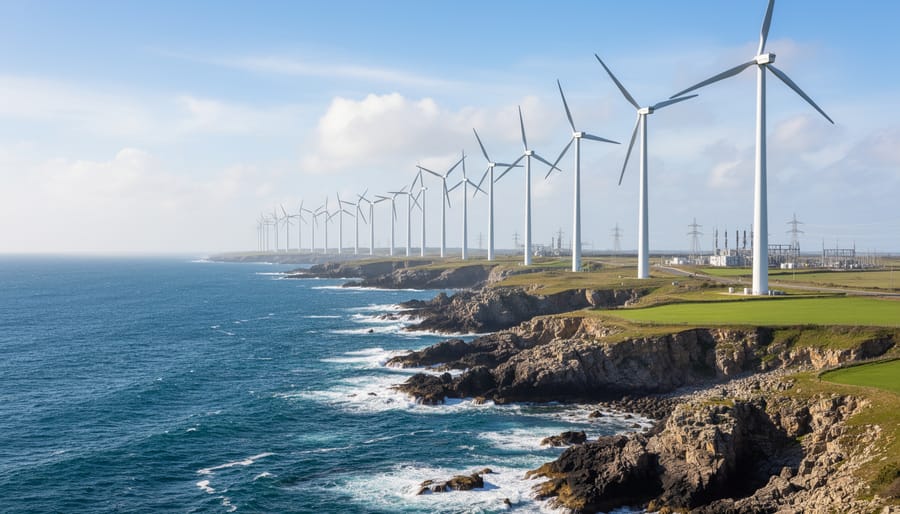
The Global Policy Toolkit
The global energy transition toward net zero demands more than aspirational pledges. It requires a robust policy framework built on accountability, transparency, and verifiable action. Currently, 123 countries have expressed interest in achieving net zero, representing significant momentum. However, interest alone does not constitute a credible plan.
A credible national net zero strategy must include specific, enforceable elements that demonstrate genuine commitment rather than distant promises. These components transform abstract goals into concrete pathways:
- Binding short-term targets for 2030-2035 that show immediate action rather than delayed implementation
- Medium-term milestones for 2035-2045 that bridge near-term efforts to the 2050 endpoint
- Comprehensive greenhouse gas accounting covering all sectors and emission sources, not selective reporting
- Enforcement mechanisms with legal frameworks that ensure compliance and accountability
- Progress tracking systems with regular public reporting and independent verification
These elements ensure that net zero commitments represent more than political posturing. Without short- and medium-term targets, nations can defer action indefinitely while claiming alignment with 2050 goals. Without comprehensive emissions accounting, crucial sectors remain unaddressed, undermining the entire effort. Continued demonstrated effort in reducing emissions, measured through transparent reporting, separates genuine climate leadership from greenwashing. The IEA roadmap sets the electricity sector to achieve net zero by 2040 globally, establishing an interim benchmark that credible plans should meet or exceed through concrete policy action starting now.
Research and Information Resources
Staying informed requires tapping into reliable sources that translate complex energy research into actionable intelligence. Platforms dedicated to clean energy transitions serve as critical hubs where policy developments, technological breakthroughs, and implementation strategies converge. These resources help practitioners separate credible pathways from unsubstantiated claims, particularly as 123 countries express interest in net zero targets and the field rapidly evolves.
Conferences and industry summits play an equally vital role in building the networks that accelerate progress. When 120 countries, 400 cities, and 800 businesses come together through initiatives like the Climate Ambition Alliance, the resulting knowledge exchange shapes real-world implementation. These gatherings connect researchers publishing peer-reviewed findings with policymakers drafting legislation and corporate leaders planning capital deployment, creating feedback loops that refine strategies.
Expert analysis bridges the gap between high-level commitments and operational reality. While the IEA’s roadmap sets a global framework for net zero by 2050, practitioners need guidance on translating those benchmarks into their specific contexts. Quality research platforms curate this expertise, offering sector-specific insights on everything from grid modernization requirements to credible national planning criteria, including the comprehensive emissions accounting and interim milestones that distinguish substantive commitments from vague aspirations.
For stakeholders navigating this transition, consistent engagement with trusted information sources isn’t optional. The pace of policy shifts and technology advancement means yesterday’s assumptions quickly become outdated, making ongoing education essential for effective participation in building clean energy futures.
Critical Considerations Before You Begin
Before committing to a clean energy transition, understand that the path to net zero is littered with well-intentioned failures. The difference between genuine progress and wasted effort often comes down to avoiding a handful of critical mistakes in the planning stage.
The most common pitfall is setting ambitious 2050 targets without binding short- and medium-term milestones. A net zero commitment that leaps straight to a distant deadline creates no accountability for the next decade, when action matters most. Credible plans require specific targets for 2030 and 2035-2040 periods that demonstrate immediate momentum rather than deferred responsibility. The IEA’s pathway, for example, sets electricity generation net zero by 2040 as a crucial interim benchmark, not just a vague 2050 aspiration.
Incomplete emissions accounting represents another major trap. Many organizations focus narrowly on electricity or direct emissions while ignoring transportation, industrial processes, agriculture, and supply chain impacts. True energy sustainability requires comprehensive greenhouse gas accounting across all sectors and scopes. If your plan excludes significant emission sources, you’re solving only part of the problem.
Equally dangerous is neglecting grid reliability and storage infrastructure in renewable deployment plans. Scaling solar and wind without addressing intermittency, transmission constraints, and backup capacity creates system instability that undermines public confidence and slows adoption. The transition requires coordinated investment in smart grids, battery storage, demand response systems, and grid modernization alongside generation capacity.
Finally, avoid the trap of treating climate action as a future concern. Plans that promise aggressive cuts starting in 2030 or 2035 waste the most valuable years we have. Emissions reductions must begin immediately with demonstrated, continued effort rather than backloaded timelines that push difficult decisions onto future administrations or leadership teams.
Step-by-Step Process: Building Your Clean Energy Pathway
Step 1: Establish Net Zero Policy and Binding Targets
Setting credible net zero commitments starts with binding policy frameworks that translate long-term ambition into measurable action. Your first milestone should target 2030 through 2035, establishing a concrete pathway rather than distant promises. These near-term goals create market signals that drive investment decisions today, not decades from now.
Effective net zero policy requires three core elements. First, set legally binding short-term targets that reduce emissions by specific percentages within the next decade. Second, establish medium-term benchmarks for 2035 through 2045 that bridge to your 2050 endpoint. Third, ensure these commitments cover all greenhouse gas emissions across every sector of your economy, from electricity generation to transportation and industrial processes.
The policy framework must account for the complete transition, including decisions about coal vs renewable energy sources in your electricity sector. The IEA’s roadmap sets the global electricity sector on a path to net zero emissions by 2040, providing a benchmark for your planning.
Credible plans demonstrate continued effort through regular progress reviews and adjustment mechanisms. Include enforcement provisions that ensure accountability, not just aspirational statements. Specify the policy instruments you’ll deploy: carbon pricing, renewable energy standards, clean energy procurement requirements, or sector-specific regulations. These details give investors and innovators the certainty they need to commit capital and resources.
Your policy framework should be public, detailed, and transparent. Publish interim reporting schedules that track progress against each milestone, allowing for course correction when implementation lags behind targets.
Step 2: Publish a Clear, Comprehensive Action Plan
A credible action plan converts your targets into reality through detailed, sector-specific roadmaps that leave no emission source unaddressed. This isn’t about publishing aspirational goals, it’s about documenting exactly how you’ll achieve them, starting immediately rather than postponing hard decisions to future decades.
Your plan must account for every greenhouse gas across all sectors: electricity generation, transportation, buildings, industry, agriculture, and land use. Partial plans that cherry-pick easy wins while ignoring challenging sectors undermine credibility and delay necessary action. The IEA benchmark reaches net zero by 2040 for electricity, a decade ahead of the 2050 endpoint, because power sector transformation enables decarbonization across other sectors through electrification.
Develop your comprehensive plan using this framework:
- Conduct a complete emissions baseline inventory covering Scope 1, 2, and 3 emissions across all operations and value chains
- Map sector-by-sector reduction pathways with quantified milestones for 2030, 2035, 2040, and 2045
- Create technology deployment schedules specifying renewable capacity additions, efficiency upgrades, and infrastructure investments year by year
- Identify funding mechanisms including capital allocation, green bonds, carbon pricing revenue, and private investment partnerships
- Detail regulatory reforms and policy changes required to remove barriers and accelerate implementation
- Establish annual review processes with transparent reporting, progress tracking against milestones, and course correction protocols
The most effective plans front-load action in the current decade rather than banking on future breakthroughs. They specify who implements each measure, how progress gets measured, and what happens when targets are missed. Without this detail, your plan becomes another statement of intent rather than a working blueprint for transformation.
Step 3: Scale Renewable Energy Deployment

Scaling renewable energy deployment requires removing the structural barriers that slow progress and building the industrial capacity to meet exponential growth targets. The IEA’s pathway demands that electricity generation reach net zero emissions by 2040 worldwide, which means solar, wind, and other renewables must expand far faster than current rates.
Start by addressing permitting bottlenecks. Streamline approval processes for renewable projects, reduce wait times for grid connection studies, and create clear siting frameworks that balance community concerns with climate urgency. Many promising projects stall not from technical challenges but from years-long regulatory queues.
Secure supply chains early. Map critical mineral dependencies for solar panels, wind turbines, and batteries. Establish domestic or allied sources for components. Build resilience through diversified suppliers rather than single-country concentration.
Invest in manufacturing capacity now. The solar energy future depends on factories that can produce panels, inverters, and mounting systems at unprecedented scale. Wind deployment needs turbine plants and blade facilities. Battery production must multiply. Creating this industrial base takes years, so start immediately.
Coordinate across sectors. Renewable deployment intersects with workforce development, transmission planning, and land use policy. Align these elements rather than treating them as separate workstreams.
The 120-plus countries in the Climate Ambition Alliance represent massive collective demand. Those who build manufacturing capacity and streamline deployment now will lead the transition while others play catch-up with inadequate infrastructure and foreign dependencies.
Step 4: Modernize Grid Infrastructure and Ensure Reliability
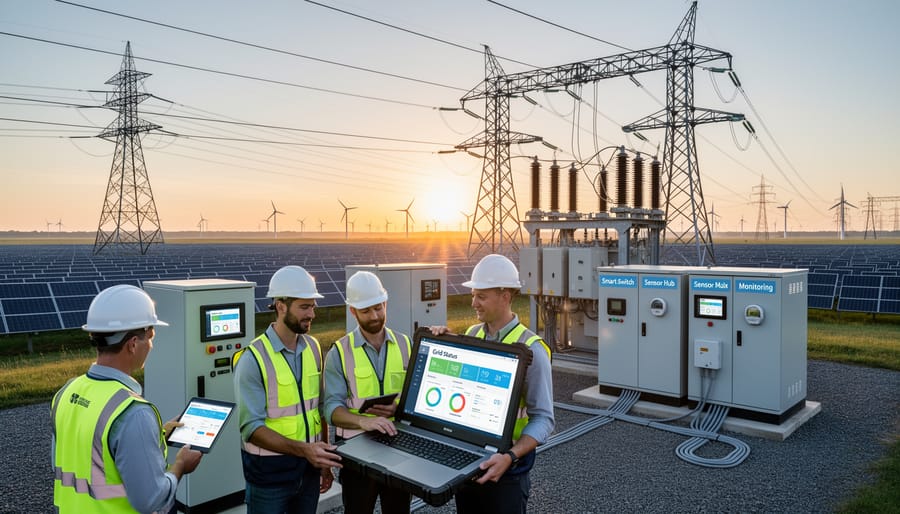
Achieving a clean energy future requires a fundamental transformation of the electricity grid itself. As renewable generation scales up to meet the 2040 net zero timeline for the electricity sector, grid infrastructure must evolve to handle variable energy sources while maintaining the reliability that modern societies demand.
Smart grid technologies form the foundation of this modernization. Digital sensors, advanced metering infrastructure, and 5G edge computing enable real-time monitoring and automated response to changing conditions. These systems detect supply-demand imbalances instantly and coordinate distributed energy resources across the network. The result is a grid that adapts dynamically rather than relying on static, centralized control.
Energy storage stands as the most critical supporting measure for integrating wind and solar power. Battery systems, pumped hydroelectric storage, and emerging technologies like compressed air or thermal storage allow excess renewable generation to be captured when production exceeds demand and released during periods of high consumption or low renewable output. This smooths the variability inherent in weather-dependent energy sources.
Demand response programs add another layer of flexibility by adjusting consumption patterns to match available supply. Industrial facilities, commercial buildings, and even residential customers can shift non-essential electricity use to times when renewable generation peaks, reducing stress on the grid during challenging periods.
Interconnection upgrades enable geographic diversity to work in your favor. Expanding transmission capacity allows renewable-rich regions to export power to areas with lower generation, while weather differences across broader territories reduce overall system variability. Stronger interconnections between regions create a more resilient network where multiple areas support each other.
Together, these measures create a modern grid architecture capable of achieving net zero emissions by 2040 while delivering the consistent, reliable power that economies require.
Real-World Implementation: Case Studies in Clean Energy Transition
The shift from ambitious net zero pledges to practical implementation is happening now across every scale of governance and enterprise. Within the Climate Ambition Alliance, 120 countries plus the EU, 400 cities, 800 businesses, and 15 states and regions, diverse actors are translating the IEA’s 2050 roadmap into concrete action plans with measurable milestones.
National governments are leading with comprehensive strategies that address all greenhouse gas emissions, not just energy sector carbon. Countries setting credible pathways establish both short-term targets for 2030-2035 and medium-term benchmarks for 2040-2045, creating a staged progression rather than a single distant goal. These plans specify sector-by-sector reduction strategies, from power generation achieving net zero by 2040 to harder-to-abate industries like heavy manufacturing and aviation. The most effective national approaches demonstrate continued effort through policy mechanisms that ratchet down emissions progressively, adjusting strategies as technologies mature and costs decline.
Cities are proving particularly nimble in clean energy deployment. With direct control over building codes, transportation planning, and municipal energy procurement, urban centers can accelerate renewable adoption faster than national programs. The 400 cities in the Alliance are implementing electric vehicle mandates, renewable energy requirements for new construction, and district heating systems powered by waste heat and geothermal sources. Their concentrated populations and existing infrastructure make them ideal testing grounds for grid modernization technologies.
The 800 businesses participating range from energy producers transforming their generation portfolios to manufacturers redesigning supply chains around clean electricity and green hydrogen. Corporate net zero commitments succeed when they include Scope 3 emissions, the full value chain impact, rather than only direct operational emissions. Companies setting science-based targets aligned with the 1.5-degree pathway are establishing supplier requirements, investing in renewable energy certificates, and funding research into breakthrough technologies for their sectors.
Regional coalitions, representing 15 states and subnational governments, bridge the gap between national policy and local implementation. They coordinate renewable energy zones, share grid infrastructure investments, and harmonize standards to create larger markets for clean technologies. These collaborations demonstrate how fragmented jurisdictions can achieve the scale needed for meaningful emissions reductions while respecting local economic conditions and political realities.
What unites successful implementation across all these contexts is transparency and accountability, with regular progress reports showing how current actions connect to future targets.
Verifying Progress and Maintaining Momentum
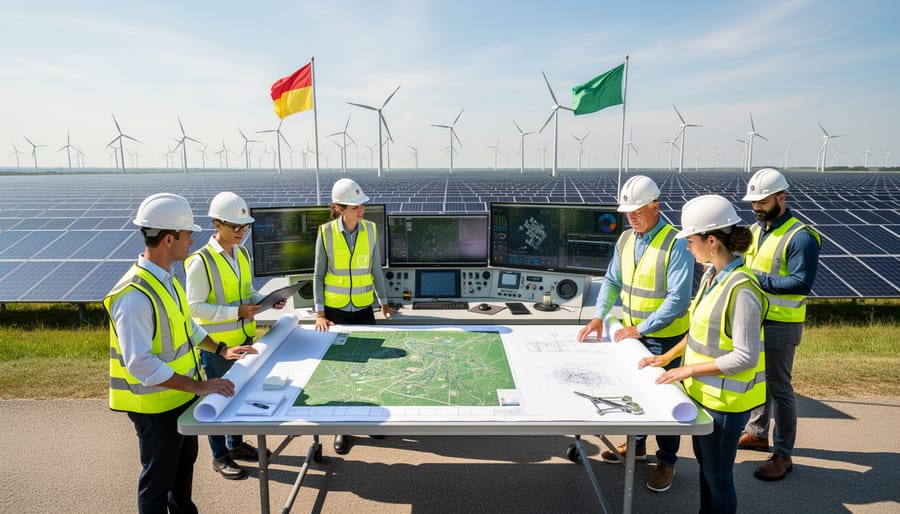
Measuring progress toward net zero isn’t just about checking a box in 2050. It requires rigorous, ongoing verification at every milestone to catch problems early and maintain confidence among stakeholders. Countries, cities, and businesses following the IEA roadmap need transparent systems that track real-world outcomes against their stated targets, not wishful projections.
Start by establishing baseline emissions through comprehensive greenhouse gas accounting that covers all sectors. This foundation lets you measure year-over-year changes accurately. The Climate Ambition Alliance’s 120+ countries and 800+ businesses all face the same requirement: demonstrate continued effort in reducing emissions through verifiable data, not rhetoric.
Track these key performance indicators consistently:
- Annual emissions reduction rates across all sectors compared to baseline
- Renewable energy percentage growth in total generation capacity and actual output
- Grid storage capacity additions and deployment of flexibility resources
- Policy implementation milestones including permitting reforms and regulatory updates
- Investment flows into clean technologies measured against projected requirements
Third-party validation matters enormously. External auditors and scientific bodies should verify your emissions reporting using standardized methodologies. This builds credibility with investors, citizens, and international partners who need assurance your plans translate into action.
Publish progress reports annually with granular sector-by-sector breakdowns. When you miss a target, explain why and adjust your approach rather than moving goalposts. The pathway to net zero by 2050 demands honest assessment. If renewable deployment lags projections, identify specific barriers like permitting delays or supply chain constraints, then implement corrective policies immediately.
For entities at different stages: early-phase actors should focus on establishing robust measurement systems and hitting first milestones. Mid-journey participants need to scale successful programs while addressing underperforming sectors. Advanced leaders should share lessons learned and help others accelerate their transitions. Whatever your starting point, transparent tracking separates genuine progress from greenwashing and keeps momentum building toward 2050.
Common Questions About Building Clean Energy Futures
What makes a net zero plan credible?
A credible net zero plan requires three essential elements: short- and medium-term targets that bridge to 2050, comprehensive accounting for all greenhouse gas emissions across all sectors, and demonstrated continued effort in reducing emissions. Without these components, a 2050 commitment risks becoming a distant promise rather than an actionable pathway.
Why do short-term targets matter if the goal is 2050?
Short-term targets create immediate accountability and drive action today rather than deferring progress to future decades. The IEA pathway, for instance, sets a 2040 benchmark for net zero electricity generation, ensuring that critical infrastructure changes and technology deployment happen on a timeline that makes 2050 achievable rather than aspirational.
Can cities and businesses make a real difference alongside national governments?
Absolutely. The Climate Ambition Alliance demonstrates this with 400 cities, 800 businesses, and 15 states and regions joining 120 countries and the EU in working toward net zero. Sub-national actors often move faster than national policy, driving innovation in renewable procurement, building efficiency, and local grid modernization that creates models for broader adoption.
Where can I find current research on clean energy progress?
Clean Energy Future Research provides ongoing coverage of sustainable energy transitions, technology developments, and policy evolution. The platform offers news, analysis, and insights from industry experts, helping stakeholders track progress and identify emerging opportunities in the transition to clean energy.
The questions above reflect the practical concerns that arise when organizations and governments move from commitment to implementation. One challenge that surfaces repeatedly involves translating renewable energy capacity into reliable electricity supply. The answer lies not in choosing between renewables and reliability, but in pairing generation with grid modernization, storage deployment, demand response programs, and regional interconnection. Systems designed around variable renewable energy look different from those built for dispatchable fossil generation, requiring planning that accounts for both energy quantity and grid flexibility.
Technology readiness varies by sector and application. Solar and wind have reached cost-competitiveness in most markets, making rapid scaling feasible with appropriate policy support. Other technologies needed for hard-to-decarbonize sectors continue to mature, which is why comprehensive plans phase deployment based on current readiness while supporting ongoing innovation. The pathway doesn’t require waiting for perfect solutions, it requires deploying what works now while advancing what’s needed next.
The path to a clean energy future is no longer a question of “if” but “how fast.” The IEA roadmap to net zero by 2050 isn’t aspirational theory, it’s a concrete framework supported by proven technologies and accelerating global commitment. With 120 countries plus the EU, 400 cities, 800 businesses, and 15 states and regions already working toward net zero through the Climate Ambition Alliance, the momentum is undeniable.
What makes this moment different is the convergence of feasibility and urgency. The tools exist: renewable energy technologies that are cost-competitive, grid solutions that ensure reliability, and policy frameworks that create certainty for investors and innovators. The 123 countries expressing interest in net zero represent economies at every development stage, proving this transition works across diverse contexts.
Success requires following research-backed pathways with credible short- and medium-term targets, comprehensive emissions accounting, and demonstrated continued effort. Stay connected to platforms like Clean Energy Future Research for the latest insights, industry developments, and expert analysis that keep you ahead of the curve.
Your role in this transformation matters, whether you’re setting organizational policy, advocating for cleaner infrastructure in your community, or making informed choices as a consumer. The clean energy future we need is within reach, not decades away, but being built right now through deliberate action and shared commitment.