
Hydropower is undergoing a quiet revolution in 2026, shifting from an era dominated by massive dam projects to one where small-scale, community-controlled systems are reshaping clean energy access and Indigenous sovereignty. Recent federal funding of nearly $17 million for two Indigenous-led hydropower projects in Quebec illustrates this transformation: the 7.5 MW Innavik Remote Hydro Project in Inukjuak and the 17 MW Matawak Hydroelectric Power Plant at Hydro-Québec’s Matawin dam near Saint-Michel-des-Saints. These projects represent more than infrastructure. They signal a fundamental rethinking of who controls renewable energy development and who benefits from it.
For decades, hydropower generated approximately 16% of global electricity while facing criticism over environmental impacts and displacement of communities. Now, as nations accelerate decarbonization targets, the technology is finding new relevance through smaller, less invasive designs that can provide reliable baseload power without the social and ecological costs of mega-dams. Indigenous communities are leading this shift, combining traditional knowledge with modern engineering to create projects that serve local needs first while contributing to broader grid stability.
This evolution matters for energy professionals and policymakers navigating the clean energy transition. Understanding how hydropower is being reimagined through community-led models, alongside innovations in low-head turbines and run-of-river systems, provides crucial insight into how mature renewable technologies can adapt to meet both climate goals and social equity demands. The case studies emerging from Quebec and similar projects worldwide demonstrate that hydropower’s next chapter will be written by those closest to the water itself.
A New Chapter in Hydropower Development

The hydropower sector stands at a crossroads. For decades, the technology conjured images of massive concrete dams flooding valleys and displacing communities. That legacy left scars, but it doesn’t define the technology’s future. Across Canada and beyond, a fundamentally different model is taking shape, one where the communities living alongside rivers drive the projects from conception through operation.
This shift toward Indigenous-led and community-controlled hydropower represents more than incremental improvement. It flips the traditional development model on its head. Instead of external utilities or corporations arriving with blueprints and buyout packages, local nations determine whether a project proceeds, how it’s designed, and what benefits it delivers. The energy generated serves community needs first, whether that means displacing diesel generators in remote locations or creating revenue streams that fund education and health services.
The contrast with legacy approaches runs deep. Traditional large-scale dams prioritized maximum generation capacity and served distant urban centers, often treating local populations as obstacles rather than partners. Community-led projects start from different premises: What does energy sovereignty look like for this specific place? How can infrastructure align with seasonal rhythms and ecological relationships that Indigenous communities have observed for generations? Can modern engineering serve self-determination rather than undermine it?
Environmental stewardship shifts when project ownership does. Communities with multigenerational ties to watersheds approach trade-offs differently than corporations optimizing quarterly returns. Run-of-river designs that maintain natural flow patterns become preferred over reservoir systems that dramatically alter ecosystems. Monitoring extends beyond regulatory compliance to incorporate traditional ecological knowledge about fish migration, water quality, and riparian health.
This emerging model offers energy transitions a roadmap grounded in consent, local benefit, and ecological respect, principles the sector desperately needs.
Quebec’s Indigenous Hydropower Projects: A Case Study
The Innavik Remote Hydro Project
The Innavik Remote Hydro Project represents a transformative solution for Inukjuak, a remote Inuit community on the eastern shore of Hudson Bay. At 7.5 MW, this facility is sized precisely for the community’s needs, demonstrating that effective hydropower doesn’t require massive scale to deliver meaningful impact.
For decades, Inukjuak has relied entirely on diesel generators for electricity, a common reality in Canada’s northern communities. Diesel dependence creates a cascade of challenges: fuel must be shipped in during the brief ice-free season, prices fluctuate with global oil markets, and diesel combustion contributes to both local air pollution and carbon emissions. The costs extend beyond dollars to include noise, storage risks, and the constant logistics of maintaining fuel supply chains across vast Arctic distances.
The Innavik project changes this equation fundamentally. By harnessing local water resources, the facility will provide stable, renewable baseload power while dramatically reducing the community’s diesel consumption. This shift means fewer fuel shipments, lower energy costs over time, and significantly reduced greenhouse gas emissions. For a community of roughly 1,800 people, the transition to renewable hydropower represents both energy sovereignty and climate action at the local scale.
The project also illustrates how small-scale hydropower can be precisely matched to community needs. Rather than overbuilding capacity or requiring complex transmission infrastructure, the 7.5 MW system fits Inukjuak’s load profile while leaving room for future growth as the community develops.
The Matawak Hydroelectric Power Plant
The Matawak Hydroelectric Power Plant represents a different strategic approach to renewable investment in Indigenous communities. Planned at the existing Hydro-Québec Matawin dam on the Lac Taureau reservoir near Saint-Michel-des-Saints, this 17 MW facility demonstrates how communities can build energy sovereignty by working with infrastructure already in place rather than starting from scratch.
The project’s location at an existing dam site offers several practical advantages. Environmental assessments are simplified because the site has already been modified for hydroelectric generation. Construction timelines shorten when you’re not building from bare ground. The existing reservoir, transmission connections, and access roads reduce both capital costs and environmental disturbance.
This approach also shifts the conversation around hydropower development. Instead of debating whether to construct new dams with their associated ecosystem impacts, the Matawak project shows how communities can claim ownership and benefit from infrastructure that’s already generating power. It’s a pragmatic model that acknowledges existing development while redirecting its benefits toward local energy needs and economic self-determination.
The 17 MW capacity positions Matawak as a substantial contributor to regional energy supply, capable of serving multiple communities or feeding power into the broader grid while maintaining Indigenous control over the resource.
Why Small-Scale Hydropower Matters for Energy Transitions
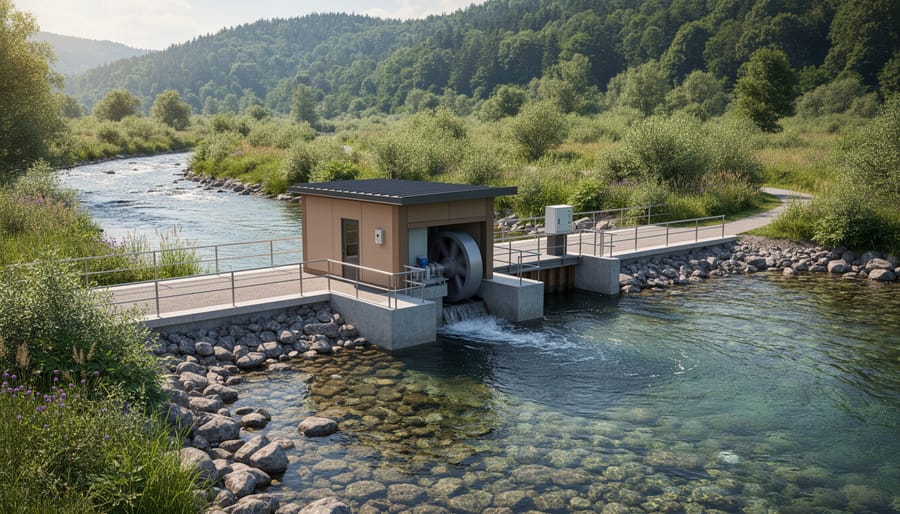
Small-scale hydropower projects occupy a strategic niche in modern energy systems that large dams simply can’t fill. While massive hydroelectric facilities generate significant power, community-scale installations like the 7.5 MW Innavik and 17 MW Matawak projects offer distinct advantages for energy transitions, particularly in regions where centralized grid infrastructure is impractical or non-existent.
The reliability factor stands out immediately. Unlike solar and wind resources that fluctuate with weather patterns, run-of-river and small reservoir systems provide consistent baseload power. This characteristic makes them ideal partners in hybrid renewable systems, where hydropower can smooth out the variability of other sources. In remote communities, this reliability eliminates dependence on diesel generators that require constant fuel shipments and produce significant emissions.
Community-scale projects also excel at grid-edge innovation operating effectively in distributed energy networks where flexibility matters more than raw capacity. These installations can respond quickly to local demand changes, providing the kind of grid stabilization services that become increasingly valuable as energy systems incorporate more intermittent renewables. Because they’re sized for specific community loads rather than wholesale power markets, they reduce transmission losses and improve overall system efficiency.
The benefits extend across multiple dimensions:
- Energy independence for remote or underserved communities
- Reduced transmission infrastructure costs and energy losses
- Local economic development through construction, operation, and maintenance jobs
- Environmental adaptability to site-specific conditions with minimal ecosystem disruption
Environmental considerations favor smaller installations too. Modern community-scale projects can incorporate fish passage systems, maintain environmental flows, and adapt to local watershed characteristics in ways that massive dams cannot. The footprint remains proportional to the energy produced, avoiding the large-scale flooding and habitat transformation associated with major reservoirs. This approach aligns with contemporary understanding that renewable energy transitions must balance climate goals with ecosystem health and community wellbeing, rather than trading one environmental problem for another.
Lessons from Indigenous Energy Leadership
Indigenous-led hydropower projects offer crucial insights that extend far beyond their immediate energy output. These initiatives demonstrate how centering community voices from the outset produces more resilient, contextually appropriate infrastructure that serves local needs while advancing broader climate goals.
The community engagement model employed in projects like those in Quebec represents a fundamental departure from traditional top-down development. Rather than presenting communities with predetermined plans, these initiatives embed Indigenous governance structures throughout the decision-making process. This approach reduces conflict, accelerates permitting, and ensures projects align with community priorities such as local employment, skills development, and cultural preservation. The result is infrastructure that communities actively support rather than merely tolerate.
Traditional ecological knowledge integration represents another transformative practice. Indigenous communities bring generations of understanding about seasonal water flows, fish migration patterns, and ecosystem interdependencies. This knowledge complements Western engineering approaches, often identifying environmental risks or mitigation strategies that standard assessments miss. For instance, Indigenous advisors can pinpoint sensitive spawning areas or seasonal variations that affect project design, creating more ecologically sound installations.
The sustainable development frameworks emerging from these projects balance economic, environmental, and social objectives in ways that conventional projects often struggle to achieve. They prioritize long-term community benefits over short-term profit maximization, considering how projects interact with traditional land use, food security, and cultural practices. This holistic approach addresses energy justice by ensuring marginalized communities gain energy sovereignty rather than merely hosting infrastructure that benefits distant populations.
These lessons apply broadly as the energy sector navigates transitions involving energy storage grid modernization, and renewable deployment. Projects succeed when they serve communities first, integrate diverse knowledge systems, and define success beyond megawatts generated.
The Path Forward for Hydropower Innovation

The modernization of existing hydropower infrastructure represents one of the most promising pathways for expanding clean energy capacity without new environmental disruption. Across North America, thousands of aging dams could be retrofitted with modern turbines and digital controls, boosting efficiency by 20-30% while improving fish passage and ecosystem flows. This approach allows the industry to increase output from existing sites rather than building new structures, reducing both costs and community concerns.
Emerging technologies are reshaping what hydropower can deliver to modern grids. Variable-speed turbines now allow plants to respond to demand fluctuations within minutes, providing the flexibility that power and renewables grids need as solar and wind generation expands. Advanced forecasting systems integrate weather data with watershed models, enabling operators to optimize water releases for both energy production and ecological health. These innovations position hydropower as a stabilizing force rather than just baseload generation.
Hybrid systems combining hydropower with battery storage and other renewables demonstrate how the technology can anchor regional energy transitions. Several Canadian projects now pair run-of-river hydro with solar arrays, using the hydro component to smooth intermittency while minimizing water diversion. This integration model proves particularly effective in remote communities where energy independence matters as much as carbon reduction.
Policy support is evolving to match these technical advances. New federal and provincial programs increasingly tie funding to meaningful Indigenous partnership and environmental outcomes, not just megawatt targets. This shift recognizes that successful projects must earn social license through genuine collaboration, benefit-sharing agreements, and designs that protect water quality and aquatic ecosystems. The industry’s credibility in 2026 depends on demonstrating that hydropower development can advance both climate action and reconciliation.
The Quebec projects demonstrate what becomes possible when Indigenous communities take the lead on energy infrastructure. With nearly $17 million in federal support, the 7.5 MW Innavik project and 17 MW Matawak plant represent more than new generating capacity. They’re proving that hydropower can evolve beyond its legacy of displacement and ecological disruption into something that strengthens communities while advancing climate goals.
This shift matters because it addresses the fundamental challenge of energy transitions: how to build the infrastructure we need while respecting the people and places where it’s built. Indigenous-led projects bring traditional ecological knowledge, long-term thinking, and accountability to affected communities into the planning process from day one, not as an afterthought.
The outlook for hydropower innovation is genuinely optimistic when paired with this leadership model. Energy developers, policymakers, and investors should look beyond these two Quebec projects and ask how similar frameworks can be applied across regions and technologies. Supporting community ownership, prioritizing local benefits, and integrating Indigenous knowledge aren’t just ethical imperatives. They’re practical strategies that produce better projects, stronger public support, and more resilient energy systems. The next wave of hydropower development won’t succeed by repeating the mistakes of the past. It will succeed by following the leadership we’re seeing emerge today.