
Russia, one of the world’s largest energy exporters, is experiencing recurring fuel shortages across more than 40 regions, a crisis that began in May and has exposed deep vulnerabilities in the country’s domestic energy infrastructure. What started as localized gasoline and diesel scarcities spread nationwide by July, forcing authorities to impose sales restrictions, ban fuel exports, lower quality standards, and even import petroleum products to stabilize supply. The immediate trigger? A combination of refinery disruptions from drone attacks and export-driven market pressures that left domestic consumers scrambling for fuel at the pump.
The irony is striking. A nation sitting atop vast fossil fuel reserves now rations petrol to its own citizens, with Moscow-region stations running dry even as export revenues have historically bankrolled government operations. The crisis highlights how geopolitical conflict, aging infrastructure, and market distortions can destabilize even the most resource-rich economies.
For energy professionals and sustainability advocates, Russia’s fuel shortage offers a powerful case study in supply chain fragility and the risks of over-reliance on fossil fuel infrastructure. As drone strikes on refineries triggered fresh restrictions in August, the episode underscores an urgent question for the global energy transition: how do nations build resilient, diversified energy systems that can withstand both physical disruption and market volatility? The answer may accelerate interest in decentralized renewable energy networks that reduce single points of failure and enhance energy security.
What Changed: Russia’s Fuel Crisis Returns

Russia’s fuel shortage crisis has resurfaced in August 2026, reversing a brief period of stability achieved just weeks earlier. After authorities managed to ease supply constraints in late July, fuel shortages have returned to multiple regions across the country, forcing renewed restrictions on gasoline and diesel sales at petrol stations.
The current scope of the crisis is substantial. Russian authorities have imposed restrictions in over 40 regions, with at least 10 of those tightening controls on motor fuel sales as August shortages intensified. The on-the-ground reality varies by location and fuel type. In the Moscow region, gasoline has become unavailable at some stations once more, creating queues and limiting consumer access. Diesel fuel, however, remains available at most stations in the capital area, suggesting the supply disruption affects different petroleum products unevenly.
This August resurgence marks a setback for government efforts to stabilize domestic fuel markets. The late July measures had appeared effective, with some regions lifting or significantly easing restrictions as supplies improved. That progress proved short-lived, underscoring the fragility of the current fuel distribution system and the persistent challenges facing Russian energy infrastructure.
Key Developments: Three Waves of Crisis
1. Initial Crisis Spread (May, July 2026)
Russia’s fuel shortage crisis did not emerge overnight. The first signs appeared in May 2026, when scattered reports of restricted petrol and diesel availability began surfacing at filling stations across several regions. What started as isolated incidents quickly escalated through June, as more local authorities quietly implemented sales controls to manage dwindling supplies.
By July, the situation had transformed from a regional concern into a nationwide crisis. The fuel shortage had spread to almost all regions of Russia, a geographic reach that caught many energy analysts by surprise. This wasn’t limited to remote areas or border regions, the crisis affected major population centers and industrial hubs alike, disrupting both consumer access and commercial transport operations.
The speed of the crisis spread revealed underlying vulnerabilities in Russia’s fuel distribution network. Within roughly two months, a major energy producer found itself unable to guarantee consistent domestic supply across its vast territory. Local governments responded with varying degrees of restriction: some imposed purchase limits at the pump, others regulated which vehicles could refuel and when, while certain regions introduced rationing systems for commercial operators.
The scale of this first wave demonstrated how quickly fuel security can deteriorate even in resource-rich nations. The crisis wasn’t just about absolute supply volumes, it exposed distribution bottlenecks, regional infrastructure gaps, and the challenge of balancing domestic needs against export commitments. By late July, authorities faced mounting pressure to intervene with coordinated federal measures.
2. Government Response and Temporary Stabilization (Late July)
Faced with a fuel crisis that had reached nearly every corner of the country by mid-July, Russian authorities launched a coordinated intervention package designed to boost domestic supply and ease pressure on regional markets. The government’s response centered on three main policy levers: restricting outbound flows of petroleum products, relaxing domestic quality standards to increase available volumes, and sourcing imports to supplement local production.
The specific measures implemented included:
- A temporary ban on exports of gasoline and diesel fuel to redirect supply toward domestic consumption
- Lowered quality requirements for motor fuels sold at retail stations, allowing refiners to bring more product to market quickly
- Initiation of petroleum product imports to supplement constrained domestic refining capacity
- Regional coordination to prioritize fuel allocation to critical sectors and geographic areas experiencing acute shortages
These interventions produced tangible results within weeks. By the end of July, the fuel availability situation had stabilized across much of Russia, with queues at petrol stations diminishing and supply disruptions easing. Several regional governments that had imposed strict rationing and sales restrictions in June and early July began lifting or significantly relaxing those controls as local fuel inventories recovered.
The stabilization was particularly visible in major urban centers and transport corridors, where consistent supply became the norm again rather than the exception. Refiners adjusted their output mix under the relaxed quality parameters, and the export ban ensured that volumes previously destined for international markets remained available domestically. For a brief window in late July, it appeared the crisis had been contained through decisive policy action and market rebalancing, offering a template for managing acute supply shocks in critical infrastructure sectors.
3. August Resurgence Triggered by Infrastructure Attacks
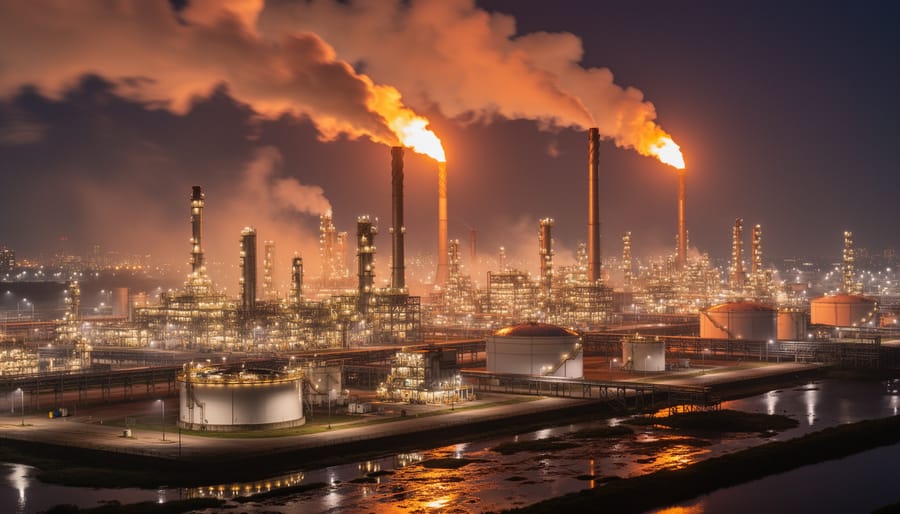
Just as authorities were declaring progress, a fresh wave of infrastructure strikes reversed the stabilisation. Drone attacks on oil refineries in late July and early August disrupted production capacity at several key facilities, forcing regional governments to reimpose sales restrictions they had only recently lifted. The attacks targeted refining infrastructure directly, cutting into the processing capacity needed to convert crude oil into gasoline and diesel for domestic consumption.
The government’s response came swiftly. On Wednesday, authorities issued a resolution extending the temporary ban on exports of diesel fuel and marine fuel, effectively prioritising domestic supply over international commitments. This marked the second time in weeks that export restrictions had been deployed as an emergency lever to redirect fuel stocks toward internal markets.
By mid-August, at least 10 regions had tightened controls on motor fuel sales at petrol stations, introducing purchase limits and rationing measures similar to those seen during the July peak. Reuters witnesses reported gasoline was once again unavailable at some fuel stations in the Moscow region, though diesel remained accessible at nearly all outlets. The pattern suggested refineries were struggling to restore normal output levels after the infrastructure damage, with gasoline production particularly affected.
The August resurgence underscored a critical vulnerability: even aggressive policy interventions could not fully insulate fuel supply from physical infrastructure disruption. Each strike reset the clock on recovery efforts, forcing authorities to cycle back through the same emergency measures they had deployed weeks earlier.
Why It Matters: Implications for Global Energy Markets
Russia’s fuel crisis carries weight far beyond its borders, exposing critical vulnerabilities in global energy supply chains and accelerating conversations around energy sustainability. When a nation responsible for roughly 10 percent of global oil production experiences domestic shortages, it sends tremors through international markets and challenges long-held assumptions about fossil fuel reliability. The resurgence of restrictions across 40-plus regions demonstrates how quickly infrastructure damage can cascade into widespread disruption, even in countries with vast hydrocarbon reserves.
The implications extend to energy security planning worldwide. Countries that rely on Russian petroleum products for domestic consumption or industrial processes now face renewed uncertainty about supply stability. The August resurgence, triggered by targeted infrastructure attacks, reveals how geopolitical tensions can translate into immediate energy access problems, forcing governments to weigh export commitments against domestic needs. Russia’s August decision to extend bans on diesel and marine fuel exports illustrates this zero-sum dynamic, where maintaining internal stability requires cutting international supply.
For proponents of the energy transition the crisis offers powerful evidence for accelerating shifts toward renewables. Fossil fuel systems, regardless of reserve size, remain vulnerable to single points of failure, refineries, pipelines, storage facilities, that can be disrupted by physical damage, maintenance issues, or deliberate attacks. Distributed renewable energy systems, by contrast, spread risk across thousands of installations, making wholesale disruption far more difficult. The shortages in Moscow and other major urban centres demonstrate that even proximity to production doesn’t guarantee fuel access when infrastructure fails, strengthening the case for local renewable generation and storage solutions that reduce dependence on complex, fragile supply chains.
Expert Perspectives: Lessons for Energy Resilience
Energy infrastructure experts view Russia’s recurring fuel shortages as a critical case study in vulnerability. “This crisis demonstrates that even the world’s largest energy exporters can face domestic supply failures when infrastructure becomes a target,” notes Dr. Elena Petrova, senior analyst at the European Energy Security Institute. The repeated cycles, initial crisis, temporary stabilization through export bans, then renewed shortages after refinery attacks, reveal how geopolitical tensions can cascade through petroleum supply chains far faster than emergency measures can contain them.
The resilience contrast with diversified energy systems proves instructive. Traditional fossil fuel infrastructure concentrates risk in fixed, high-value assets vulnerable to disruption, whereas distributed renewable networks spread generation across thousands of sites. “Solar arrays and wind farms present fundamentally different security profiles,” explains Thomas Chen, infrastructure resilience researcher at the Global Clean Energy Council. A single refinery attack can cripple regional fuel supply for weeks; disabling equivalent renewable capacity would require simultaneous strikes on countless dispersed installations.
This advantage extends beyond physical security. Clean energy systems avoid the supply chain chokepoints, pipelines, refineries, export terminals, that make petroleum markets susceptible to both intentional attacks and operational failures. Countries investing in eco-friendly alternatives build inherent redundancy into their energy infrastructure, with multiple generation technologies and decentralized production reducing single-point failure risks.
The August 2026 resurgence underscores a broader strategic reality: energy security increasingly depends on diversification. Nations relying predominantly on fossil fuel infrastructure face compounding vulnerabilities from aging facilities, concentrated production, and geopolitical exposure. Accelerating clean energy deployment offers not just environmental benefits but measurable improvements in supply resilience and infrastructure security.
What to Watch: Signals and Future Outlook
Several concrete indicators will signal whether Russia’s fuel situation stabilizes or deteriorates in the coming months. Watch for changes in the number of regions under restrictions, expansion beyond the current 40-plus regions would suggest deepening supply stress, while gradual lifting of controls would indicate recovery. The government’s export ban policy serves as another critical barometer: extensions of the diesel and marine fuel restrictions signal ongoing domestic shortages, whereas lifting these measures would reflect restored refinery capacity and market balance.
Refinery recovery timelines matter most for medium-term outlook. Infrastructure repairs following drone attacks typically take weeks to months, depending on damage severity. If attacks continue or target additional facilities, expect cascading regional shortages as fuel distribution networks struggle to compensate. Conversely, sustained periods without infrastructure disruption should allow refineries to rebuild output and stabilize domestic supplies.
Regional spillover effects warrant attention, particularly for neighboring markets historically dependent on Russian petroleum products. Countries in Central Asia and parts of Eastern Europe may face supply tightness if export bans extend, potentially triggering price volatility and prompting accelerated energy diversification strategies. For energy professionals assessing system resilience, these developments underscore the vulnerability of centralized fossil fuel infrastructure to both physical and policy disruptions, reinforcing the strategic case for distributed energy systems, including solar reshaping the grid that offer inherent redundancy and reduced geopolitical exposure.
Frequently Asked Questions
Why did Russia’s fuel shortages return in August 2026?
The shortages resurfaced following a new wave of drone attacks on oil refineries in late July and early August, disrupting domestic fuel production. This came after a brief stabilization period at the end of July when government intervention measures had temporarily eased the crisis.
What measures has the Russian government taken to address the fuel crisis?
Authorities introduced an export ban on gasoline and diesel fuel, lowered quality requirements for domestic fuel supplies, and began importing petroleum products to supplement the domestic market. In August, the government extended a temporary ban on exports of diesel fuel and marine fuel.
Which regions are most affected by the fuel restrictions?
Russian authorities have imposed sales restrictions in more than 40 regions, with at least 10 regions tightening controls in August. The Moscow region has experienced renewed unavailability of gasoline at some fuel stations, though diesel remains more widely accessible.
How does this crisis relate to global energy security trends?
The fuel shortage in a major fossil fuel producer demonstrates how infrastructure vulnerabilities and geopolitical disruptions can create supply chain fragility, reinforcing the strategic case for diversified energy systems that reduce dependence on single fuel sources or concentrated infrastructure networks.
These developments reveal the complex interplay between domestic energy policy, infrastructure resilience, and supply stability. For energy professionals tracking market dynamics, the Russia fuel crisis offers practical insights into how quickly petroleum supply situations can shift and the limitations of short-term policy interventions when underlying infrastructure challenges remain unresolved.
Russia’s fuel crisis in 2026 serves as a powerful reminder that even the world’s largest energy producers face significant infrastructure vulnerabilities. The three waves of shortages across more than 40 regions, triggered by both operational pressures and external disruptions, demonstrate how quickly supply chains can fracture when systems lack redundancy and resilience. For energy professionals and policy makers, this unfolding situation offers concrete lessons about the risks of over-reliance on centralized fossil fuel infrastructure.
The crisis underscores a strategic truth that extends far beyond Russia’s borders: diversified energy systems built on renewable sources and distributed generation offer inherent advantages in stability and security. As we witness real-time challenges in maintaining petroleum supplies, the case for accelerating clean energy transitions grows stronger. Building resilient energy futures means investing in technologies and infrastructure that can withstand disruption, adapt to changing conditions, and serve communities reliably. The path forward lies not in reinforcing yesterday’s vulnerabilities, but in creating the robust, flexible energy systems that tomorrow demands.