
Eco-friendly alternatives to fossil fuels are renewable energy sources that generate power without depleting natural resources or releasing significant greenhouse gases, including solar, wind, hydroelectric, geothermal, and biomass energy systems. These technologies harness naturally replenishing forces like sunlight, moving air, and Earth’s internal heat to produce electricity and thermal energy for homes, businesses, and transportation networks.
The global energy landscape is shifting rapidly. With fossil fuels losing ground due to climate concerns and falling renewable costs, understanding what comes next has moved from theoretical to urgent. Each alternative operates on fundamentally different principles than combustion-based power generation. Solar panels convert photons into electrons through semiconductor materials. Wind turbines transform kinetic energy from moving air into rotational force that drives generators. Geothermal plants tap underground heat reservoirs, while hydroelectric dams channel gravitational potential energy through massive turbines.
This article breaks down how each technology actually works, where they’re being deployed at scale today, and what trade-offs energy planners face when choosing between them. You’ll find case studies from operating facilities, insights from engineers working directly with these systems, and straightforward explanations of conversion mechanisms that avoid both oversimplification and unnecessary complexity. Whether you’re evaluating options for policy frameworks, conducting academic research, or simply trying to understand what replaces coal and natural gas in a decarbonized grid, the sections ahead provide the technical foundation and real-world context you need.
What Eco-Friendly Energy Alternatives Mean for Our Future
An eco-friendly alternative to fossil fuels is any energy source that produces power while minimizing environmental harm, particularly greenhouse gas emissions and air pollution. These alternatives draw on naturally replenishing resources rather than finite deposits of coal, oil, or gas that took millions of years to form.
Three key criteria define whether an energy source truly qualifies as eco-friendly. First, it must be renewable or sustainable, meaning it regenerates on a human timescale and won’t run out through use. Second, it needs to produce significantly lower carbon emissions across its entire lifecycle compared to conventional fossil fuels. Third, it should minimize broader environmental impacts like habitat destruction, water pollution, and resource depletion.
Understanding the terminology around alternative energy helps clarify what different sources actually offer:
- Renewable Energy
- Energy derived from sources that naturally replenish themselves, such as sunlight, wind, or flowing water. These sources are essentially inexhaustible on human timescales.
- Clean Energy
- Power generation that produces little to no direct emissions or pollutants during operation. Solar and wind are clean, though manufacturing their equipment does create some emissions.
- Carbon-Neutral Energy
- Energy systems where total carbon emissions released are balanced by carbon removed from the atmosphere, resulting in net-zero carbon impact over time.
- Energy Transition
- The global shift from fossil fuel-based power systems to renewable and low-carbon alternatives, fundamentally reshaping how societies generate and consume energy.
These terms overlap but aren’t interchangeable. Nuclear power, for instance, qualifies as clean and low-carbon but isn’t renewable since it relies on uranium. Biomass is renewable but not always clean if burned inefficiently. The strongest eco-friendly alternatives typically meet all three criteria, offering renewable sources with minimal emissions and sustainable practices throughout their supply chains.
The energy transition gaining momentum worldwide prioritizes sources that check all these boxes, focusing investment and policy support on technologies that deliver genuine environmental benefits rather than marginal improvements over fossil fuels.
How Alternative Energy Sources Work
Solar Energy Conversion
Solar energy conversion transforms sunlight into electricity through two primary technologies: photovoltaic (PV) cells and concentrated solar power (CSP) systems.
Photovoltaic cells use the photoelectric effect to generate electricity directly from sunlight. When photons hit semiconductor materials (typically silicon), they knock electrons loose from atoms, creating an electric current. Multiple PV cells connect to form solar panels, which can scale from small rooftop installations to sprawling solar farms. Modern panels achieve conversion efficiencies of 20-23% in typical residential applications, though commercial systems push beyond 40% through multi-junction designs that capture different wavelengths of light.
Concentrated solar power works differently. Large mirrors or lenses focus sunlight onto a receiver, generating intense heat that produces steam to drive turbines, much like conventional power plants. CSP systems often include thermal storage, allowing electricity generation after sunset.
Recent advances have pushed efficiency boundaries further. Laboratory cells reached 47% conversion rates in 2025 using layered perovskite materials, while commercial installations benefit from bifacial panels that capture reflected light from both sides. These improvements make solar increasingly competitive, delivering more power from the same surface area and reducing the cost per kilowatt-hour generated.
Wind Power Generation
Wind turbines transform the kinetic energy of moving air into electricity through a straightforward mechanical process. When wind flows across the turbine blades, it creates aerodynamic lift, similar to how airplane wings generate lift, causing the blades to rotate around a central rotor. This rotation typically occurs at 15 to 20 revolutions per minute for large utility-scale turbines, though smaller models spin faster.
The rotating blades connect to a shaft inside the nacelle, the housing unit at the top of the tower. This low-speed shaft links to a gearbox that increases the rotational speed by up to 100 times before transferring it to a high-speed shaft. That shaft drives a generator containing copper wire coils positioned within a magnetic field. As the coils spin rapidly through this field, they induce an electrical current through electromagnetic induction, the same principle that powers most electrical generation worldwide.
The raw electricity produced varies with wind speed, so power conditioning equipment converts it to match grid specifications before transmission lines carry it to homes and businesses. Modern turbines also feature sophisticated control systems that adjust blade pitch to optimize performance across different wind conditions and automatically shut down during dangerous wind speeds.
Hydroelectric and Ocean Energy
Moving water contains tremendous kinetic energy that we can capture and convert into electricity through turbines, spinning devices that work much like a reverse fan. When water flows past turbine blades, it causes them to rotate, and this mechanical motion drives a generator that produces electrical current.
In traditional hydroelectric dams, water stored at height flows downward through large tubes called penstocks. The falling water’s force spins turbines at the dam’s base, generating power that’s immediately sent to the grid. The higher the water falls and the greater its volume, the more electricity produced.
Tidal energy systems exploit the predictable rise and fall of ocean tides. Underwater turbines installed in tidal channels spin as tides rush in and out twice daily, creating a reliable power source unlike other intermittent renewables. Some designs use tidal barrages, low walls across estuaries that capture water at high tide and release it through turbines as tides recede.
Wave energy converters capture the bobbing motion of surface waves using floating buoys or oscillating devices. As waves pass, these mechanisms compress air or move hydraulic pistons that drive generators. While still emerging commercially, wave technology holds significant potential for coastal regions with consistent wave action.
Geothermal Heat Extraction
Geothermal plants access the Earth’s natural heat reservoir by drilling wells one to two miles deep into hot rock formations or underground reservoirs of steam and hot water. At these depths, temperatures typically range from 150°C to over 350°C, providing a constant, reliable heat source that doesn’t depend on weather or time of day.
The extraction process varies by resource temperature. In high-temperature reservoirs, naturally occurring steam or superheated water flows up through production wells to the surface. When hot water reaches the surface under lower pressure, it “flashes” into steam, which drives turbines connected to electrical generators. After the steam passes through the turbine, it condenses back into water and gets reinjected into the reservoir through separate injection wells, creating a closed-loop system that maintains the resource.
In moderate-temperature resources where water doesn’t flash to steam, binary cycle plants use the hot geothermal fluid to heat a secondary fluid with a lower boiling point, such as isobutane. This secondary fluid vaporizes, spins the turbine, then condenses and repeats the cycle. The geothermal water never directly contacts the turbine and returns underground fully, making this approach highly efficient and sustainable.
Bioenergy and Biomass
Bioenergy converts organic materials, plant matter, agricultural waste, food scraps, and even algae, into usable energy through three primary pathways. Each process taps into the stored chemical energy that plants captured from sunlight during photosynthesis.
Combustion is the most straightforward method: burning dry biomass like wood chips, crop residues, or dedicated energy crops directly produces heat for electricity generation or heating. Modern biomass power plants use advanced combustion technology to maximize efficiency and minimize emissions compared to simple burning.
Anaerobic digestion breaks down wet organic waste in oxygen-free environments, much like how compost decomposes. Bacteria consume the material and produce biogas, primarily methane, which can generate electricity, heat buildings, or be refined into vehicle fuel. Wastewater treatment plants and livestock operations commonly use digesters to process manure and sludge.
Fermentation transforms sugar-rich crops like corn or sugarcane into ethanol through yeast activity, similar to brewing beer. The resulting biofuel blends with gasoline for transportation. Advanced fermentation techniques now target cellulosic materials like switchgrass and wood waste, avoiding competition with food crops.
The carbon neutrality of bioenergy depends critically on sustainable sourcing practices, growth rates of replacement biomass, and lifecycle emissions from production and transport.
Major Categories of Fossil Fuel Alternatives
Solar Power Systems
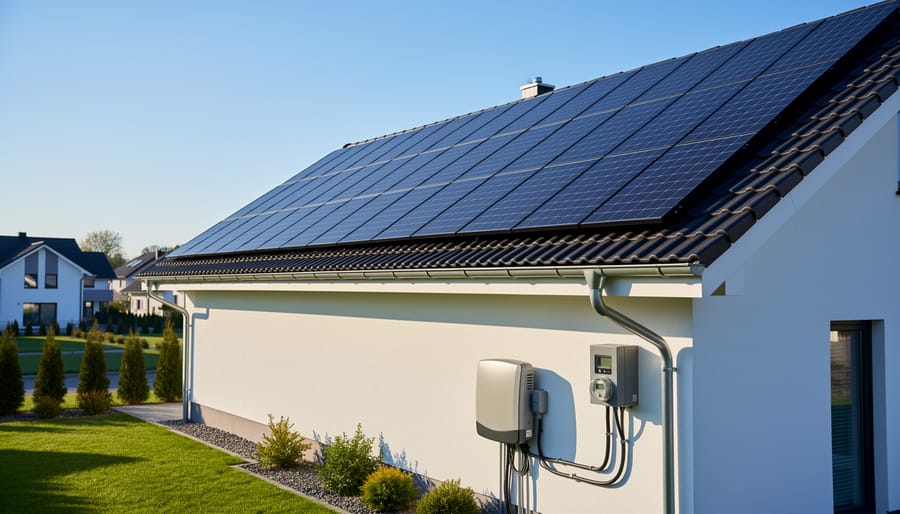
Solar power divides into three main deployment types, each suited to different scales and applications. Rooftop installations remain the most accessible option for homes and businesses, converting sunlight directly into electricity through photovoltaic panels mounted on existing structures. These systems typically generate 4-10 kilowatts for residential properties, enough to offset most household consumption.
Solar farms represent utility-scale deployment, with arrays spanning hundreds of acres that feed electricity directly into the grid. These installations achieve economies of scale that drive down costs while generating megawatts of power for thousands of homes.
The technology itself continues advancing rapidly. Perovskite solar cells have emerged as a promising innovation, potentially boosting efficiency beyond traditional silicon panels while reducing manufacturing costs. Lab tests show perovskite cells reaching conversion efficiencies above 25%, though durability challenges remain before widespread commercial deployment. This progress in solar energy reshaping our grid demonstrates how ongoing innovation addresses the core limitations that once constrained solar’s viability as a fossil fuel replacement.
Wind Energy Infrastructure
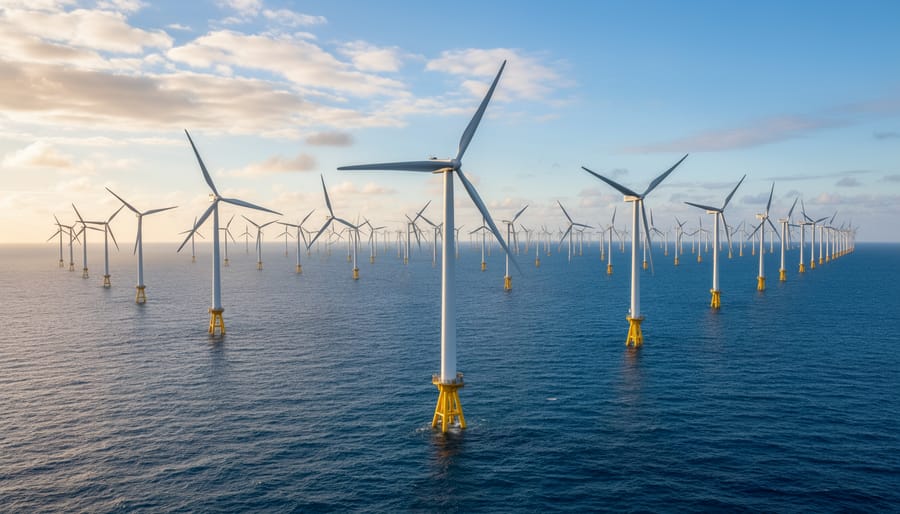
Wind energy infrastructure spans three main deployment scales, each suited to different environments and energy needs. Onshore wind farms remain the most common and cost-effective option, with turbines ranging from 2-5 megawatts installed on land across agricultural areas, plains, and ridgelines. These installations now account for over 90% of global wind capacity due to their relatively simple construction and maintenance access.
Offshore wind has expanded rapidly since 2020, particularly in Europe and Asia. Bottom-fixed turbines anchored to the seabed in shallow coastal waters can reach 15 megawatts per unit, capturing stronger and more consistent ocean winds. These installations require specialized installation vessels and subsea cabling but deliver higher capacity factors than onshore equivalents.
Floating wind platforms represent the newest frontier, allowing deployment in deep waters beyond 60 meters where fixed foundations aren’t viable. Platforms use tension legs, semi-submersible designs, or spar buoys to support turbines while moored to the seabed. Scotland’s Hywind project and Portugal’s WindFloat Atlantic demonstrate commercial viability, opening vast ocean areas previously unsuitable for wind development.
Small-scale turbines under 100 kilowatts serve individual properties, farms, and remote communities, offering energy independence where grid connection proves impractical or expensive.
Hydropower and Marine Energy
Hydropower remains the world’s largest source of renewable electricity, accounting for roughly 16% of global power generation. Traditional dam systems create reservoirs that release water through turbines, controlling flow to match demand. Run-of-river installations generate power from natural stream flow without large-scale water storage, reducing environmental disruption while sacrificing some flexibility.
Pumped storage acts as a giant battery: excess electricity pumps water uphill to a reservoir, then releases it through turbines when demand peaks. This technology provides crucial grid stability as wind and solar capacity grows.
Marine energy taps oceanic forces through tidal barrages, dam-like structures harnessing predictable tidal flows, and wave energy converters that capture surface motion. Though still commercially limited compared to wind or solar, pilot projects in Scotland, France, and South Korea demonstrate ocean energy’s reliability. Unlike weather-dependent renewables, tides follow precise schedules, offering consistent baseload potential coastal nations are beginning to exploit.
Geothermal Energy Systems
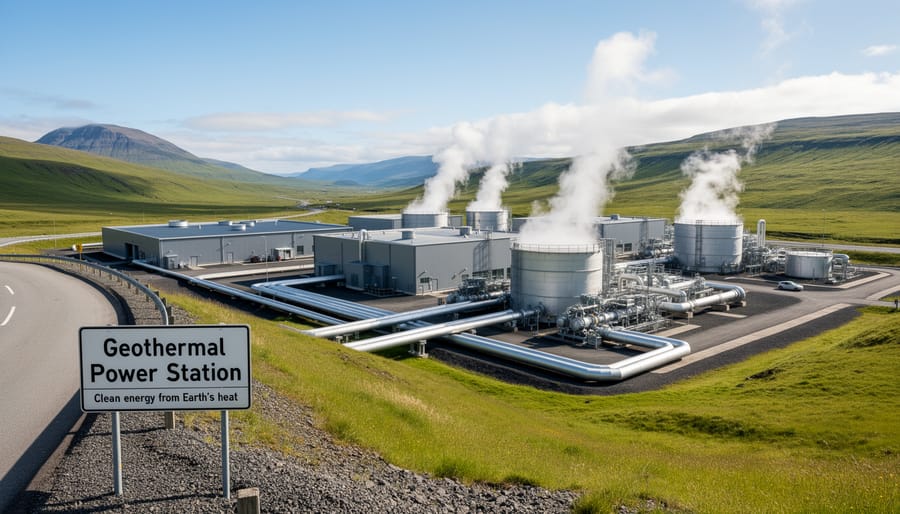
Geothermal energy systems tap into underground heat reservoirs, but they do it in different ways depending on temperature and geology. Flash steam plants dominate where temperatures exceed 180°C, they pull up pressurized hot water, “flash” it into steam by dropping the pressure, then drive turbines with that steam. Binary cycle plants work with moderate temperatures (below 180°C) by using the geothermal fluid to heat a secondary liquid with a lower boiling point, which vaporizes and spins the turbine while the original fluid stays contained. This closed-loop design prevents emissions and works in more locations than flash systems. Direct-use applications skip electricity generation entirely, piping hot water straight into district heating networks, greenhouses, or industrial processes, Iceland heats about 90% of its buildings this way, proving geothermal’s versatility beyond power generation.
Bioenergy Solutions
Bioenergy converts organic materials, crops, agricultural waste, forestry residues, and even municipal waste, into usable fuel. Biogas results from anaerobic digestion of organic matter, producing methane-rich gas for heating or electricity. Biodiesel is made by chemically treating vegetable oils or animal fats, creating a diesel substitute that works in existing engines. Ethanol, typically fermented from corn or sugarcane, blends with gasoline or powers flex-fuel vehicles. Solid biomass, wood pellets, chips, or agricultural residues, burns directly for heat and power generation.
Sustainable sourcing is critical: second-generation biofuels use waste feedstocks rather than food crops, avoiding competition with agriculture. Third-generation options, like algae-based fuels, show promise for high yields without requiring arable land. When managed responsibly, bioenergy provides a carbon-neutral cycle, plants absorb CO₂ while growing, offsetting emissions when burned.
Real-World Applications and Where Alternatives Are Used
Case Study: Denmark’s Wind-Powered Grid Transformation
Denmark stands as one of the world’s most successful examples of large-scale wind energy integration. In 2025, wind turbines supplied over 55% of the country’s electricity consumption, with the Denmark wind power share reaching record levels during high-wind periods when turbines occasionally generate more than 100% of domestic demand.
The Danish approach relied on three key strategies. First, the country built extensive offshore wind farms in the North Sea and Baltic Sea, which deliver steadier output than onshore installations. Second, Denmark created strong grid interconnections with Norway, Sweden, and Germany, allowing excess wind power to be exported and hydropower or other sources to be imported when wind drops. Third, they implemented sophisticated forecasting systems that predict wind output 36 hours ahead, enabling grid operators to balance supply precisely.
This transformation didn’t happen overnight. Denmark began serious wind investment in the 1970s and sustained it through consistent policy support, feed-in tariffs, and public-private partnerships. While Denmark’s wind success often gets compared to countries investing in solar power grid integration, the fundamental lesson remains the same: variable renewable sources can reliably power modern grids when paired with flexibility mechanisms and cross-border cooperation.
Case Study: Costa Rica’s Renewable Energy Achievement
Costa Rica stands as one of the world’s most compelling examples of renewable energy success. For multiple consecutive years, the Central American nation has run its entire electricity grid on Costa Rica 100% renewable record demonstrating that complete fossil fuel independence is achievable at a national scale.
The country’s approach relies on geographic advantages and deliberate policy choices. Hydropower provides the backbone, contributing roughly 70% of electricity generation through a network of run-of-river and reservoir plants that capture abundant rainfall from tropical weather patterns. Geothermal plants tap volcanic heat from the Pacific Ring of Fire, supplying stable baseload power that complements hydro’s seasonal variations. Wind farms positioned in mountain passes and coastal corridors add another layer, while solar installations continue expanding across commercial and residential sectors.
Costa Rica’s success hinges on diversification rather than depending on a single technology. During dry seasons when hydro output drops, geothermal and wind pick up the slack. This complementary mix, supported by strong environmental legislation and public investment in grid infrastructure, has kept the lights on without fossil fuels while maintaining some of the lowest electricity rates in the region.
Benefits of Transitioning to Alternative Energy Sources
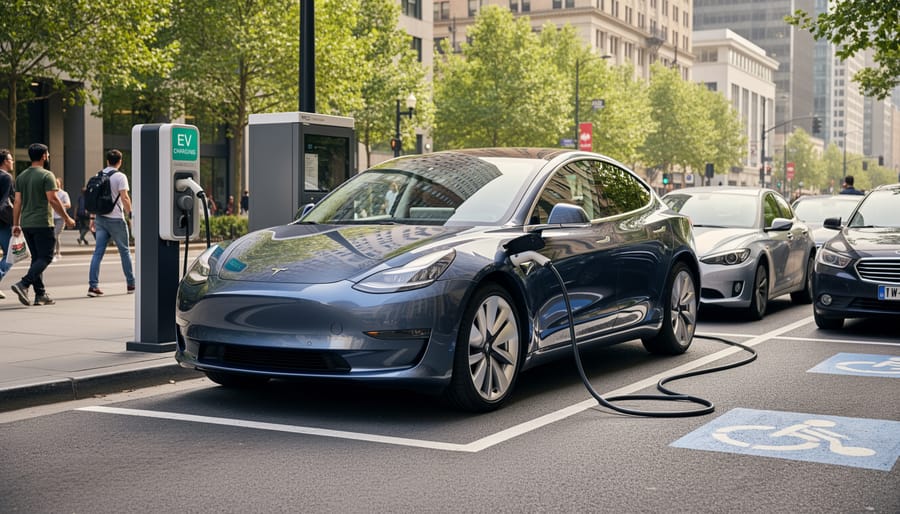
Switching from coal, oil, and natural gas to renewable sources delivers measurable gains that extend far beyond cutting emissions. These benefits compound over time, creating a self-reinforcing cycle where cleaner energy systems become economically stronger and more resilient while improving public health and community prosperity.
The most immediate advantage is drastically lower carbon dioxide and methane releases. Wind turbines and solar panels generate electricity without combustion, eliminating the greenhouse gases that drive climate change. Countries that have scaled up renewables report significant drops in their energy sector emissions, often 30-40% reductions within a decade of serious investment. Cleaner air follows directly: fewer coal plants mean less particulate matter, sulfur dioxide, and nitrogen oxides, which translates to lower rates of asthma, respiratory infections, and cardiovascular disease in nearby communities.
Key advantages of transitioning to eco-friendly energy include:
- Emissions reduction potential of 70-90% compared to fossil fuel generation over a project’s lifetime
- Health improvements from reduced air pollutants, preventing thousands of premature deaths annually in regions with high renewable adoption
- Price stability since wind and sunlight carry no fuel costs, insulating consumers from volatile global energy markets
- Local job creation in manufacturing, installation, and maintenance, often exceeding employment losses in fossil fuel industries
- Energy security through domestically sourced power, reducing dependence on imported fuels and geopolitical supply disruptions
Economic resilience strengthens as renewable infrastructure matures. Once built, wind farms and solar installations operate with minimal ongoing costs, no fuel purchases, no price shocks when global supply tightens. This predictability helps businesses plan long-term investments and shields households from energy price spikes. The job market shifts too: installation of solar on the grid and maintenance of turbines create skilled positions that can’t be offshored, anchoring employment in local communities.
Current Challenges and How They’re Being Addressed
The transition to eco-friendly energy isn’t without hurdles, but innovative solutions are emerging to tackle each major challenge.
Intermittency remains the most cited concern. Solar panels don’t generate power at night, and wind turbines sit idle during calm weather. This variability creates grid stability issues, especially when renewables supply a large percentage of electricity. Battery storage technology has advanced significantly, with lithium-ion costs dropping 89% since 2010. Grid-scale batteries in California and South Australia now store excess renewable energy for discharge during peak demand or low generation periods. Beyond batteries, pumped hydro storage, where water is pumped uphill during surplus generation and released through turbines when needed, provides proven large-scale storage, while emerging technologies like gravity storage and green hydrogen offer additional options.
Energy storage costs have declined sharply but still add expense to renewable projects. A complete solar-plus-storage system costs more upfront than solar alone, though lifecycle costs increasingly favor renewables over fossil fuel plants when fuel and environmental expenses are factored in. Manufacturing scale continues to drive prices down, making storage more economically viable each year.
Infrastructure transformation presents another obstacle. Existing power grids were designed for centralized fossil fuel plants, not distributed renewable generation. Upgrading transmission lines, adding smart grid technology for real-time management, and building charging infrastructure for electric vehicles requires substantial investment. Countries like Germany and Denmark have demonstrated that grid modernization is achievable, using sophisticated forecasting software and cross-border interconnections to balance variable renewable output across regions.
Initial capital requirements can deter adoptionparticularly in developing nations. International financing mechanisms, declining equipment costs, and increasingly competitive levelized costs of energy are addressing this barrier. Solar and wind now represent the cheapest new electricity sources in most markets, making economic arguments for fossil fuels harder to justify even before considering carbon costs.
Frequently Asked Questions About Fossil Fuel Alternatives
Can renewables really replace all fossil fuels?
Yes, renewable energy sources have the technical potential to meet global energy demand several times over. However, a complete transition requires substantial investment in infrastructure, energy storage, and grid modernization to manage the variable nature of wind and solar power.
How much do alternative energy sources cost compared to fossil fuels?
Solar and wind are now among the cheapest sources of electricity in most regions, often undercutting coal and natural gas on price alone. While initial capital costs remain higher, falling equipment prices and zero fuel costs mean renewables deliver lower lifetime energy costs in many applications.
What happens when the sun doesn’t shine or wind doesn’t blow?
Grid operators address intermittency through a combination of battery storage, pumped hydro, demand management, and maintaining diverse energy mixes that include baseload sources like geothermal and hydropower. Advanced forecasting and interconnected grids also help balance supply across regions.
How long will the energy transition take?
The timeline varies by region and sector, but most projections suggest electricity grids in developed nations could reach 70-90% renewable penetration by 2040-2050. Transportation and industrial heating will take longer due to technical challenges, though progress is accelerating as battery and hydrogen technologies mature.
These questions reflect the practical concerns of individuals, businesses, and governments weighing the shift to cleaner energy. Understanding the answers helps set realistic expectations about what the transition involves, from investment requirements to the engineering solutions already in play.
The cost advantage of renewables has fundamentally changed the conversation around alternatives. Where advocates once argued for clean energy despite higher costs, solar and wind now compete on pure economics in most markets. This shift removes a major barrier and accelerates adoption even without policy mandates.
Intermittency remains the most commonly cited concern, yet it’s increasingly a solved problem rather than a fundamental limitation. Countries like Denmark and regions like South Australia demonstrate that grids can function reliably with renewable shares exceeding 50%, provided the supporting infrastructure exists.
The transition from fossil fuels to eco-friendly alternatives isn’t just viable, it’s already underway and accelerating. Solar, wind, hydro, geothermal, and sustainable bioenergy have proven their capacity to power modern economies reliably and affordably. Countries like Denmark and Costa Rica demonstrate that high renewable penetration is achievable with the right infrastructure and commitment.
What remains is scaling these technologies globally and addressing grid integration challenges through better storage solutions and smarter distribution networks. The tools exist; what drives progress now is coordinated policy, sustained investment in research, and continued cost reductions through manufacturing scale.
The next decade will determine how quickly the world can reduce its carbon footprint while meeting growing energy demand. Innovations in battery technology, green hydrogen, and grid management are clearing pathways that seemed impractical just years ago. As governments implement supportive policies and industries recognize both the environmental imperative and economic opportunity, alternative energy sources will increasingly become the default rather than the exception.
This shift represents more than swapping one energy source for another, it’s restructuring how societies generate and consume power for long-term sustainability.