
Keep Kylo Peptides’ ipamorelin lyophilized, cold, dry, dark, and sealed, and don’t open the vial until you’ve let it come to room temperature. That short rule, applied consistently, protects a freeze-dried peptide that is stable on the shelf yet fragile the moment moisture, heat, or light gets involved. The whole routine takes a few minutes per vial and requires nothing more than basic lab competence, plus one prerequisite: the supplier’s own documentation and your institution’s SOPs, which set the final storage conditions for any given lot.
Why does this matter so much? Lyophilization removes water so the peptide stays intact for long periods, but the powder is hygroscopic and will pull humidity from the air if you give it the chance. A single careless opening on a cold vial can condense water inside and quietly shorten its useful life. If you’re working with Kylo Peptides’ ipamorelin or any other research-grade lot, the discipline is the same.
Think of it the way battery engineers think about cells headed for storage systems. The industry’s push toward safer residential batteries rests on precision handling, where small controls on temperature, moisture, and contamination decide whether a material performs for years or fails early. A peptide vial rewards the same care. What follows covers the tools you’ll need, the conditions that should make you stop, the ordered process, and how to confirm the vial is still in good shape.
Why Lyophilized Ipamorelin Is Sensitive to Its Environment
Lyophilization, or freeze-drying, removes water from a peptide solution while it is frozen, leaving a dry solid behind. That solid is usually a small, fluffy white mass at the bottom of the vial, known as the “cake.” Without water to carry out unwanted reactions, the peptide can stay stable for far longer than it would in solution.
Think of that sealed vial the way you would think of a battery cell on a shelf. A well-made cell holds its charge quietly until the casing is breached or the surroundings turn harsh. The dried peptide behaves much the same way: protected by its seal and its dry state, but not invincible once the environment changes.
Several things can break that protection after the vial leaves the supplier:
– Moisture uptake. Many freeze-dried peptides are hygroscopic, meaning they readily pull water vapor from the air. Even a small amount of absorbed water can soften the cake and restart the chemistry that drying was meant to stop.
– Heat. Warmth speeds up almost every chemical reaction, so a vial left out on a bench ages faster than one kept cold.
– Light. Prolonged exposure can contribute to breakdown, which is why opaque or amber storage is common practice.
– Temperature swings. Repeated cooling and warming cycles encourage condensation inside and around the vial.
– Oxygen. Over time, exposure to air can chemically alter sensitive parts of a peptide.
The shared result is degradation: the gradual breakdown or chemical alteration of the peptide into forms that are no longer what the label says. You often cannot see it happening, which is exactly why habits and documentation matter more than visual inspection alone.
Tools and Materials to Have Ready Before You Open a Vial
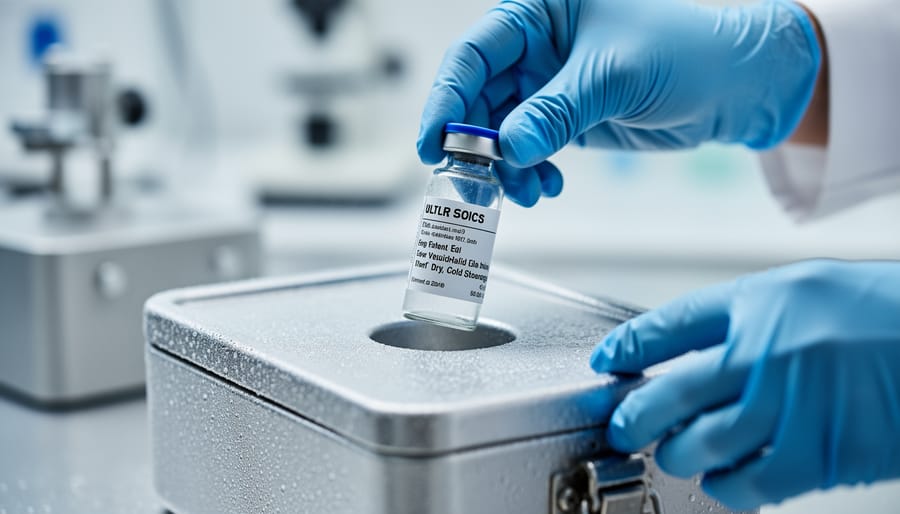
Before you open a vial, gather everything in one place. Scrambling for a missing label or a spare desiccant pack mid-task means the vial sits out longer than it should. Start with the paperwork: pull the supplier’s certificate of analysis and recommended storage conditions, since those documents, along with your institutional SOP, set the targets for everything below.
- Storage: a calibrated freezer for long-term holding and a refrigerator for short-term use.
- Storage: a thermometer or data logger so you can prove conditions held.
- Storage: desiccant packs and airtight secondary containers to keep moisture out.
- Storage: amber or opaque boxes to block light.
- Protection: nitrile gloves, a lab coat and eye protection.
- Handling: a clean, low-humidity workspace, plus an analytical balance if your protocol involves weighing.
- Documentation: durable labels and a lab notebook or inventory log for lot numbers, dates and every access.
Think of this kit the way a battery lab thinks about its dry room: the goal is controlling the environment around a sensitive material, not just the material itself. A reliable data logger matters more than it might seem, because a freezer’s dial setting tells you what it intends to do, while a logger tells you what it actually did.
One practical tip: label secondary containers before the vials go in, not after. Labels applied to cold, frosty surfaces tend to peel, and an unlabeled vial is one of the easiest ways to end up quarantining good material.
Safety Warnings and Stop Conditions
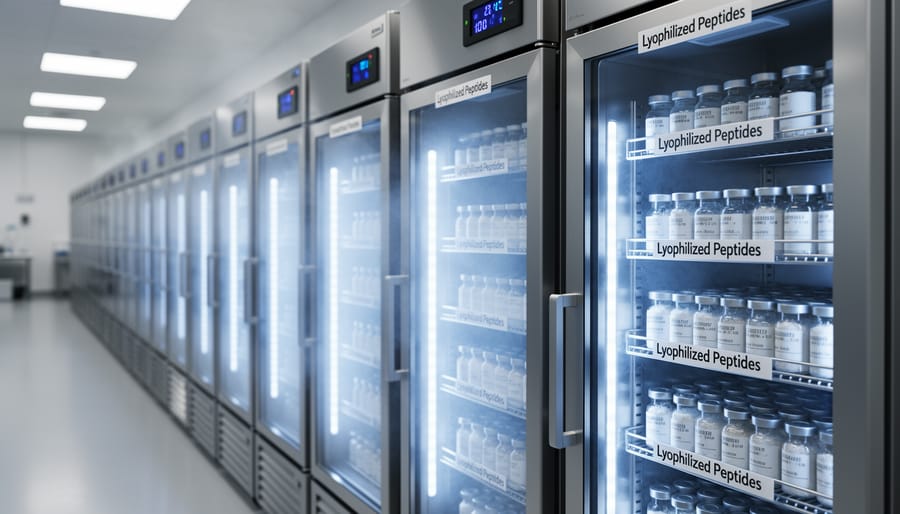
Treat lyophilized Ipamorelin as a research-use-only material and set up your safety framing before you touch a vial. Wear gloves, a lab coat and eye protection, and read the safety data sheet and your institution’s chemical hygiene plan first. Freeze-dried powder can become airborne when a vial is opened, so work in a way that avoids inhaling it and keep your face away from the vial opening.
Good habits here mirror how energy researchers think about supply chain risks: a problem caught at receiving is far cheaper than one found after it has contaminated your results. Inspect every vial before it goes into storage or use, and be ready to walk away from one that looks wrong.
When a stop condition appears, the rule is simple: quarantine and document rather than use. Label the vial clearly, note the lot number, the date and what you observed, and set it apart from usable stock. That record helps you raise the issue with the supplier and protects the integrity of later work.
Regulations on peptide handling vary by jurisdiction and institution, so your lab’s own policy governs. If this guidance and your SOP ever differ, follow the SOP.
Step-by-Step: Receiving, Storing and Handling Lyophilized Ipamorelin

Handling Mistakes That Quietly Shorten Shelf Life
Most lyophilized peptide losses aren’t dramatic. A vial doesn’t fail overnight; it drifts. A technician pulls a cold vial and cracks the cap right away because the experiment is waiting. Condensation forms on the cake, and nobody notices. Weeks later, the results look a little off, and no one connects the dots. That drift is what quietly erodes research reliability, and it almost always traces back to small habits, not bad intentions.
The good news is that each slip has a simple fix:
- Opening a cold vial straight from the freezer: let it warm to room temperature, sealed, before the cap comes off.
- Repeated freeze-thaw cycles: plan your use and keep access to a minimum, so the vial isn’t cycled without need.
- Storing in a frost-free freezer that cycles temperature: choose a stable freezer, and add temperature monitoring to catch drift.
- Leaving vials in bright light: return them to an opaque or amber box right after use.
- Skipping documentation: log each access, lot number and date in the notebook or inventory record.
None of these call for new equipment or extra training. They call for a pause, a label and a habit, and a lab that builds them in tends to see steadier results.
How to Verify Your Storage Worked and What to Do Next
Verification starts with the paper trail. Pull the temperature log for the storage unit and look for excursions, such as a door left ajar, a defrost cycle, or a power blip. A gap in the record is itself a finding, so note it.
Next, inspect the vial before every use. The cake should look the way it did on arrival: intact, uniformly white to off-white, and dry. Collapsed, shrunken, discolored or tacky material, or any sign of moisture inside the vial, means stop and quarantine. Then check the label and lot number against the certificate of analysis, so you know you’re comparing the right material to the right specification.
Visual checks can’t confirm purity, though. Where your research depends on it, send a sample for analytical confirmation, such as HPLC or mass spectrometry, through your own facility or a third party, and compare the result with the supplier’s figures.
Keep records tidy as you go. Write the received date and the first-opened date on every vial, log each access, and rotate stock by lot and date so the oldest material is used first. Retire a vial when the log shows an unresolved excursion, the appearance has changed, or the results no longer match the certificate of analysis.
When a vial passes these checks, take the next steps. Update the SOP with anything the review exposed, train new lab members on the receiving-to-storage routine, and schedule periodic storage audits so good habits don’t drift.
Frequently Asked Questions About Storing Lyophilized Ipamorelin
How long does a sealed lyophilized vial stay stable?
It depends on the lot and formulation, so follow the supplier’s certificate of analysis and stated storage conditions rather than a universal figure.
Is a refrigerator enough, or should it be frozen?
Refrigeration often suits short-term use, while freezing is typically preferred for longer storage. Your supplier’s guidance and lab SOP decide which applies.
Why let a vial warm before opening it?
Opening a cold vial pulls moisture onto the dry cake as condensation, so let it reach room temperature sealed first.
What if a vial arrives warm?
Document the condition, quarantine the vial, and contact the supplier before use.
Aliquoting is a call for your lab’s SOP, since every extra opening adds exposure to moisture and air.
Good handling of lyophilized Ipamorelin comes down to a short, repeatable routine. Keep the sealed vial cold, dry, dark and undisturbed, and give it as little time at room temperature as the work allows. The sequence below is the whole discipline in miniature:
- Inspect the shipment on arrival, because a damaged seal or an unclear label is far easier to deal with before the vial enters your inventory.
- Log the lot number and date received, so every later question about the material has a traceable answer.
- Move the sealed vial to cold storage promptly, since time spent warm is time the peptide cannot get back.
- Place it in a desiccated, light-protected secondary container to guard against moisture and light, the two quiet threats to a dried cake.
- Store it at the conditions stated in the supplier’s documentation, not a generic number, because the certificate of analysis reflects what was actually tested.
- Let the vial reach room temperature unopened before use, so condensation forms on the outside of the glass and not on the cake.
- Work quickly in a clean, dry area, which keeps exposure to humid air as short as possible.
- Recap and return the vial to storage immediately, then record the access, so the next person knows exactly what the vial has been through.
None of these steps is difficult. Their value comes from doing them the same way every time, and from writing them down. A temperature log, a dated label and a short note in the inventory sheet are what turn good intentions into results you can defend.
There’s an encouraging parallel here. Progress in solar and storage research has leaned heavily on better materials handling and steady environmental monitoring. Labs that treat reagents with that same care protect the reliability of their own results, and the habit pays off long after any single vial is used up.
So take a few minutes this week to pull up your lab’s storage SOP and compare it against how vials are actually handled at the bench. Check the logs, confirm the labels are current, and tighten whatever has drifted. Small, consistent corrections now are what keep your next set of results trustworthy.