
The biggest solar news right now is a policy shift with a market response: the 30% federal tax credit for homeowner-installed solar and battery systems expired at the end of 2025, after Congress voted in July to eliminate the federal solar incentives through the Big, Beautiful Bill. For homeowners, that changes the math on rooftop solar and home batteries. For the wider sector, it hasn’t slowed the momentum. Developers are aiming to add 43.4 GW of utility-scale solar in 2026, roughly 60% more than the record 27.2 GW installed in 2025.
That contrast is the story. One door has closed on the residential side, while utility-scale growth keeps accelerating and interest in solar paired with batteries and virtual power plants (VPPs, networks of home systems that work together to support the grid) keeps building.
This article breaks down what changed, the three developments worth tracking, and what they mean whether you’re a homeowner weighing your options or a professional following the market. Along the way, we’ll look at a real-world solar-plus-battery VPP case study, because policy headlines make more sense when you can see how systems actually perform in a home.
What Changed: The End of the Federal Homeowner Solar Credit
For years, the 30% federal tax credit made rooftop solar and home batteries noticeably cheaper for American households. At the end of 2025, that credit for homeowner-installed solar and battery systems expired. The change followed a July vote in which Congress eliminated federal solar incentives through the Big, Beautiful Bill solar sunset.
The credits are reported to expire on Dec. 31, though sources describe the timing in slightly different ways. That’s why it pays to confirm exactly how the deadline applies to your own situation rather than relying on a headline summary.
If you’re newer to the terminology, a quick distinction helps. A tax credit reduces what you owe the government, dollar for dollar, when you file your taxes. A rebate, by contrast, is money paid back to you, often by a utility or agency, after you buy or install a system. The federal incentive that just ended was a tax credit, which is a different mechanism from the rebates some programs offer.
It’s also worth saying what we don’t know. Details on other incentives and rebates remain unresolved, so it would be premature to assume anything is available or unavailable beyond the federal credit. For homeowners, the practical takeaway is straightforward: the federal incentive is no longer part of the math, and every other piece of the equation deserves a closer look.
Key Developments Shaping Solar Right Now
1. The Federal Homeowner Credit Has Expired
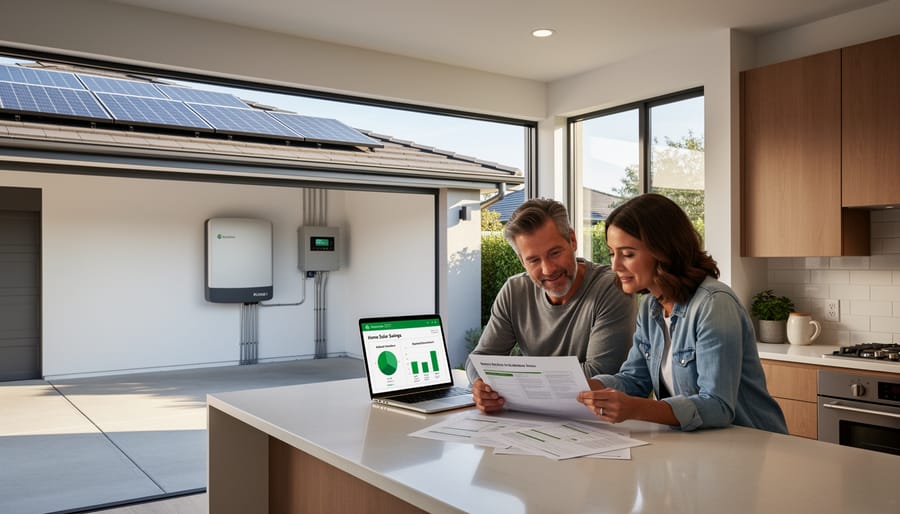
The 30% federal tax credit for homeowner-installed solar and battery systems expired at the end of 2025. Congress voted to eliminate the federal solar incentives in July, and the credits were set to end on Dec. 31. For anyone planning a system now, that changes the math, so it’s worth confirming how the timing applies to your situation.
Here’s the practical shift. For years, that 30% credit was the headline number in a lot of household solar calculations. Without it, the question stops being “how much does the incentive knock off?” and becomes “what does this system do for my energy costs over the next 20 or 25 years?”
That points to three things worth looking at more closely:
– Long-term energy costs: what you pay your utility today, and what you’d realistically offset over the life of the system.
– System design: roof-mounted versus ground-mounted layouts, panel placement, and whether a battery fits your usage patterns.
– Financing: how the structure of a loan or other arrangement affects the monthly picture, since upfront price now carries more weight.
None of this makes solar a bad idea. It just makes the decision less about a single incentive and more about fit, design, and how you pay for it.
2. Utility-Scale Solar Is Aiming for a Record 43.4 GW in 2026
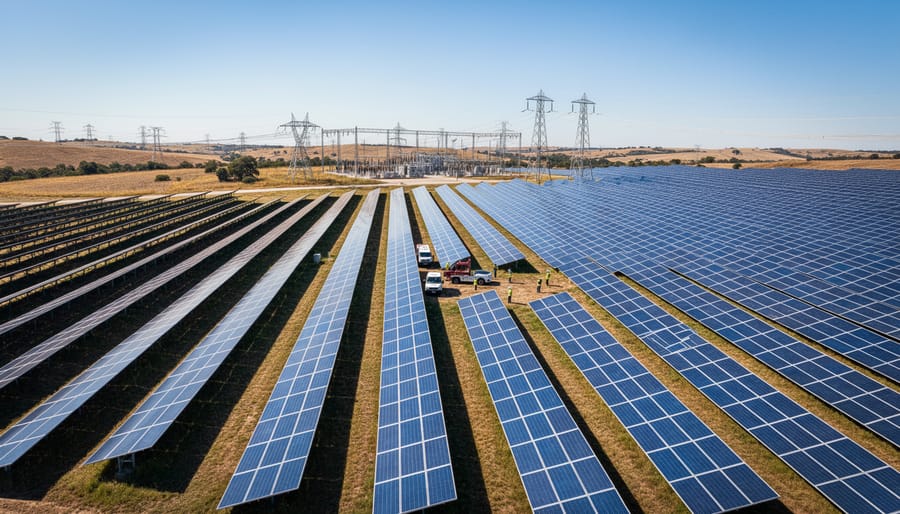
While rooftop systems get most of the attention, the biggest growth in solar is happening at a much larger scale. Developers are aiming to add 43.4 GW of utility-scale solar in 2026, a 43.4 GW solar target for 2026 that would mark roughly a 60% jump over the 27.2 GW record in 2025.
Those numbers can feel abstract, so here’s a quick translation. A gigawatt (GW) is one billion watts, a unit used to describe the generating capacity of power plants and entire fleets of them. Adding 43.4 GW means building a very large amount of new generating capacity in a single year.
“Utility-scale” simply means solar projects built to feed electricity into the grid for many customers at once, typically as large arrays spread across open land. That’s different from rooftop solar, where a system sits on a home or business and mainly serves the building beneath it. The two share the same basic technology, but they differ in size, ownership, and how they connect to the grid.
One caution: 43.4 GW is a goal, not a guarantee. Developers set targets, and what actually gets built depends on many moving parts. Still, even as a stated ambition, it shows where the industry is directing its energy.
3. Solar Plus Batteries and Virtual Power Plants Move Into the Spotlight
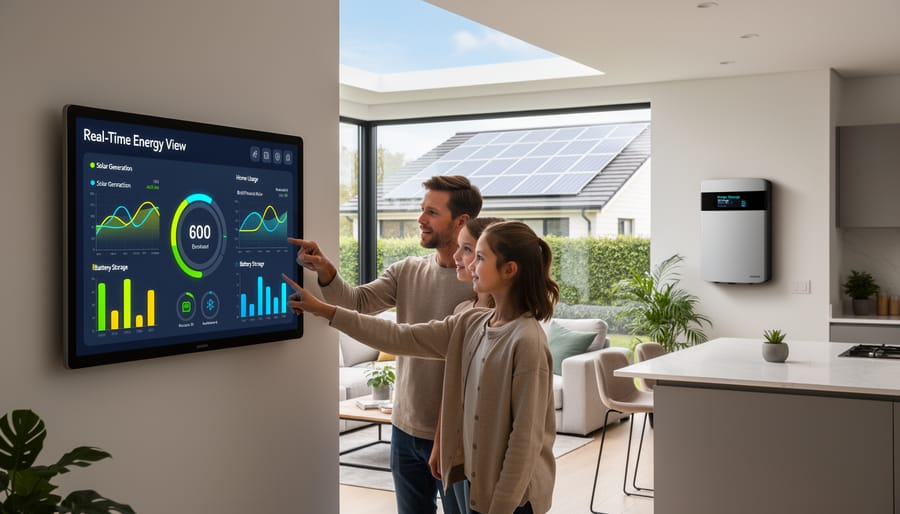
Pairing solar with batteries is getting more attention now that the federal homeowner credit has expired, and one upcoming event shows why. Green Builder Media is hosting a free webinar, “PV + Battery VPP Case Study,” on May 20 at 2:00 PM ET, featuring brothers Daran and Devan Wastchak. It’s built around a real-world solar-plus-battery setup, which makes it a useful look at how these systems work beyond the brochure.
Here’s what the session is listed as covering:
- Roof-mounted versus ground-mounted solar systems
- Financing options
- Permitting
- Installation realities
- Battery storage strategies
- System optimization and homeowner energy use in real time
- DER and VPP programs
- Utility coordination
- EV charging
- Smart home integration
Two acronyms there deserve a plain-language explanation. DER stands for distributed energy resources: the small, local sources of power and storage, like rooftop panels and home batteries, that sit close to where energy is used. A VPP, or virtual power plant, links many of those individual systems together so they can act like one larger power source, helping the grid when demand is high.
If the hardware side interests you, it’s worth understanding the components that make these systems tick. Our guide on MPPT vs PWM charge controllers is a good starting point for that. As always, check with Green Builder Media for current registration details before you plan to attend.
Why It Matters for Homeowners, Developers, and the Grid
When the federal homeowner credit ended, the math of going solar changed for households. Without a 30% tax credit on solar and battery systems, buyers have to look harder at system size, financing terms, and how much of their own power they actually use. That is a more demanding decision, but not a hopeless one. Homeowners who understand their usage patterns can still build a strong case for solar.
At the same time, developers are aiming to add 43.4 GW of utility-scale solar in 2026, roughly 60% more than the record 27.2 GW added in 2025. That contrast tells an important story: the market is shifting its center of gravity, not shrinking. Larger projects feed the grid directly, and the broader energy transition keeps moving forward even as household incentives change.
Batteries sit at the heart of what comes next. Stored power gives homeowners more control over when they use energy, and coordinated programs like virtual power plants (VPPs) can link many small systems into one flexible resource that utilities can call on. This is one reason why we see solar reshaping the grid in ways that go well beyond panels on a roof.
[Expert perspective placeholder: insert a sourced quote from a solar installer, energy analyst, or utility planner on how households and utilities are adapting.]
What to Watch Next in Solar Power Updates
The solar story doesn’t end with one policy change, so here are the signals worth tracking as 2026 unfolds. The biggest is whether developers actually reach the 43.4 GW utility-scale target. That figure is a goal, not a result, and the gap between the two will say a lot about how resilient the market really is.
- Progress toward the 2026 utility-scale target, measured against the record 27.2 GW added in 2025.
- Homeowner financing trends now that the 30% federal credit has expired.
- Growth in battery storage and virtual power plant (VPP) programs.
- Any state or utility-level incentive announcements, which are worth monitoring but are not confirmed here.
Financing deserves particular attention. With the federal homeowner credit gone, loan terms, leasing structures, and system design will increasingly shape whether going solar pencils out for a household. Batteries and VPPs are the other area to follow, since they pair rooftop systems with coordinated grid services in ways that may change how homeowners think about value.
One caution: details on specific rebates and technology updates were not confirmed in this edition. Before making a purchase or a tax decision, check current sources, your utility, and a qualified tax professional.
Frequently Asked Questions About the Latest Solar Changes
Did the federal solar tax credit end?
Yes. The 30% federal tax credit for homeowner-installed solar and battery systems expired at the end of 2025, after Congress voted in July to eliminate federal solar incentives through the Big, Beautiful Bill. Reports describe the credits as expiring on Dec. 31, so confirm how this applies to your own situation with a qualified tax professional.
How much is utility-scale solar expected to grow in 2026?
Developers aim to add 43.4 GW of utility-scale solar in 2026, roughly a 60% increase over the record 27.2 GW added in 2025. That figure is a target, not a guaranteed result.
What is a VPP?
A virtual power plant, or VPP, links many distributed energy resources, such as home batteries and solar systems, so they can work together and support the grid. Think of it as many small systems acting like one coordinated power source.
Where can I learn more about pairing solar with batteries?
Green Builder Media is hosting a free webinar on May 20 at 2:00 PM ET called “PV + Battery VPP Case Study,” featuring Daran and Devan Wastchak. Check the organizer for current registration details.
Because incentive rules and technology details are still evolving, treat any rebate or credit question as something to verify with current sources before you sign a contract. Specific state, local, or utility programs weren’t confirmed here, so they’re worth checking directly. If you’d like to keep tracking how the market shifts, you can find more solar updates as the year unfolds.
The solar story right now is less about slowing down and more about shifting gears. The 30% federal tax credit for homeowner-installed systems has expired, and that changes how households weigh the numbers. At the same time, developers are aiming to add 43.4 GW of utility-scale solar in 2026, roughly 60% more than the record 27.2 GW added in 2025.
Those two facts can sit side by side. Incentives come and go, but the demand for clean, affordable power keeps pushing the sector forward, with batteries and coordinated programs like virtual power plants drawing more attention along the way.
Keep an eye on the signals we’ve outlined, and confirm any tax or incentive details with a qualified professional. We’ll keep tracking the changes here at Clean Energy Future, so check back for what’s next.