
The clean energy sector added over 3.2 million jobs globally in 2025 alone, and projections suggest this growth will accelerate through the end of the decade. For professionals considering a career transition or graduates mapping their future, renewable energy offers something rare in today’s employment landscape: meaningful work with genuine job security in an expanding industry.
But breaking into this sector requires more than enthusiasm for sustainability. “We’re seeing a significant skills gap,” explains Dr. Sarah Chen, workforce development director at the International Renewable Energy Agency. “Companies need electrical engineers who understand grid integration, project managers experienced with complex financing structures, and technicians certified in emerging technologies like green hydrogen systems.”
The pathway isn’t always obvious. A former oil and gas engineer might wonder how their expertise translates to offshore wind development. A recent graduate in environmental science may not realize that solar companies desperately need sales professionals who can explain technical concepts to commercial clients. And mid-career professionals often underestimate how transferable their skills actually are.
Consider Marcus Rodriguez, who spent twelve years in automotive manufacturing before retraining as a wind turbine technician in 2024. “I thought I’d need to start from scratch,” he recalls. “But my mechanical background and problem-solving skills gave me a huge advantage. The technical training took six months, and I was earning more within a year of making the switch.”
This guide maps the current renewable energy job landscape, identifies specific career paths across experience levels, outlines training and certification requirements, and provides concrete strategies for connecting with employers in this competitive field. Whether you’re targeting solar installation, energy storage development, or policy roles shaping the energy transition, understanding the sector’s structure and demands is your first step toward a sustainable career in every sense of the word.
The Renewable Energy Job Landscape in 2026
The clean energy sector is experiencing unprecedented expansion, creating a hiring surge that has transformed renewable energy recruitment from a niche specialty into one of the most dynamic corners of the professional staffing world. U.S. clean energy employment grew faster than the overall economy in 2025, and that momentum has accelerated into 2026 as federal incentives, state mandates, and corporate net-zero commitments converge to fuel project pipelines across the country. Solar installation companies are adding crews monthly, offshore wind developers are competing for experienced engineers, and energy storage firms are building teams from scratch to support gigawatt-scale battery deployments.
Four sectors dominate hiring activity this year. Solar remains the largest employer, with utility-scale projects and distributed residential systems both requiring installers, electricians, and project coordinators. Wind energy, particularly offshore development along the Atlantic coast and expansion in the Great Plains, needs turbine technicians, marine engineers, and operations specialists. Energy storage has emerged as the fastest-growing segment, driven by grid-scale battery projects that require electrical engineers, software developers, and maintenance crews. Grid modernization rounds out the big four, as utilities invest billions in transmission upgrades, smart grid technology, and microgrid deployment, creating demand for grid engineers, cybersecurity analysts, and regulatory specialists.
Geographic concentration matters for job seekers. Texas leads the nation in total renewable energy jobs, with its massive wind capacity and booming solar market creating opportunities from Amarillo to Houston. California remains a powerhouse across all segments, especially in residential solar, battery storage, and electric vehicle infrastructure. The Northeast corridor from Massachusetts through New Jersey is the epicenter of offshore wind development, with hiring concentrated in coastal communities and manufacturing hubs. The Southwest (Arizona, Nevada, New Mexico) continues expanding utility-scale solar, while the Midwest sees growth in agricultural solar projects and wind farm construction.
This rapid expansion has exposed a critical skills gap that makes renewable energy recruitment particularly challenging. Community colleges and technical programs have struggled to scale training fast enough to meet demand. The shortage is most acute in mid-level technical roles requiring three to seven years of experience, the sweet spot between entry-level installers and senior engineers. Employers report that finding candidates who combine technical competency with renewable energy system knowledge can take months, not weeks. This scarcity has pushed salaries upward and prompted companies to invest in training programs, recruit from adjacent industries like oil and gas or traditional utilities, and partner with educational institutions to build talent pipelines.
The competition for talent has professionalized renewable energy recruitment itself. Specialized recruiters who understand climate jobs across sectors now focus exclusively on clean energy, developing networks of passive candidates, maintaining relationships with training programs, and educating hiring managers on realistic salary expectations. Industry-specific job fairs, like the Clean Energy Job Fair scheduled for November in Anaheim, have become essential recruiting venues where employers can meet hundreds of qualified candidates in a single day. For professionals considering a move into renewables, understanding this landscape means recognizing both the opportunity and the need to position yourself strategically in a competitive but rapidly expanding market.
In-Demand Renewable Energy Career Paths
Technical and Engineering Roles
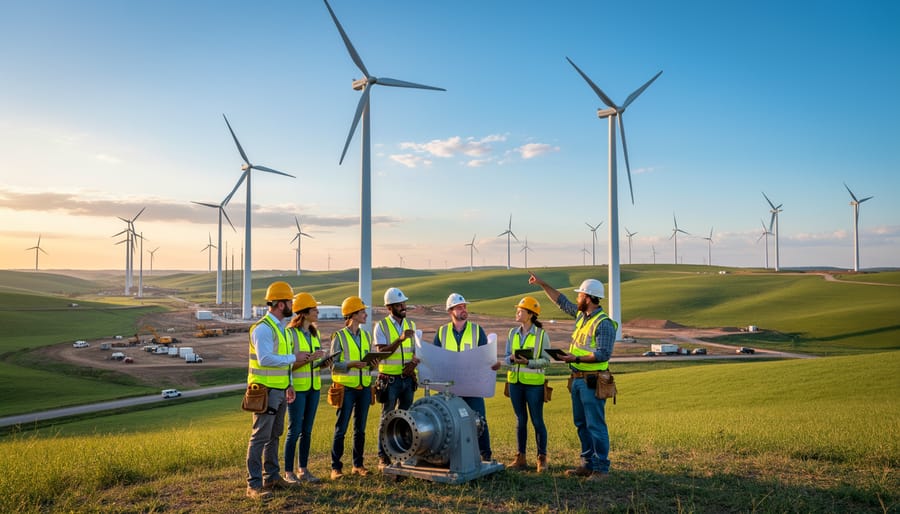
Technical roles form the backbone of the renewable energy sector, with demand for hands-on specialists outpacing supply across nearly every discipline. Solar installers remain one of the fastest-growing occupations, transforming photovoltaic panels from warehouse inventory into functioning power systems on rooftops and solar farms. Entry typically requires a high school diploma plus specialized training, often a few weeks to several months through community colleges or apprenticeship programs, though candidates with electrical backgrounds can transition quickly. Wind turbine technicians work at dizzying heights, performing maintenance, repairs, and troubleshooting on turbines that can exceed 300 feet tall; most enter the field through two-year technical programs combining mechanical and electrical coursework with safety certifications.
Engineers specializing in grid energy storage design and optimize battery systems that balance supply and demand, a role requiring at least a bachelor’s degree in electrical, chemical, or mechanical engineering. Grid integration specialists ensure renewable sources connect seamlessly to existing power networks, navigating complex regulations and technical constraints; this position usually demands an engineering degree plus several years of utility or power systems experience. Renewable energy system designers create custom solar, wind, or hybrid installations for commercial and residential clients, blending engineering principles with project economics.
- Solar Installers: High school diploma plus NABCEP certification or apprenticeship; entry-level to crew lead progression within 2-4 years
- Wind Turbine Technicians: Associate degree in wind energy technology; advance to senior technician or site supervisor roles
- Energy Storage Engineers: Bachelor’s in engineering; move into lead design or R&D positions with 5+ years experience
- Grid Integration Specialists: Engineering degree plus power systems background; often progress to project management or consulting
- System Designers: Bachelor’s in engineering or related field with design software proficiency; senior roles involve client-facing responsibilities
Career progression in these technical paths typically moves from hands-on execution to supervision, then into project management or specialized consulting. Many technicians earn bachelor’s degrees while working, opening doors to engineering positions. The common thread across all these roles is continuous learning, as technologies evolve rapidly and certifications require regular updates to reflect industry advances.

Business, Policy, and Project Management
The renewable energy sector doesn’t run on technology alone. Behind every wind farm and solar installation, there’s a business case to build, financing to secure, policies to navigate, and teams to coordinate. These roles attract professionals who want to drive the energy transition through strategy, relationships, and analysis rather than direct technical work.
Energy project managers orchestrate renewable installations from feasibility studies through commissioning, coordinating engineers, contractors, and stakeholders while managing budgets and timelines. They need technical fluency without necessarily holding engineering degrees. Sustainability consultants help corporations and municipalities develop clean energy roadmaps, conduct carbon audits, and implement renewable procurement strategies. Policy analysts shape the regulations and incentives that make projects viable, working for government agencies, think tanks, or industry associations.
The financial side offers substantial opportunities. Renewable finance careers span project finance specialists who structure power purchase agreements, investment analysts evaluating clean energy portfolios, and capital raisers connecting developers with funding sources. These positions often draw talent from traditional finance looking for more purposeful work.
Business development professionals identify new markets, build partnerships, and secure contracts that keep renewable companies growing. They combine industry knowledge with sales acumen. Most business and policy roles require bachelor’s degrees, often in business, economics, environmental science, or public policy, with MBAs and specialized master’s programs providing advancement paths. Experience in traditional energy, consulting, or finance translates well, especially when paired with genuine interest in sustainability challenges.
Emerging Specialized Positions
The renewable energy industry’s rapid evolution is creating specialized roles that didn’t exist five years ago. These positions require a unique blend of technical expertise and forward-thinking skills that combine multiple disciplines.
Green hydrogen roles are among the hottest new career paths. As countries and corporations commit to decarbonization targets, specialists who understand hydrogen production, storage, and fuel cell integration are commanding premium salaries. These professionals design electrolysis systems, optimize hydrogen production facilities, and develop applications across heavy industry and transportation. The role typically requires chemical engineering or electrochemistry backgrounds, though professionals from oil and gas refining are finding their process engineering expertise highly transferable.
Microgrid architects design self-contained energy systems that can operate independently from the main grid. They integrate solar arrays, battery systems, backup generators, and sophisticated control software to create resilient power solutions for communities, military bases, campuses, and remote facilities. This role demands electrical engineering skills plus a deep understanding of energy management software and regulatory frameworks. With climate-driven grid reliability concerns growing, these specialists are increasingly sought after.
EV charging infrastructure planners address one of clean transportation’s biggest bottlenecks. They site charging stations strategically, design electrical systems to handle high-power charging loads, coordinate utility interconnections, and model usage patterns to optimize network placement. The position blends civil engineering, electrical design, and data modeling, often requiring collaboration with municipalities and utilities.
Energy data analysts turn the massive information flow from smart meters, distributed solar systems, and residential energy storage into actionable insights. Using machine learning and statistical modeling, they forecast demand, optimize grid operations, identify efficiency opportunities, and support strategic planning. Professionals with backgrounds in data science, statistics, or software engineering find renewable energy offers compelling applications for their analytical skills.

Breaking Into Renewable Energy: Training and Pathways
Education and Certification Programs
Renewable energy employers value a mix of formal education and industry-recognized credentials. Four-year engineering degrees remain the gold standard for technical positions, with electrical, mechanical, and environmental engineering programs increasingly offering renewable energy concentrations. However, the field has opened significantly to alternative pathways that recruiters now actively seek.
Community college programs have emerged as vital entry points, offering two-year associate degrees in solar technology, wind energy, and energy management. These programs combine classroom instruction with hands-on training, often teaching students to work with equipment like inverters, battery systems, and solar charge controller s. Many partner directly with local employers, creating direct recruitment pipelines.
Industry certifications carry substantial weight with hiring managers. The North American Board of Certified Energy Practitioners (NABCEP) offers the most recognized credentials, including PV Installation Professional and Solar Heating Installer certifications. Wind technicians often pursue Global Wind Organisation (GWO) safety training, while energy auditors seek Building Performance Institute (BPI) certification. These credentials demonstrate competency to recruiters evaluating candidates without traditional engineering backgrounds.
Online platforms have democratized access to renewable energy education. Coursera, edX, and industry-specific platforms offer courses ranging from introductory overviews to specialized technical training in grid integration and energy storage. While these alone rarely secure positions, they strengthen applications and demonstrate commitment.
For young professionals entering the field, the Student Energy Green Jobs program provides wage funding and training along with financial support, reducing barriers to entry in sustainable energy careers. Programs like these address the industry’s need for diverse talent while creating accessible pathways for those without means to pursue traditional four-year degrees.
Alternative Entry Points and Career Transitions
The renewable energy sector actively welcomes professionals from adjacent industries, recognizing that many traditional energy and infrastructure roles provide directly transferable expertise. Oil and gas engineers, for example, bring valuable project management experience and understanding of large-scale energy systems that translate seamlessly to offshore wind development or geothermal projects. Similarly, electricians and construction managers from conventional building projects possess the core technical skills needed for solar installation and energy efficiency retrofits, requiring only sector-specific training to make the transition.
IT professionals find particularly strong demand in renewable energy careers, as the sector’s increasing reliance on smart grids, energy management software, and data analytics creates roles that didn’t exist five years ago. Traditional utility workers understand grid operations and regulatory frameworks that remain relevant even as the energy mix shifts toward renewables. Manufacturing specialists from automotive or aerospace backgrounds often transition smoothly into battery production or wind turbine manufacturing roles.
The key to successful transitions lies in identifying skill overlaps and addressing knowledge gaps through targeted training. Many employers value industry experience combined with renewable energy certifications more highly than candidates with solely academic credentials but no practical background.
**Case Study: Maria Chen’s Transition to Solar Energy**
Maria Chen spent twelve years as a project manager in commercial construction before pivoting to renewable energy careers in 2024. Frustrated by the environmental impact of conventional building projects, she enrolled in a six-month solar PV design certification program while still employed. She leveraged her construction background to land a position with a solar developer, where her expertise in permitting, contractor coordination, and budget management proved immediately valuable. Within eighteen months, Maria advanced to senior project manager, overseeing utility-scale solar installations. Her construction network became a recruiting pipeline, as former colleagues reached out about following her path into clean energy.
Connecting with Renewable Energy Employers
Job Fairs and Industry Events
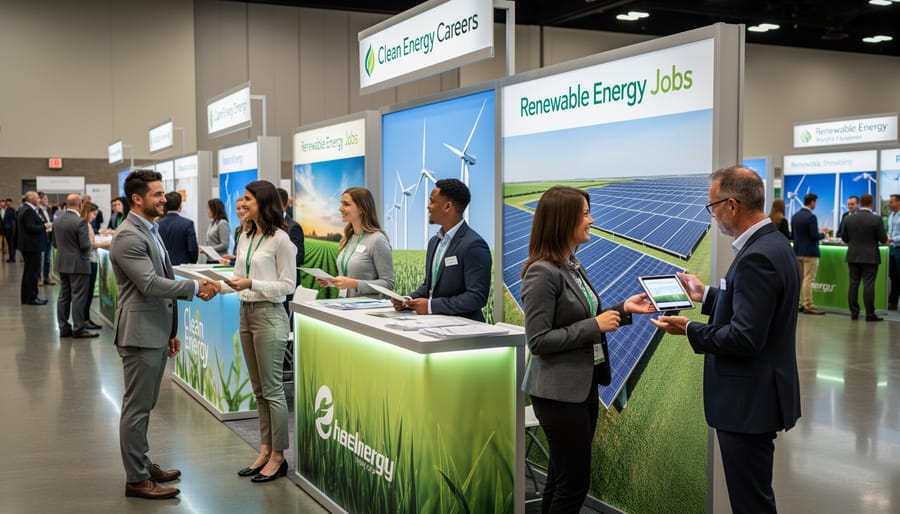
Job fairs and industry events offer some of the most direct pathways into renewable energy careers, bringing employers and candidates together in ways that online applications can’t replicate. The Clean Energy Job Fair, scheduled for Wednesday, November 18, 2026, from 11:00 am to 2:00 pm at the Las Vegas Convention Center (LVCC, W203-206), stands out as a prime opportunity for 2026. Hosted by GRID Alternatives and Women of Renewable Industries and Sustainable Energy (WRISE) in partnership with RE+, this event expects to connect over 300 job seekers with hiring managers from across the clean energy sector.
Who shows up matters. The fair draws clean energy professionals exploring new opportunities, RE+ conference attendees, students from job training organizations and community colleges, and local Anaheim-area residents curious about entering the field. This mix creates networking opportunities beyond just submitting resumes. You’ll encounter panel discussions led by top clean energy industry experts who share insider perspectives on what companies actually need. The event also spotlights solar installation training opportunities, a practical entry point for those without formal renewable energy experience. For details on registration and participating employers, check the Clean Energy Job Fair details page.
To maximize these events, research participating companies beforehand, prepare a 30-second introduction that highlights transferable skills, and bring printed resumes. Arrive early when recruiters are fresh and lines are shorter. Ask specific questions about training programs, typical career progression, and what separates successful candidates from the rest. Follow up within 48 hours with personalized emails referencing your conversation. These face-to-face interactions often lead to interviews that might never happen through a cold online application.
Digital Platforms and Professional Networks
Beyond face-to-face events, digital platforms have become essential tools for connecting with renewable energy recruiters. Specialized job boards such as CleanEnergyJobs.com, RenewableEnergyWorld’s careers section, and the American Solar Energy Society job bank aggregate openings from employers actively seeking clean energy professionals. These niche platforms often surface opportunities weeks before they appear on general sites like Indeed.
LinkedIn deserves particular attention in your renewable energy career search. Optimize your profile by highlighting relevant certifications, projects involving solar, wind, or energy storage, and any transferable technical skills. Follow companies you’re interested in, engage meaningfully with industry content, and use targeted keywords like “renewable energy engineer” or “sustainability consultant” to improve recruiter visibility. Join LinkedIn groups focused on clean energy careers to access peer insights and job postings.
Professional associations provide another crucial networking layer. Organizations such as the American Council on Renewable Energy (ACORE), Women of Renewable Industries and Sustainable Energy (WRISE), and the Association of Energy Engineers offer member directories, mentorship programs, and exclusive job boards. Many also host regional chapters with monthly meetups where you can build relationships with hiring managers before formal recruitment begins. Student and early-career memberships are typically affordable, making these networks accessible entry points into the renewable energy careers ecosystem.
What Renewable Energy Recruiters Look For
After speaking with several hiring managers and talent acquisition leads across solar installation firms, wind developers, and energy storage companies, a clear picture emerges of what separates successful candidates from the rest. While technical competence remains the baseline requirement, the professionals who thrive in renewable energy careers consistently demonstrate a broader skill set that goes beyond certifications and degrees.
Technical proficiency still opens the door. Recruiters prioritize candidates with hands-on experience over those with purely academic credentials. For engineering roles, familiarity with industry-standard software like PVsyst, AutoCAD, or HOMER is expected. Installation and technician positions demand practical skills demonstrated through apprenticeships, boot camps, or prior field work. Recognized certifications carry weight: NABCEP credentials for solar professionals, GWO training for wind technicians, and project management certifications like PMP for those leading deployments.
The biggest gap we see is candidates who understand the technology but can’t communicate why it matters to stakeholders who don’t share their technical background. We need people who can translate complexity into business value.
That communication gap reveals why soft skills have become non-negotiable in renewable energy recruitment. Hiring managers consistently mention adaptability, problem-solving under pressure, and collaborative mindset as deal-breakers. The industry moves quickly; projects face regulatory shifts, supply chain disruptions, and evolving technologies. Candidates who demonstrate they can pivot, learn rapidly, and work across disciplines stand out.
Cultural fit carries particular significance in this sector. Recruiters look for genuine commitment to sustainability beyond buzzwords on a resume. They probe for evidence: volunteer work with environmental organizations, personal projects involving clean energy, participation in climate advocacy, or career decisions that reflect values over compensation. Passion translates to retention, and companies invest heavily in training, so they want people who will stay.
Cross-functional experience increasingly wins out over narrow specialization. A solar engineer who understands financing structures, a project manager familiar with community engagement, or a policy analyst with grid operations knowledge brings perspective that siloed expertise cannot match. The most competitive candidates build T-shaped skills: deep in one area, conversant across several.
Finally, recruiters value candidates who demonstrate resourcefulness in connecting with the industry. Those who attend events like the upcoming Clean Energy Job Fair, engage with professional networks, and stay current on sector developments signal the initiative and engagement that renewable energy careers demand.
The renewable energy sector is no longer an emerging market, it’s the mainstream, and 2026 offers more pathways into clean energy careers than ever before. Whether you’re a recent graduate, mid-career professional ready for a change, or skilled tradesperson looking to transition, the opportunities are real and growing. The skills gap that defined earlier years of the industry has opened doors for candidates willing to pursue training, demonstrate passion, and commit to the sector’s mission.
Your next move matters. If you’re serious about breaking into renewable energy careers, start with concrete steps. Mark your calendar for the Clean Energy Job Fair on Wednesday, November 18, from 11:00 am to 2:00 pm at LVCC, W203-206, hosted by GRID Alternatives and WRISE in partnership with RE+. This event brings together 300+ job seekers with employers actively hiring, offers panel discussions from industry experts, and provides information on solar installation training opportunities. It’s a direct line to decision-makers and a chance to understand what companies need right now.
Beyond job fairs, invest in credentials that recruiters recognize. Pursue certifications like NABCEP for solar, explore community college programs, or consider wage-funded training through initiatives like the Student Energy Green Jobs program. Join professional associations, engage on specialized job boards, and build your LinkedIn presence within renewable energy networks.
The work you do in this sector carries weight beyond a paycheck. Every project contributes to a cleaner grid, every innovation accelerates the transition, and every career choice sends a signal about where talent is heading. The clean energy economy needs skilled, committed professionals, and 2026 is the year to step in.