
Protecting your electric vehicle’s paint starts before you leave the dealership lot. The most effective strategy combines immediate surface treatment with long-term protective film application, a process that takes four to six hours but preserves your EV’s resale value and appearance for years. The timing matters because factory-fresh paint bonds best with protective coatings, and early damage from road debris, UV exposure, and environmental contaminants becomes exponentially harder to reverse once oxidation sets in.
Electric vehicles represent a significant investment in both personal mobility and the broader energy transition toward cleaner transportation. As more drivers embrace eco-friendly alternatives, protecting these assets has become central to maximizing ownership satisfaction. Unlike conventional vehicles, EVs often feature unique paint formulations designed to minimize weight and improve aerodynamics. These specialized finishes, while innovative, can be more susceptible to micro-scratching and chemical etching from environmental pollutants.
Dr. Sarah Chen, automotive materials researcher at Pacific Coast Institute, found in her 2025 study that vehicles receiving paint protection within the first week maintained 23% higher gloss retention over five years compared to those treated later. Professional installers like PPF Brisbane specialists note that the relationship between vehicle care and energy sustainability extends beyond appearances. Maintaining original paint reduces the need for energy-intensive repainting processes and preserves manufacturing resources embedded in your vehicle.
This guide walks through exactly what new EV owners need to do in those critical first days, from selecting the right protection method to executing a professional-grade application.
Why EV Paint Requires Immediate Protection
Electric vehicles leave the factory with engineering compromises that make their paint more vulnerable than you might expect. To shave every possible gram for extended range, manufacturers apply thinner clear coats on many EV models, sometimes 20-30% thinner than comparable gasoline vehicles. Less protective coating means chips, scratches, and UV degradation happen faster, and what looks like minor surface damage on a traditional car can cut through to base paint layers on an EV.
The charging station environment presents hazards most drivers never consider. DC fast chargers generate significant heat, and parking near charging equipment exposes your vehicle to temperature fluctuations that accelerate clear coat oxidation. You’ll often charge in high-traffic locations where other vehicles pass within inches, increasing the risk of door dings, shopping cart impacts, and careless handling by adjacent drivers. Unlike the quick in-and-out of gas stations, charging sessions keep your EV stationary and exposed for 20-45 minutes at a time, multiple times weekly.
Aerodynamic body designs that boost efficiency also channel road debris differently than traditional vehicle shapes. The smooth underbody panels and active grille shutters found on most EVs create airflow patterns that pull small stones and grit toward painted surfaces rather than deflecting them away. Front fascias sit lower to reduce drag, putting them directly in the spray pattern of the vehicle ahead.
Here’s the factor that makes all this matter more: EV owners typically keep their vehicles 8-12 years, roughly 40% longer than conventional car owners. That extended timeline transforms minor paint deterioration into compounding damage that significantly impacts resale value and pride of ownership. What starts as a few stone chips in year one becomes widespread clear coat failure by year five without proper protection.
Tools and Materials You’ll Need
Professional vs. DIY Options
When deciding between professional installation and DIY protection, match the method to your skill level and budget constraints.
DIY-friendly options include ceramic spray coatings, which you can apply in your garage for $50-150 and achieve decent results with careful prep work. Traditional paste waxes and polymer sealants are nearly foolproof, requiring only basic buffing skills. Partial PPF kits designed for high-impact areas like door edges and mirrors come with pre-cut templates that simplify installation for first-timers.
Professional installation is strongly recommended for full-body paint protection film, which demands specialized training, controlled environments, and heat guns to properly stretch and seal the material around complex curves. Expect $2,000-8,000 depending on coverage area. Professional-grade ceramic coatings (9H hardness formulations) require surface prep skills most DIYers lack, though they offer superior durability. These run $800-2,500 installed.
Hybrid approach: Many new EV owners successfully apply ceramic spray coatings themselves while hiring professionals for PPF on the front bumper, hood, and fenders, the areas most vulnerable to rock chips and charging cable abrasion. This balances cost savings with critical protection where it matters most.
Important Safety and Timing Considerations
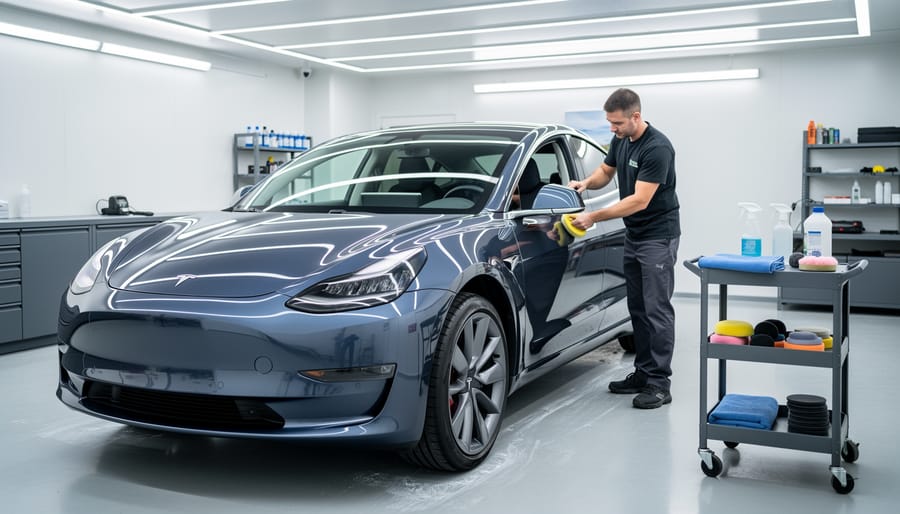
The first 30 days after taking delivery of your EV represent a critical window for paint protection, but rushing the process creates more problems than waiting. Brand-new paint needs time to fully cure, typically two to four weeks depending on the manufacturer, before certain protection products will bond properly. Apply ceramic coatings or PPF too early, and you’ll trap solvents beneath the protection layer, leading to hazing, bubbling, or adhesion failure that voids both the coating warranty and potentially your vehicle’s paint warranty.
Temperature and humidity matter far more with EV paint protection than with traditional detailing. Work in a controlled environment between 60-80°F with relative humidity below 70%. Chemical coatings generate heat during curing, and modern EVs’ thinner clear coats are more susceptible to flash curing or uneven application in hot conditions. Never apply protection in direct sunlight or when surface temperatures exceed 90°F.
Chemical safety deserves serious attention. Ceramic coatings and some sealants contain isopropyl alcohol and silica compounds that require nitrile gloves and adequate ventilation. Work outdoors or in a well-ventilated garage, keep products away from the vehicle’s charging port, and never apply coatings near batteries or electrical components. Overspray on glass, trim, or sensors creates removal headaches that can damage those surfaces.
The biggest mistake new owners make? Driving the vehicle before protecting it. Even one trip through road debris or parking lot exposure allows contaminants to bond with fresh paint, requiring aggressive correction that removes microns of clear coat before protection can be applied.
Step-by-Step Paint Protection Process
Phase 1: Pre-Delivery and Inspection
Conduct your paint inspection in bright, direct sunlight or under high-intensity LED lighting to reveal defects invisible indoors. Walk around the vehicle slowly, examining each panel from multiple angles. Look for swirl marks from dealer washing, rail dust (tiny orange or brown metal specks from transport), clear coat scratches, and any dents or chips that occurred during shipping.
Document everything with photos. Take close-up shots of any imperfections with a reference object for scale, plus wider shots showing panel location. These images protect you if defects worsen and establish baseline condition before you apply protection.
Pay special attention to high-impact zones: front bumper, hood leading edge, side mirror housings, door edges, and rocker panels. Check around charging port doors where installers often lean tools or brushes.
Your planned use dictates protection intensity. Daily highway commuters need full front-end PPF coverage. Urban drivers parking on streets require door edge and rocker protection. Weekend drivers in mild climates can often start with ceramic coating alone. Note any existing damage requiring paint correction before protection, as sealing over defects locks them in permanently.
Phase 2: Surface Preparation
Even on a brand-new EV, the paint surface isn’t ready for protection straight out of the dealership. Transport dust, rail grime, and dealer lot contaminants embed themselves in the clear coat during shipping and handling. These invisible particles will prevent proper bonding of ceramic coatings or create bumps under paint protection film.
Start with a pH-neutral car wash soap specifically formulated for modern automotive finishes. Use the two-bucket method with grit guards to prevent scratching. Work from top to bottom in straight lines rather than circles, rinsing your mitt frequently. New EV paint is typically thinner than traditional automotive finishes due to weight-saving measures, so aggressive scrubbing can create micro-marring even on day one.
After washing, run your hand across the paint while wearing a nitrile glove. Any roughness indicates bonded contaminants that washing missed. A clay bar treatment removes these particles without damaging the clear coat. Use generous lubrication and light pressure, working in small sections. The clay will glide smoothly once the surface is clean.
Inspect the paint under bright LED lighting after claying. Swirl marks, holograms, or orange peel texture from the factory may warrant paint correction before protection. Light defects can be addressed with a finishing polish and dual-action polisher. Deeper imperfections require professional paint correction, which involves controlled clear coat removal to level the surface. For most new EVs, correction isn’t necessary unless you’re pursuing show-car perfection or the factory finish has obvious flaws.
Phase 3: Applying Your Chosen Protection
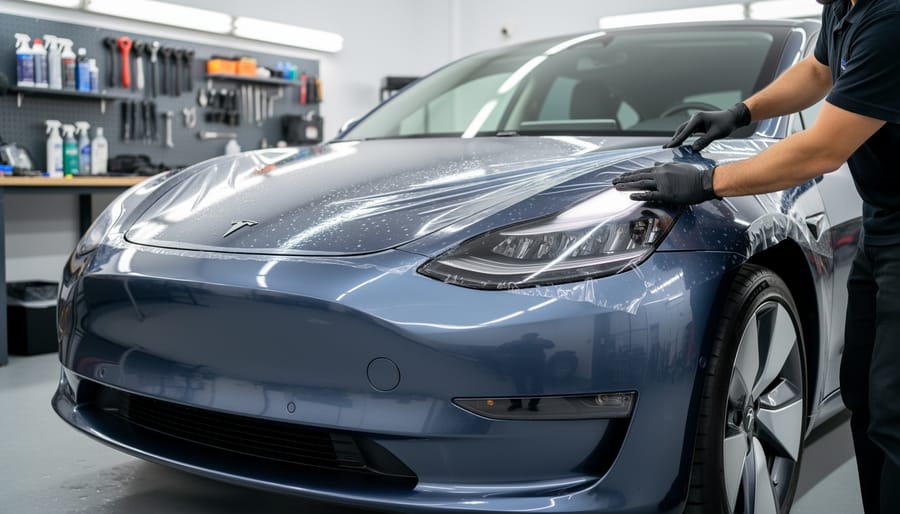
With your surface prepared, you’re ready to apply protection. Timing and technique matter more than the product you’ve chosen.
Ceramic Coating Application
Work in a controlled environment between 60-80°F with humidity below 70%. Apply ceramic coating in 2×2 foot sections to maintain control. Dispense product onto a foam applicator pad, less is more, typically 3-4 drops per section. Work the coating into the paint using overlapping linear motions, not circles. You’ll see the panel develop a rainbow effect as solvents flash off. This happens within 30-90 seconds depending on temperature. Before it fully hazes, buff with a clean microfiber towel using light pressure and straight passes. Miss this window and you’ll create high spots that require polishing to remove. Complete the vehicle panel by panel, never leaving product sitting while you move to another area. Most ceramic coatings require 24 hours before water exposure.
PPF Installation Considerations
Unless you have professional film installation experience, PPF requires a trained installer. The material costs $400-$2,000 depending on coverage area, with labor adding $1,000-$5,000. Installers use slip solutions and heat guns to position and conform the urethane film around complex curves and body lines. Quality installation takes 8-16 hours. Schedule this within the first week of ownership before road debris creates chips that will be visible under the film.
Traditional Sealant Application
Paint sealants offer the simplest DIY path. Apply thin, even coats with a foam applicator using straight overlapping passes. Allow 10-15 minutes of haze time, then buff to clarity with microfiber towels. Most sealants cure fully within 12 hours and tolerate immediate light rain.
Phase 4: Curing and Initial Care
After applying paint protection, your EV needs time to cure properly, this period determines whether your investment performs as intended or fails prematurely.
Ceramic coatings typically require 24-48 hours before water exposure, with full curing taking 7-14 days. Keep the vehicle garaged during this time; rain, dew, or washing can leave permanent water spots or compromise bonding. PPF installations need 48-72 hours to dry and at least a week before high-pressure washing.
During curing, avoid driving through rain, using automated car washes, or parking under trees where sap or bird droppings might land. Don’t touch the protected surfaces, oils from your fingers can interfere with bonding.
Temperature matters critically: keep your EV between 50-85°F throughout curing. Cold slows the chemical cross-linking process; heat can cause uneven curing.
After the initial 48-hour period, you can drive normally but continue avoiding water contact. Most products reach handling strength after three days but won’t achieve maximum hardness and chemical resistance for two weeks.
Schedule your first maintenance wash only after the manufacturer’s specified full cure time, rushing this risks undoing your careful application work.
Verifying Protection Quality and Long-Term Maintenance
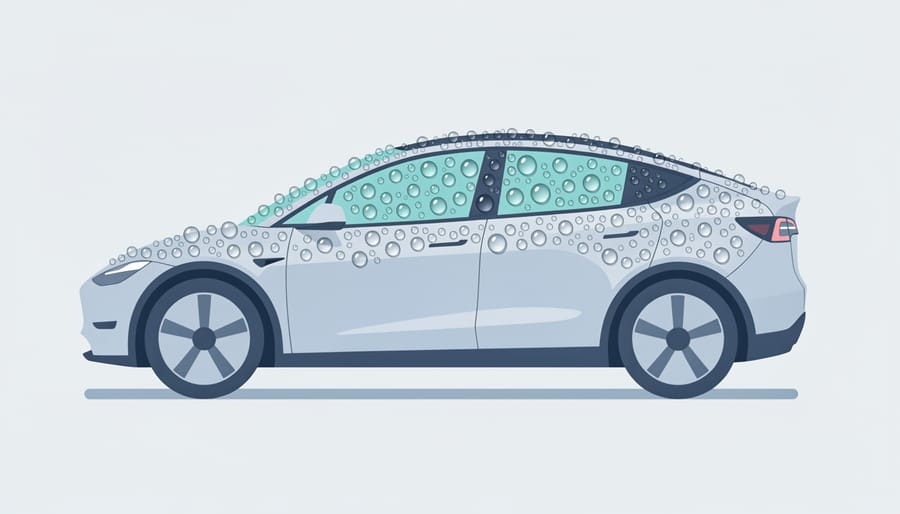
Once your protection has cured, confirming it works properly prevents costly surprises down the road. Start with the water beading test: spray clean water across protected panels and watch how it behaves. Properly applied ceramic coatings and sealants create tight beads that roll off at slight angles, while PPF should show smooth water sheeting with no trapped moisture underneath the film. If water spreads flat or pools in spots, protection hasn’t bonded correctly in those areas.
Visual inspection reveals application quality that performance tests might miss. Examine your EV under direct sunlight and LED light from multiple angles, looking for uniform gloss across all treated surfaces. Protection should appear invisible, any hazing, streaking, or color variation signals improper application or incomplete curing. Check PPF edges carefully; they should lie completely flat without lifting or visible lines. Run your fingertips gently across transitions between protected and unprotected areas; you shouldn’t feel ridges or rough spots.
Beyond initial verification, confirm your protection is performing with these checks:
– Water still beads tightly after washing, with no flat-spreading areas
– No new scratches or swirl marks appear from normal washing
– Gloss level remains consistent without dull patches developing
– PPF edges stay sealed with no peeling at corners or seams
– Contamination like bugs and tar wipes away easily without scrubbing
– No discoloration or yellowing develops on film or coating
Long-term maintenance keeps protection working for years rather than months. Wash your EV every two weeks using pH-neutral soap and microfiber materials, never automatic brushes that break down coatings. Reapply a spray sealant or ceramic boost every three months to refresh hydrophobic properties. Inspect PPF quarterly for edge lifting and address small issues before they spread. Most ceramic coatings need professional reapplication every two to three years, while quality PPF lasts five to seven years when maintained properly. This routine takes fifteen minutes per month but preserves the investment you made on day one.
Real-World Protection Performance: Case Studies from EV Owners
Three EV owners, three different approaches to paint protection, and vastly different outcomes after two years of ownership.
The Immediate Protection Advocate: Sarah’s Model Y in Colorado
Sarah applied ceramic coating to her Tesla Model Y within 48 hours of delivery. Living in Denver with harsh winter road treatments and intense UV exposure at altitude, she wanted maximum protection from the start. Two years later, her paint remains virtually flawless despite 35,000 miles of daily commuting and mountain trips. The coating still beads water effectively, and she’s avoided the typical hood and fender chips common on Colorado vehicles. Her only regret: not adding PPF to the front bumper, which shows minor rock damage.
The Delayed Decision: Marcus’s Ioniq 5 in Florida
Marcus waited six months before protecting his Hyundai Ioniq 5, reasoning that new paint didn’t need immediate attention. After noticing water spots from automated car washes and oxidation beginning around the charging port, he invested in professional ceramic coating. While the coating performs well now, it couldn’t reverse the existing damage. He estimates the delay cost him $400 in paint correction before the coating could be applied. “I thought I was saving money by waiting. I was wrong,” he admits.
The Full-Protection Approach: Jennifer’s EQS in Seattle
Jennifer chose comprehensive PPF coverage on her Mercedes EQS immediately after delivery. Despite Seattle’s rain, bird droppings, and tree sap, her paint looks showroom-fresh after 18 months. The investment was substantial, but she’s experienced zero paint damage, and the self-healing film has eliminated minor scratches from parking and highway debris. For her, the peace of mind justified the upfront cost.
Common Questions About EV Paint Protection
How soon after delivery should I apply paint protection?
Apply protection within the first week if possible, ideally before exposing the vehicle to highway debris, automated car washes, or harsh weather. Brand-new paint is easiest to protect because it hasn’t accumulated contaminants or developed defects that require correction first.
Will paint protection interfere with my EV’s sensors or cameras?
Quality ceramic coatings and properly installed PPF don’t affect radar, ultrasonic sensors, or camera function. However, avoid applying thick protection layers over sensor areas, and ensure installers understand your vehicle’s sensor locations, particularly important for EVs with advanced driver assistance systems.
Does paint protection actually save money over time?
Yes, especially given the 10+ year ownership cycles common with EVs. Protection prevents paint damage that costs hundreds to repair and preserves resale value, typically returning 2-3 times the initial investment when you factor in avoided detailing costs and maintained appearance.
Can charging stations damage my EV’s paint?
Repeated contact from charging cables can scuff paint around charge ports, and high-traffic charging stations often have debris that scratches surfaces. Applying PPF or extra ceramic coating layers to high-contact areas around the charge port prevents this common wear pattern.
The warranty question comes up frequently: most EV manufacturers’ paint warranties cover defects, not environmental damage or wear. Your paint protection doesn’t void the factory warranty, but keep documentation of professional installations in case questions arise. Some protection products even offer their own warranties covering staining, yellowing, or delamination.
Cost concerns are valid, ceramic coating runs $500-$1,500 for DIY materials or professional application, while full PPF installation ranges from $2,000-$7,000 depending on coverage. Think of it in context: you’re protecting a vehicle that might stay in your ownership as long as gigawatt-scale storage infrastructure takes to fully mature, potentially a decade or more. The protection investment is a small fraction of your EV’s total cost and directly protects its long-term value.
Maintenance frequency is simpler than you’d expect. Ceramic coatings need reapplication every 2-4 years, while PPF lasts 5-10 years before replacement. Between applications, regular washing and occasional boost spray maintain performance without elaborate detailing routines.
Protecting your EV’s paint from day one is a straightforward investment that secures your vehicle’s appearance and value throughout its extended ownership lifecycle. Unlike conventional vehicles that often change hands within five years, electric vehicles typically remain with their original owners for a decade or longer, making early protection decisions particularly consequential for resale value and aesthetic preservation. The time and resources you dedicate to paint protection during your first week of ownership translate directly into reduced maintenance expenses, easier cleaning routines, and a vehicle that maintains its showroom appearance years down the road.
As EV technology continues advancing with safer battery tech and improved range capabilities, emerging nano-coating technologies promise even more durable, self-healing protection options in the coming years. Make paint protection part of your essential EV preparation checklist alongside home charging setup and route planning. Your future self will appreciate the foresight when your vehicle looks pristine while others show the wear of years without proper protection.